Archives for posts with tag: Factory farming

??????????????????????????????????????????????????????????????????????????????

There are many myths about meat consumption. I focus on two in this article, along with some related issues.

MYTH 1: BEEF PRODUCED FROM GRASS-FED COWS IS BETTER FOR THE ENVIRONMENT THAN GRAIN-FED

It seems logical, doesn’t it? After all, eating grass is natural for a cow. But does that make it better for the environment?

Why wouldn’t you believe the myth when a supposedly authoritative source like the Australian Conservation Foundation says: “When you do buy meat, choose pasture or grass-fed sources over grain-fed ones.” [1]

To my knowledge, the ACF has not cited any sources to support that statement.

Similarly, no sources were cited by prominent climate change activist Bill McKibben of 350.org when he supported the idea of grass-fed cattle over the feedlot variety in his Orion Magazine article of 2010, The Only Way to Have a Cow“. [2] He was maintaining that position during a speaking tour of Australia in June, 2013. [Footnote 1]

Emissions from grass-fed cows are multiples of the grain-fed alternative

On the other hand, Professor Gidon Eshel of Bard College, Annandale-on-Hudson, New York and formerly of the Department of the Geophysical Sciences, University of Chicago, has reported, “since grazing animals eat mostly cellulose-rich roughage while their feedlot counterparts eat mostly simple sugars whose digestion requires no rumination, the grazing animals emit two to four times as much methane”. [3]

In Australia, the CSIRO (Commonwealth Scientific and Industrial Research Organisation) has also reported that cows produce significantly more methane when eating grass than when eating grain. It stated, “These measurements clearly document higher CH4 [methane] production (about four times) for cattle receiving low-quality, high-fiber diets than for cattle fed high-grain diets.” [4]

CSIRO scientists subsequently reported some reduction in methane emissions from northern Australian cattle herds, representing around half the country’s cattle population. [5] However, that would still leave grass-fed cows’ methane emissions as a multiple of grain-fed emissions.

What does the FAO say?

In November, 2013, the FAO (Food and Agriculture Organization of the United Nations) reported a signficant difference in the greenhouse gas emissions intensity between beef derived from animals on “grazing” (or “grass-based”) feeding systems and those on “mixed” systems. [6] [7]

The emissions intensity of a product represents the kilograms of CO2-equivalent (CO2-e) greenhouse gas emissions per kilogram of product.

It seems reasonable to conclude that the FAO’s “mixed” figures included grain-fed cattle, as it confirmed “grass-based and mixed livestock production systems” are responsible for 100 percent of global beef production. (Reference 7, p. 24).

Cows are not fed grain exclusively. They have not evolved to consume it, and if it is used at all, they are generally only “finished” on it for the final one hundred days or so prior to slaughter.

For specialised beef (as opposed to beef from dairy cows), the FAO reported emissions intensity figures of 56.2 for mixed feeding systems and 102.2 from grazing systems.

Those figures were based on carcass weight. If we gross them up to allow for the fact that not all the carcass is used as end product for the dinner table, the figures increase to 77.2 and 140.2 respectively. That’s based on the US Department of Agriculture’s mid-range yield estimate of 72.8% for all beef, including ground beef for use in hamburgers and the like. [8]

We can also gross them up to allow for a 20-year GWP (global warming potential) for methane. Allowing for that factor (refer to additional comments below), the figures increase to 160.1 and 290.9 respectively.

Conventional measures of methane’s global warming impact measure it over a 100-year timeframe. However, methane breaks down relatively quickly in the atmosphere, with much of it doing so within around 12 years. That means the 100-year measure greatly understates its shorter-term impact, as it provides an average figure over a 100-year period, when much of the methane effectively did not exist during the final 88 years. In the chart below, I have used a 20-year GWP of 86 for methane, from the IPCC’s Fifth Assessment Report. It is up from the IPCC’s previous figure of 72, and allows for carbon-climate feedbacks. (Without those feedbacks, the IPCC now uses a figure of 84.) [9]

Researchers at NASA have estimated an even higher 20-year GWP for methane of 105. [10]

Although methane may have a shorter life than carbon dioxide (which remains in the atmosphere for many hundreds of years), its impact can be long-term if it contributes to us reaching tipping points that result in positive feedback loops with potentially irreversible and catastrophic consequences. On the positive side, the relatively short-term nature of methane’s impact means that action on livestock production can be one of the most effective steps available to us in dealing with climate change.

Respected climate change commentator, Joseph Romm, has quoted the IPCC [his underlines]:

There is no scientific argument for selecting 100 years compared with other choices (Fuglestvedt et al., 2003; Shine, 2009). The choice of time horizon is a value judgement since it depends on the relative weight assigned to effects at different times.” [11]

Romm went on to say:

“Given that we are approaching real, irreversible tipping points in the climate system, climate studies should, at the very least, include analyses that use this 20-year time horizon.”

I have previously compared beef production to aluminium in order to add some perspective to its emission levels. Aluminium production is an incredibly emissions-intensive process.  In recent times, it has consumed up to 16 percent of Australia’s electricity production [12], for less than: 1 percent of GDP (gross domestic product); and 0.1 percent of jobs.

In a 2003 report commissioned by the former Australian Greenhouse Office, its emissions intensity was reported as 20 kg CO2-e per kg of product. [13] The Australian Aluminium Council has reported a 2011 figure of 15.6 kg (rounded to 16 kg in the table below) for “primary aluminium production, not including emissions from alumina refining which are considered separately”.  [14] It has stated that over 80 percent of smelting’s greenhouse gas emissions are indirect (electricity-related) emissions. The emissions intensity of Australian aluminium is more than twice the global average, due to the heavy reliance on coal-fired power. [15]

Here’s how beef production compares to aluminium and steel, based on: (i) carcass weight and standard 100-year GWP; (ii) retail weight and 100-year GWP; and (iii) retail weight and 20-year GWP. Beef’s figures vary by region. Those shown here are based on the global average.

Figure 1: Greenhouse Gas Emissions Intensity

Emissions-intensities-8

So, allowing for a 20-year GWP to more accurately reflect methane’s shorter-term impact, a kilogram of steak is 18 times as emissions intensive as a kilogram of Australian aluminium, and more than 30 times as emissions intensive as aluminium’s global average.

How do other foods compare?

The emissions intensity of the following foods have been reported to be less than 2 kg CO2-e per kg of product even (in respect of some) when transported overseas by boat: whole wheat; rice; carrots; potatoes; green beans; apples; oranges; and soy beans. [16] That is less than 0.7% of the top figure for beef from Figure 1. [Footnote 2]

MYTH 2: BUYING BEEF FROM LOCAL SOURCES IS ENVIRONMENTALLY-FRIENDLY

Why wouldn’t you believe this one, when the Australian Conservation Foundation says: “And be sure to support hardworking families in your community by buying from local farmers.”

Similarly, Bill McKibben has said that one of the most important measures for reducing the climate change impact of animal agriculture is to buy locally. He has said that when he’s at home, he tries to eat nothing produced outside the valley in which he lives.

But how effective is that approach in terms of beef?

The following image depicts the FAO’s breakdown of emissions from beef production (including beef from dairy cows), with “postfarm” emissions of 0.5 percent (including transport and processing) highlighted.

Figure 2: Breakdown of emissions from beef production (global average)

UNFAO-tackling-climate-change-through-livestock-Fig-7-highlighted

The main contributors are: enteric fermentation (which produces methane in a cow’s digestive system) 42.6%; manure-related emissions 23.1%; land use change through pasture expansion 14.8%; feed 10%; and fertilizer and crop residues 7.4%.

You can focus as much as you like on locally produced meat, but the relative positive impact is negligible.

Conclusion

Vested interest groups attempt to create the impression that beef and other animal products can be produced in an environmentally benign way. In reality, on the scale required to feed the masses, such products are unsustainable. A general shift towards a plant-based diet, along with a move away from fossil fuels, is essential if we are to overcome catastrophic climate change.

Footnotes:

1. I commented on Bill McKibben’s position in my articleDo the math: There are too many cows. [17] He appeared to be supporting a key proponent of intensive grazing systems, Allan Savory, on whom I commented in my article “Livestock and Climate: Why Allan Savory is not a saviour“. [18] Savory’s methods, even if successful in some situations, would never scale up to the level required.

2. Soy beans and other products grown on land that had been cleared of rain forest for that purpose would have a higher emissions intensity figure than indicated here, but still tiny compared to beef. In any event, if such products were only grown for human consumption, we would almost certainly not need to encroach on forested areas in that way. Most soy is grown as part of the grossly and inherently inefficient process of transferring plant-based nutrients to food animals for human consumption.

3. This article first appeared on the website rabble.ca on 15th April, 2014, with the title Why even grassfed and local beef isn’t sustainable. This is a slightly expanded version.

4. Postscript 9th May, 2014: The figures in Figure 1 are based on the global average percentage split of the various factors contributing to beef’s emissions intensity. As methane’s percentage contribution would be higher in grazing systems than in mixed systems, the “20-Year GWP” figures may be under-stated for the former and over-stated for the latter. They are intended to be approximations only.

5. Postscript 4th April, 2015: The retail figures attribute all carcass weight emissions to retail cuts of meat. If emissions are also attributed to other products that may be derived from the carcass, utilising fat, bone and the like, then the emissions intensity of the retail cuts will be around 28 percent lower than those shown here. For example, the maximum figure for grazed beef would be around 209, rather than 291 kg CO2-e/kg product.

Author: Paul Mahony

Related articles: Climate Change and Animal Agriculture

Images:

Cows grazing  © Ondrez | Dreamstime.com

Figure 2 adapted from Figure 7, p. 24, Food and Agriculture Organization of the United Nations, “Tackling climate change through livestock: A global assessment of  emissions and mitigation opportunities”, Nov 2013, http://www.fao.org/ag/againfo/resources/en/publications/tackling_climate_change/index.htm; http://www.fao.org/docrep/018/i3437e/i3437e.pdf

References:

[1] Australian Conservation Foundation, Green Home, “Eat less animal products”http://www2.acfonline.org.au/category/green-eating/tips/eat-less-animal-products (accessed 14 April, 2014)

[2] McKibben, Bill, “The only way to have a cow”, Orion Magazine, Mar/Apr 2010, http://www.orionmagazine.org/index.php/articles/article/5339/

[3] Eshel, G., “Grass-fed beef packs a punch to environment”, Reuters Environment Forum, 8 Apr 2010, http://blogs.reuters.com/environment/2010/04/08/grass-fed-beef-packs-a-punch-to-environment/

[4] Harper, L.A., Denmead, O.T., Freney, J.R., and Byers, F.M., Journal of Animal Science, June, 1999, “Direct measurements of methane emissions from grazing and feedlot cattle”, J ANIM SCI, 1999, 77:1392-1401, http://www.ncbi.nlm.nih.gov/pubmed/10375217; http://www.journalofanimalscience.org/content/77/6/1392.full.pdf

[5] Paterson, J., “CSIRO says cow methane emissions lower than first thought”, ABC Rural, 27 May, 2011, http://www.abc.net.au/site-archive/rural/news/content/201105/s3229224.htm

[6] Food and Agriculture Organization of the United Nations, “Tackling climate change through livestock: A global assessment of  emissions and mitigation opportunities”, Nov 2013, http://www.fao.org/ag/againfo/resources/en/publications/tackling_climate_change/index.htm; http://www.fao.org/docrep/018/i3437e/i3437e.pdf

[7] Food and Agriculture Organization of the United Nations, “Greenhouse gas emissions from ruminant supply chains: A global life cycle assessment”, Nov 2013, http://www.fao.org/ag/againfo/resources/en/publications/tackling_climate_change/index.htm; http://www.fao.org/docrep/018/i3461e/i3461e.pdf

[8] United States Department of Agriculture Economic Research Service, Agricultural Handbook No. 697, June, 1992 (website updated 10 September, 2013), “Weights, Measures, and Conversion Factors for Agricultural Commodities and Their Products”,  http://www.ers.usda.gov/publications/ah-agricultural-handbook/ah697.aspx#.U0ihR6Ikykw

[9] Intergovernmental Panel on Climate Change, Fifth Assessment Report, 2014, http://www.ipcc.ch/report/ar5/

[10] Shindell, D.T., Faluvegi, G., Koch, D.M., Schmidt, G.A., Unger, N., Bauer, S.E., Improved Attribution of Climate Forcing to Emissions“, Science 30 October 2009: Vol. 326 no. 5953 pp. 716-718 DOI: 10.1126/science.1174760, https://www.sciencemag.org/content/326/5953/716.figures-only

[11] Intergovernmental Panel on Climate Change, Fifth Assessment Report, 2014, http://www.ipcc.ch/report/ar5/, cited in Romm, J., “More Bad News For Fracking: IPCC Warns Methane Traps More Heat”, The Energy Collective, 7th October, 2013, http://theenergycollective.com/josephromm/284336/more-bad-news-fracking-ipcc-warns-methane-traps-much-more-heat-we-thought

[12] Hamilton, C, “Scorcher: The Dirty Politics of Climate Change”, (2007) Black Inc Agenda, p. 40

[13] George Wilkenfeld & Associates Pty Ltd and Energy Strategies, “National Greenhouse Gas Inventory 1990, 1995, 1999, End Use Allocation of Emissions Report to the Australian Greenhouse Office, 2003, Volume 1”, Table S5, p. vii

[14] Australian Aluminium Council Ltd, “Climate Change: Aluminium Smelting Greenhouse Performance”, http://aluminium.org.au/climate-change/smelting-greenhouse-performance (Accessed 14th April, 2014)

[15] Turton, H. “Greenhouse gas emissions in industrialised countries Where does Australiastand?”, The Australia Institute, Discussion Paper Number 66, June 2004, ISSN 1322-5421, p. viii, https://www.tai.org.au/documents/dp_fulltext/DP66.pdf

[16] Carlsson-Kanyama, A. & Gonzalez, A.D. “Potential Contributions of Food Consumption Patterns to Climate Change”, The American Journal of Clinical Nutrition, Vol. 89, No. 5, pp. 1704S-1709S, May 2009, http://www.ajcn.org/cgi/content/abstract/89/5/1704S

[17] Mahony, P., “Do the math: There are too many cows”, 26 July, 2013, https://terrastendo.net/2013/07/26/do-the-math-there-are-too-many-cows/

[18] Mahony, P., “Livestock and Climate: Why Allan Savory is not a saviour“, 26 March, 2013, https://terrastendo.net/2013/03/26/livestock-and-climate-why-allan-savory-is-not-a-saviour/

????????????????????????????????????????????????????????????????????????????????????

One of the most common questions heard by anyone on a plant-based diet is: “Where do you get your protein?”

The question arises because of a common misconception that protein is only available in meat or other animal products, such as chickens’ eggs or cows’ milk, or that plant-based protein is somehow inferior.

The fact that some of the largest, strongest animals are herbivores or near-herbivores should alert people to the fact that there is plenty of protein available without eating animals. The range of herbivores or near-herbivores includes elephants, rhinoceroses, giraffes, cows, horses and great apes such as chimpanzees, gorillas, and orangutans.

The position is further highlighted by the fact that a 2013 paper from the Institute on the Environment at the University of Minnesota stated [1]:

“The world’s croplands could feed 4 billion more people than they do now just by shifting from producing animal feed and biofuels to producing exclusively food for human consumption”.

Animal feed crops represent 90% of that figure (representing 3.6 billion people), and biofuels only 10%.

The lead author, Emily Cassidy, has been quoted as saying:

“We essentially have uncovered an astoundingly abundant supply of food for a hungry world, hidden in plain sight in the farmlands we already cultivate. Depending on the extent to which farmers and consumers are willing to change current practices, existing croplands could feed millions or even billions more people.”

Similarly, Dr David Pimentel of Cornell University reported in 2003 that the grain fed each year to livestock in the United States could feed 840 million people on a plant-based diet. [2]

Referring to US Department of Agriculture statistics, Pimentel has also stated that the US livestock population consumes more than 7 times as much grain as is consumed directly by the entire American population.

He and Marcia Pimentel have also reported:

” . . . each American consumes about twice the recommended daily allowance for protein “.

The results cited above reflect, in part, the gross and inherent inefficiency of animals as a food source.

Is it difficult to replace animal protein with plant protein?

The Physicians Committee for Responsible Medicine (PCRM) has stated [3]:

“To consume a diet that contains enough, but not too much, protein, simply replace animal products with grains, vegetables, legumes (peas, beans, and lentils), and fruits. As long as one is eating a variety of plant foods in sufficient quantity to maintain one’s weight, the body gets plenty of protein.”

Also:

“It was once thought that various plant foods had to be eaten together to get their full protein value, but current research suggests this is not the case. Many nutrition authorities, including the American Dietetic Association, believe protein needs can easily be met by consuming a variety of plant protein sources over an entire day. To get the best benefit from the protein you consume, it is important to eat enough calories to meet your energy needs.”

PCRM is a US-based non-profit organisation that promotes preventive medicine, conducts clinical research, and promotes higher standards for ethics and effectiveness in research.

The US Department of Agriculture has reported the following protein content for a variety of food products, as shown in Figure 1 [4].

Figure 1: Protein content of selected foods

Figure-1

Some health implications of consuming too much protein 

PCRM has also highlighted some of the health implications of excessive protein intake, including kidney disease and certain types of cancer. Specifically in relation to animal protein, it has referred to osteoporosis and kidney stones, stating [5]:

“Diets that are rich in animal protein cause people to excrete more calcium than normal through their kidneys and increase the risk of osteoporosis. Countries with lower-protein diets have lower rates of osteoporosis and hip fractures.”

I have also commented on some health implications of eating animals in my article If you thinks it’s healthy to eat animals, perhaps you should think again. [6] Amongst the studies referred to was a 26-year study of more than 120,000 people by Harvard University, which found that eating red meat is associated with a sharply increased risk of death from cancer and heart disease. The lead author described the results as “staggering”. [7]

Other Issues

In addition to contributing significantly to human health problems, by utilising animals as a source of protein and other nutrients, we are causing extreme cruelty to the animals themselves, creating massive environmental problems (including those relating to climate change) and contributing to the malnutrition of more than 800 million people. [8]

Protein sources in Australia

The following chart shows that 81 percent of protein produced in Australia in 2010/11 came from plants, and only 19 percent from animals.

It includes products that are exported and/or used as livestock feed.  The inclusion of the latter means there is some double-counting of protein content.  However, given animal agriculture’s relatively low output level, the double-counting does not appear to be significant.

Figure 2: Protein value of Australian food production

Protein-value-Aust-food-production

The chart is based on: (a) production figures from the Department of Agriculture, Fisheries and Forestry’s “Australian food statistics 2010-11″; [9] and (b) nutritional information for each product from the United States Department of Agriculture’s (USDA) National Nutrient Database for Standard Reference. [4]. It appeared in my September, 2012 submission in response to the Department of Agriculture Fisheries and Forestry’s National Food Plan Green Paper. [10]

Conclusion

Despite effective campaigns by powerful interest groups to convince us that animal-based protein is essential to human health, an objective review of the available evidence points strongly in the opposite direction. If we are to improve human health and create a world that is more just and sustainable, we must move away from animals as a food source.

Notes:

  1. This article is not intended to represent dietary, nutritional, health, medical or similar advice.
  2. Figure 1 was updated on 21st February, 2016.
  3. The comment “Animal feed crops represent 90% of that figure, and biofuels only 10%” added 1st April, 2016.

Author: Paul Mahony

Image: Bull elephant © William Manning | Dreamstime.com

References:

[1] CassidyE.S., West, P.C., Gerber, J.S., Foley, J.A., “Redefining agricultural yields: from tonnes to people nourished per hectare”, Environ. Res. Lett. 8 (2013) 034015 (8pp), doi:10.1088/1748-9326/8/3/034015, cited in University of Minnesota News Release, 1 Aug 2013, “Existing Cropland Could Feed 4 Billion More”, http://www1.umn.edu/news/news-releases/2013/UR_CONTENT_451697.html

[2] Pimentel, D., Cornell University “Livestock production and energy use”, Cleveland CJ, ed. Encyclopedia of energy (in press), cited in Pimentel, D. & Pimentel M. “Sustainability of meat-based and plantbased diets and the environment”, American Journal of Clinical Nutrition, Vol. 78, No. 3, 660S-663S, September 2003, http://ajcn.nutrition.org/content/78/3/660S.full

[3] Physicians Committee for Responsible Medicine “The Protein Myth”, http://www.pcrm.org/health/diets/vsk/vegetarian-starter-kit-protein

[4] USDA National Nutrient Database for Standard Reference at http://ndb.nal.usda.gov/ via Nutrition Data at http://www.nutritiondata.com (First link updated 9th July, 2015.)

[5] PCRM 2013 Consolidated Fiscal Year Report, http://www.pcrm.org/media/good-medicine/2014/winter2014/pcrm-2013-consolidated-fiscal-year-report

[6] Mahony, P., “If you thinks it’s healthy to eat animals, perhaps you should think again”, 12th February, 2013, https://terrastendo.net/2013/02/12/if-you-think-its-healthy-to-eat-animals-perhaps-you-should-think-again/

[7] Bakalar, N., “Risks: More Red Meat, More Mortality”, The New York Times, 12 March, 2012, http://www.nytimes.com/2012/03/13/health/research/red-meat-linked-to-cancer-and-heart-disease.html?_r=1&scp=2&sq=red%20meat%20harvard&st=cse#

[8] Food & Agriculture Organization of the United Nations, “Global hunger down, but millions still chronically hungry”, 1st October, 2013, http://www.fao.org/news/story/en/item/198105/icode/

[9] Dept of Agriculture, Fisheries and Forestry, “Australian Food Statistics 2010-11”, http://www.agriculture.gov.au/ag-farm-food/food/publications/afs/australian-food-statistics (Link updated 9th July, 2015.)

[10] Mahony, P., “Submission in Response to Department of Agriculture Fisheries and Forestry National Food Plan Green Paper: The urgent need for a general transition to a plant-based diet” Sep, 2012, pp. 37-38 http://www.daff.gov.au/__data/assets/pdf_file/0011/2211014/Mahony-Paul.pdf

460-Around-the-Farm-October-2

Did you know that, wherever you live, it’s almost certain that farm animals are not protected by key aspects of standard prevention-of-cruelty laws? Animal industries are generally exempt in respect of standard procedures that would be punishable by fines or jail terms if performed on a domestic pet. The practices include various forms of mutilation without anaesthetic and, for certain species, life-long confinement indoors.

In this way, cruel practices are permitted by law and followed as standard practice. In a classic case of Orwellian double-speak, they are usually specified in documents such as the “Model Code of Practice for the Welfare of Animals”.

So if someone tells you, “the animals must be treated well, because the producers assure us they’re following the model code of practice for the welfare of animals”, please enlighten them. The animals are on their own, at the mercy of producers who derive profits from cruelty.

That’s where farm sanctuaries perform an invaluable service. Although the number of animals protected by such havens is tiny compared to the number involved in food processing and other industries (we’re killing more than 66 billion land animals for food each year), farm sanctuaries represent a lifeline to peace and security for  the individual animals who inhabit them. They also allow visitors (including those online) to relate to farm animals in a way that may otherwise have not been possible.

Here are a few images that give some indication of the wonderful work of farm animal sanctuaries:

998464_10152079888395130_23402626_n

Cisco (left) meeting another resident early on. (You can see him again below.)

group

Some bubs, including a couple with bottles:

460-Cisco-bottle

Cisco, rescued in August, 2013. His mum was not so lucky.

460-Around-the-Farm-July-46

460-Sammy-Green-Pastures-Sanctuary-Waroona-WA-306

Sammy, a rescued piglet now living peacefully at Greener Pastures Sanctuary, Waroona, WA

Some others just hanging out:

JM1_6349

Edgar’s Mission Farm Sanctuary | Image: Jo-Anne McArthur | We Animals

The sanctuaries referred to in this post are not farms. I believe that all animal farming is a form of exploitation, and therefore unethical. The best way to protect animals is to avoid consuming products derived from them.

The sanctuaries are also not zoos. In the words of Canadian photojournalist Jo-Anne McArthur, “What separates a sanctuary from a zoo or any other institution that keeps animals in its care is that it places the best interests of its residents above all else. The animals are there to be protected and live out their lives in comfort. They are forevermore exempt from being used for food, entertainment or vivisection.”

At the end of this post, I’ve included a list of farm animal sanctuaries and related organisations. Some of the sanctuaries may not be open to the public, or may only be open on certain occasions. There are no doubt many more. If you’d like any others listed, please mention them in the comments section below, and I will update the post.

Conclusion

I’ve shown lambs, a piglet, goats (including a tiny kid) and a chicken. I apologise to all  the magnificent, beautiful, fascinating animals whose images I was unable to show. I also apologise to the billions of individual animals each year who are not so lucky, and who become victims of the animal industrial complex.

Thank you to those wonderful people who have committed so much of themselves to saving or caring for animals who would otherwise have suffered horrendously.

Blog Author: Paul Mahony (also on on Twitter, Slideshare and Sribd)

Images: Courtesy Edgar’s Mission Farm Sanctuary, Marjie Bremner and Jo-Anne McArthur, We Animals

Some Sanctuaries (farm animals and wildlife):

Australia:

A Poultry Place, southern New South Wales

Barnyard Betty’s Rescue, Queensland

Big Sky Sanctuary, Victoria

Brightside Farm Sanctuary, Cygnet, Tasmania

Edgar’s Mission Farm Sanctuary, Lancefield, Victoria

Greener Pastures Sanctuary, Waroona, Western Australia

Gunyah Animal Healing Sanctuary, Yarra Valley, Victoria

Little Oak Sanctuary, Canberra, ACT

Signal Hill Sanctuary, Yass River, New South Wales

Tall Oak Farm, Longwarry, Victoria

Wala Animal Sanctuary, Victoria

Willowite Animal Sanctuary, Freshwater Creek, Victoria

USA:

Farm Sanctuary, Watkins Glen, New York

International Bird Rescue, California, Alaska and Oregon

Leilani Farm Sanctuary, Haiku, Maui

Loggerhead Marinelife Center, Florida

Sasha Farm Animal Sanctuary, Manchester, Michigan

Save the Chimps, Florida

Whisper’s Sanctuary, Elgin, Arizona

Woodstock Farm Animal Sanctuary, Willow, New York

Canada:

Cedar Row Farm Sanctuary, Stratford, Ontario

Fauna Foundation (chimpanzee sanctuary), Quebec

North Mountain Animal Sanctuary, Annapolis Valley, Nova Scotia

Snooters Farm Animal Sanctuary, Ontario

Wishing Well Sanctuary, Bradford, Ontario

UK:

Tower Hill Stables Animal Sanctuary

Asia:

Animal Aid Unlimited, India

Animals Asia Foundation. China, South East Asia

Free the Bears, South East Asia

Laos Bears

Africa:

Ape Action Africa, Cameroon

Chimpanzee Sanctuary and Wildlife Conservation Trust, Uganda

David Sheldrick Wildlife Trust, Kenya


With their celebrity chef, Curtis Stone, Coles have said they are creating “festive inspiration” at Christmas by promoting pork and ham recipes. Woolworths are taking a similar approach with Jamie Oliver.

Would you like to experience a truly compassionate Christmas? If so, then you need to focus on delicious plant-based dining options. The Veganeasy and Viva la Vegan websites have some wonderful Christmas recipes. Many other sources are also available.

If your friends and family need convincing, then perhaps inform them of the horrific cruelty suffered by the animals on their way to the dinner plate.

Picture

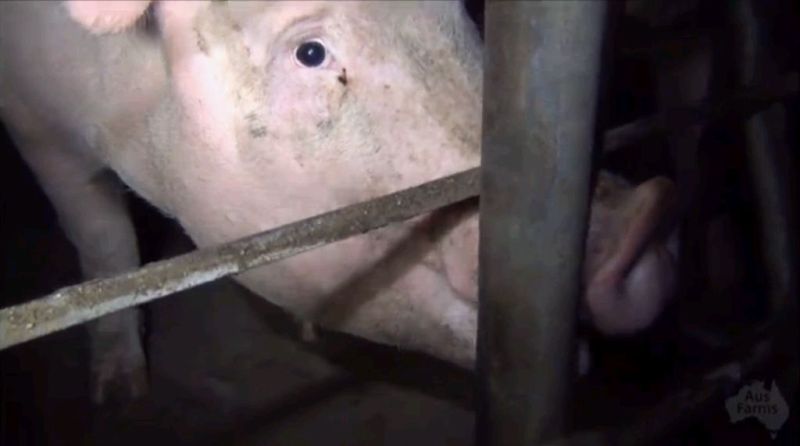
For example, please consider what generally happens to piglets and their mothers, even in most so-called “sow stall-free” establishments:

  • the mother is confined indoors for her entire life, in a continual cycle of pregnancy and birth;
  • she is also confined in a farrowing crate (which is even more restrictive than a sow stall) for twenty-four hours per day for up to six weeks on end;
  • her first view of sunshine is the day she is sent to the slaughterhouse once she can no longer become pregnant;
  • the piglets are killed for meat at between 4 and 12 months of age (often 5 to 7 months) when they would otherwise live for 10 to 12 years;
  • their tails are cut off without pain relief in the first few days of life;
  • large pieces are “notched” from their ears without pain relief;
  • their teeth are clipped to the gum line without pain relief;
  • the males can be castrated without pain relief.

These are examples of the cruelty permitted under the inappropriately named Code of Practice for the Welfare of Animals – Pigs – Third Edition, released in 2008.

For more information, please see Melbourne Pig Save and the Aussiepigs website of Animal Liberation ACT and Animal Liberation NSW. If you believe that so-called “free range” is the answer, please see the Free Range Fraud website of Animal Liberation Victoria.

Here’s an incredibly powerful video from Animal Liberation ACT, highlighting the horrific findings of fourteen undercover investigations:

Blog Author: Paul Mahony (also on on Twitter, Slideshare and Sribd)

Related Posts:

Pig Cruelty with Curtis and Coles
Some thoughts on “The truth about pig farms”
The plight of pigs: Oliver’s Piggery, Tasmania
Open letters

Image: aussiepigs.com.au

This post first appeared on the Melbourne Pig Save website on 22 December, 2013

Blantyre-3

Would you like to see and hear material about the Australian pig meat industry from two different perspectives? Here are images from Animal Liberation ACT (ALACT), said to be from Golden Grove Piggery and Dead Horse Gully Piggery in NSW, which the activist organisation’s website, Aussiepigs, indicates are owned by Blantyre Farms Pty Ltd, whose shareholders are Edwina and Michael Beveridge .

This slideshow requires JavaScript.

Farrowing Crates and Sow Stalls

The Golden Grove images are of farrowing crates. Despite all the talk and PR in Australia about “sow stall free” pork, there seems to be no suggestion that producers will cease using farrowing crates.

Besides, no-one seems to be suggesting that sow stalls will be eliminated from their supply chain altogether, so “sow stall free” does not appear to mean “sow stall free”.  (Silly me, why should I have thought it would?) Even Coles is allowing sow stalls to be used for up to 24 hours per pregnancy. For as long as stalls remain, how can we be sure that each sow will not be confined for longer than the permitted period?

One of the images above appears to show a piglet who has been crushed by his or her mother. The Aussiepigs site states:

“A number of piglets were killed or severely injured by ‘overlay’, where the sows lie on top of their piglets, crushing them. The industry claims farrowing crates prevent overlay. Yet the footage from Blantyre Farms completely undermines such a claim. The footage shows that where sows have difficulty standing or lying and cannot move away from their young, and where piglets have little room of their own, overlay is inevitable.”

In his book “The Pig who sang to the Moon”, author Jeffrey Masson described a sow’s nesting process:

“In the wild, . . . sows getting ready to give birth will often construct protective nests as high as three feet. They line these farrowing nests with mouthfuls of grass and sometimes even manage to construct a roof made of sticks – a safe and comfortable home-like structure. On modern pig farms, where the mother is forced to give birth on concrete floors, her babies are often crushed when she rolls over. This never happens in the wild because the baby simply slips through the nest and finds her way back to her own teat.”

The Industry’s Position Regarding the Role of Animal Activists

You can hear Ms Beveridge’s comments regarding the activists investigations, along with comments from Andrew Spencer of peak industry body Australian Pork Ltd, in this report of 5th November 2013 from the ABC’s Lateline program.

Edwina Beveridge appears to be a respected pig meat producer. So is Ean Pollard of Lansdowne Piggery, who also appears in the Lateline segment. His piggery was investigated by ALACT earlier this year. They are two of eleven piggeries that ALACT have secretly investigated to date.

In my opinion, the message is one of consistent horror, yet all the industry seems to do is attack the activists.

What About Free Range?

Another producer, Otway Pork recently lost its “Paw of Approval” accreditation from the RSPCA, after Animal Liberation Victoria exposed its so-called “free range” operations. According to The Age newspaper, the RSPCA earns a royalty in exchange for its “Paw of Approval” accreditation equal to 2% of product sales. The RSPCA does not appear to have stated publicly its reason for removing Otway Pork’s accreditation. According to ALV, the RSPCA saw the undercover footage of Otway Pork in December 2012, but “the endorsement was underhandedly withdrawn in July this year”, a delay of eight months.

Some More Thoughts on Animal Cruelty

If you eat pig meat, who can you trust in terms of animal cruelty and product quality? In any event, much of the cruelty is perfectly legal, due to exemptions from anti-cruelty legislation in favour of producers.

One of those forms of cruelty is tail docking without anaesthetic. Here’s some more from Aussiepigs in relation to the Golden Grove and Dead Horse Gully Piggeries:

“Workers at Blantyre Farms’ Golden Grove Piggery cut off the tails and teeth of piglets, and cut sections out of their ears, all without pain relief. Tails are discarded in the aisles and sometimes even end up in the food trolley. Tail cutting is performed by the majority of piggeries in Australia as an attempt to prevent cannibalism (tail biting) once the pigs are moved into overcrowded ‘grower’ sheds which completely lack stimulation. Despite the tail cutting, Blantyre’s grower facility, DHG, has a severe cannibalism problem.”

“At DHG, pigs are crammed into overcrowded sheds where they do not see sunlight until they are being trucked off to the Cowra abattoir. Out of boredom, they eat at the stubs of each others’ tails, leaving large bleeding wounds. From the nature of the wounds, it appears that little or no effort is made to treat these injuries.”

The best way to avoid cruelty to animals is to stop consuming products and services derived from them in the form of food, clothing, entertainment and the like.

Blog Author: Paul Mahony (also on SlideshareScribd, and Twitter)

Edits 17th January, 2014: (a) Images added to gallery, including some that are said to be from Dead Horse Gully Piggery; (b) Reference to Animal Liberation NSW deleted, as the Aussiepigs website now only refers to Animal Liberation ACT.

Related articles and other material:

Pig Cruelty with Curtis and Coles

Some thoughts on “The truth about pig farms”

More on our open letter to Tammi Jonas of Jonai Farms

Open letter on free range pig farming

Wilbur’s Woes

The plight of pigs: Oliver’s Piggery, Tasmania

The Australian pig meat industry via Melbourne Pig Save

Images:

Courtesy of aussiepigs.com

998602_10151673410472384_21498128_n

This month’s edition of The Australian Women’s Weekly magazine included a six-page article by Mark Whittaker on the Australian pig meat industry, titled “The Truth About Pig Farms”. Here are my thoughts:

  • It was interesting that the journalist, Mark Whittaker, had already arranged to visit Ean Pollard’s piggery just before its sow stalls were filmed by activists.
  • Whittaker seemed blasé in reporting the results of tail docking: “He [Pollard] points out some piglets smeared with a little blood from where their tails were cut off this morning. ‘They clean themselves up’ he says, pointing to another crate. ‘See, this lot were docked four days ago and they’re fine.'”
  • He was similarly blasé in reporting sows transferring from weaning to insemination: “The mothers get about a week off before they are inseminated and sent off to the area which has been a subject of much contention, the sow stalls.” His apparent attitude seems to highlight the fact that sows are considered to be production machines.
  • In describing Animals Australia’s “Make it Possible” advertisements, Pollard says, “These ads are all emotive. They dress it up with sympathetic music.” So meat, dairy and egg producers never undertake similar PR practices?
  • I was pleased to read that Lisa Chalk of Animals Australia had “warned” Whittaker that the industry would “put up . . . their best intensive pig farm in Australia”, and that they wouldn’t call it a factory farm. She was correct. Pollard calls it “indoor farming”. (Does that sound much more attractive?)
  • Chalk cited the case of Westpork in WA, where the activists’ video showed “hundreds of pigs living in muck”. “Porker wallow in excrement. There’s one dying, struggling to keep its snout above the level of faecel goop. A few dead ones are piled outside.” (It’s a shame that Whittaker refers to the pigs as “it”, rather than “he” or “she”.)
  • Whittaker reports that supermarket chain Coles’ “sow stall” free pig meat comes from sows who still live their 16 week pregnancy on “hard, slatted floors”. It would be impossible to follow their instincts in such surroundings.
  • He also reported that “Coles says it is now 100 per cent sow stall free.” That statement is only likely to be correct if Coles only sells home brand pork, because that’s the only brand it has committed to being sow stall free.
  • Whittaker spoke to Emily McKintosh of peak industry body, Australian Pork Ltd, who claimed that animal activists who enter industry properties “think they are above the law”. However, a key problem for animals is that industry members who mutilate them without anaesthetic or who confine them indoors for the entire lives, or in sow stalls and farrowing crates for extended periods, are protected by the law. If they were to treat domestic pets in that way, there’s a reasonable chance they would be prosecuted. In any event, there are many examples where activists have discovered practices that went beyond the law. Would those practices have ever been discovered without their involvement?
  • An activist who posed as a worker at a northern NSW piggery described “pigs getting dragged by their ears and being shot in the head . . . all their tails getting cut off, their teeth getting pulled with no anaesthetic. . . . Every day, you’d see animals getting hit with things. Dragged around, kicked around, sworn at, screamed at, things thrown at them. They use cattle prods and all that stuff as well.” He described a co-worker grabbing a sick piglet by the hind legs and smashing his or her head into the concrete.
  • Some unfortunate terminology was used in relation to free range farmers Matt and Sue Simmons, e.g.: they have been “growing pigs” for five years; Matt said the piglets “stay outdoors until they go to chop chop”.
  • There were some interesting insights from them too. The mainstream pig meat industry claims that farrowing crates are used in order to protect the piglets, yet Matt sees less mortality without the crates than what occurs with them. Also, “A lot of people have this romantic idea of free-range pig farming, but it’s still got to be intensive enough to be profitable”. Also, he said “you can’t farrow [give birth] in a crate”, but that’s what sows are being forced to do, as demonstrated at around the 2:20 mark in this 2009 video of Bangalow Pork in Queensland (“Super Butcher: from farm gate to your plate”).
  • Some comments from Lee McCosker of Humane Choice regarding free range: “A lot of people probably think they’re doing the right thing by buying ‘bred free-range’ or Coles Finest free-range or Primo free-range in Woolworths. Those farms, no one even knows where they are. There’s no transparency. . . . a lot of them say they are RSPCA accredited. But the RSPCA doesn’t accredit free-range” . . . “there is no legal definition of free-range”. She describes “bred free-range” as “half-hearted free-range, where the sows give birth outside, but the piglets are put inside after weaning at three to four weeks”.
  • Whittaker wanted to see a “bred free-range” system at Otway Pork, who supply Coles. However, Otway declined, “citing bio security”. Whittaker said: “It didn’t fill me with confidence in their transparency or the physical resilience of their animals.”
  • Whittaker’s concluding comments: “I began researching this story expecting to be horrified by intensive pig farming. Indeed, the YouTube videos of the Gingin [Westpork] piggery confirm that the worst is possible and that the animal liberationists have an important role to play in continuing to push for improvements. Yet the activist’s video of Ean’s farm [Lansdowne piggery] also demonstrated that cruelty is in the eye of the beholder. Farmers are improving in response to the pressure. Ultimately, though, it is the consumer that will drive this bus and they have to be prepared to pay to get to their chosen destination.”

Conclusion

Although I feel that Whittaker did a reasonable job in preparing the article, I wonder how anyone would feel if they were castrated, had their teeth clipped, tail cut off (if they had one) or ears notched, all without anaesthetic, or were forced to live their entire life indoors. The idea of cruelty being “in the eye of the beholder” wouldn’t offer much comfort in such circumstances.

Blog Author: Paul Mahony

Image: Extracted from the video “Australian sow stalls at Westmill Products ‘Lansdowne’ Piggery NSW, 2013”, courtesy aussiepigs.com.au

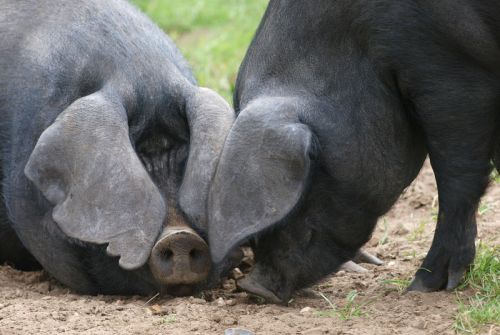
Two rare breed Large Black pigs, like those at Jonai Farms

This is an open letter to Tammi Jonas of Jonai Farms in relation to a project recently launched by ABC Radio National’s Bush Telegraph program.

The letter was prepared by Paul Mahony on behalf of Melbourne Pig Save and co-signed with MPS co-founder Karina Leung. It first appeared on the Facebook pages of Melbourne Pig Save and the ABC’s Bush Telegraph program, and in the comments section of the article “Why we will be castrating Wilbur 101” (refer below).

The program’s web page introduced the exercise this way:

RN’s chronicler of all things rural – Bush Telegraph – is staging a bold experiment, raising a pig to start a debate about free range farming and animal welfare. Over the coming months you can decide how to rear Wilbur 101 by voting in our Facebook polls

Here are links that provide some additional background:

Should we castrate this pig?“, Bush Telegraph, 16 May, 2013

Wilbur’s Woe’s“, Paul Mahony, 21 May, 2013

Why we will be castrating Wilbur 101“, Tammi Jonas, 22 May, 2013

Farmers choose to castrate Wilbur 101“, Bush Telegraph, 23 May, 2013

Bush Telegraph Facebook page

Bush Telegraph Facebook voting page

Humane Choice “True Free Range” Standards – Pigs – 2011 – Version 1.1 (Refer to Section 15.2, page 12)

OPEN LETTER TO TAMMI JONAS OF JONAI FARMS
129 Morgantis Rd, Eganstown, Victoria, 3461
4th June, 2013

Dear Tammi,

We’ve been following your “bold experiment, raising a pig to start a debate about free range farming and animal welfare”.

In the article dealing with your decision to castrate Wilbur, you said that you had asked omnivores to vote, not vegans. However, we could not see where the voting was intended to be limited in that way. We are vegans, and feel that we have a right to respond to a question asked by our national broadcaster, the ABC.

You have mentioned that you’ve been farming free-range rare breed Large Black pigs for a year and a half. You have also indicated that you had not previously used anaesthetic when castrating piglets, and initially did not intend using it for Wilbur. We note that you subsequently decided to use it for him as a result of feedback on Facebook.

We are concerned that it took the Facebook discussion for you to eventually decide on that approach, particularly when the Humane Choice “true free range” standards for pigs stipulate that anaesthetic should be used. However, the discussions on this topic in Facebook and on the Bush Telegraph forum have highlighted the lack of uniform, legally enforceable standards for free range farming.

Even the Humane Choice standards appear to allow ear notching without anaesthetic, provided it is “shown to be necessary”. The standards refer to the practice as “surgery”, rather than “mutilation”, which is not permitted.

Whether it is “surgery” or “mutilation”, we would like to think that anaesthetic would be used.

We understand from your radio interview with Cameron Wilson that ear notching occurs at Jonai Farms.

If you had intended from the beginning to use anaesthetic for Wilbur’s castration, the outcome of voting may have been different to that which eventuated.

Although vegans generally seek to avoid all forms of animal exploitation, when dealing with a situation where an animal is to be exploited regardless of their actions, they will almost invariably aim for the approach that involves the least suffering. If they could have been convinced that the castration option represented such an approach, then they may have supported it. Many voters may have been unaware that you changed your position on the use of anaesthetic, or may have voted before you did so.

Despite being treated better than pigs in factory farms, Wilbur is clearly a commodity who was brought into the world to be killed and eaten. His full name, “Wilbur 101”, appears to be consistent with that understanding when one considers the fact that all male pigs on your farm are named Wilbur. Each of the pig’s name is distinguished from the others’ names by a number, so each “name” is effectively just a number.

You’ve suggested that your pigs have only “one bad day”. But what a bad day it is! Here’s how Patty Mark of Animal Liberation Victoria described her experience of seeing a free range pig awaiting slaughter:

“The most prolonged suffering I’ve ever had to witness was in New South Wales when a free-range pig was approaching the stunner. She was hysterical, frothing at the mouth. Her chest heaved and caved as she struggled valiantly and continuously to escape. I ached to yell out, ‘Stop, enough!’ and hold her in my arms, soothe her, give her a drink of cool water, then take her to a safe place. Smoke rose from her temples as the man held the electric stunner firmly, longer than normal, to both sides of her head.”

Apart from the terror experienced by that poor pig, any day when your life is taken from you in order to satisfy the unnecessary culinary habits of humans would represent an unjust and horrific experience.

Besides, we believe the day of castration or ear notching (or other relevant procedures) without anaesthetic would have been another “bad day” for your piglets.

You have said: “Unfortunately, while the omnivorous public might have wanted to discuss the practicalities and ethics of castrating boars, a significant number of those opposed to eating meat joined the discussion and turned it into a rant against us, farmers generally, and meat eaters specifically. We were called ‘sick freaks’, ‘Neanderthals’, and ‘animal abusers’, to name some of the milder insults.”

Please note that we have not used terminology of that type in any comments. We simply aim to inform people of the facts behind their animal consumption, to assist them in purchasing in an informed manner.

We would be pleased to discuss these issues with you at any time that was convenient.

Kind Regards,

Karina Leung and Paul Mahony
Melbourne Pig Save

Image: Two Black Pigs © Nigel Baker | Dreamstime.com

The “Bush Telegraph” program on the Australian Broadcasting Corporation’s Radio National recently launched an exercise on Facebook involving a so-called “free range” piglet. The piglet was selected from his litter to carry the pre-determined name of Wilbur 101. I prefer to call him Wilbur, without the number.

Black piglet

Black piglet (not the “Large Black” breed like Wilbur)

This is how Bush Telegraph introduced the story on its web page:

Stuart and Tammi Jonas of Jonai Farms in central Victoria have agreed to let you decide how best to rear one of their pigs. They’ve given Bush Telegraph custody of a newborn male Large Black piglet called Wilbur 101. Wilbur 101 will be ready for slaughter by about Christmas, between now and then it’s up to you to vote in regular online polls and decide how best to be a free range farmer.

The first decision was whether or not to castrate Wilbur. The “no” vote won, but as in all decisions involved in the exercise, the farmers reserved the right of veto if they believed the majority decision would be contrary to Wilbur’s interests.

Implicit in the exercise is the assumption that we have the right to control the lives of animals from before they are born, when we decide to impregnate the mothers-to-be, until we decide when and how they will die.

The supposed benefits of free range farming, relative to the alternatives, seem to sit within those parameters.  While better for animals than alternatives such as factory farming, I find free range farming unacceptable, as I do not believe we have the right to control animals’ lives solely for our benefit.

Here’s a link to another Bush Telegraph page on this subject, including an audio file containing an interview between the host, Cameron Wilson, and farmers Stuart and Tammi Jonas. This extract highlights some of my main concerns with the position of the farmers:

Cameron Wilson: And Stuart, it’s important to point out here that we’re talking about a food production system; our program is not taking hold of one of these piglets as a pet at all, this pig will be ready for the kitchen table by the end of the year.

Stuart Jonas: Yes, and just back-tracking a little bit, I don’t personally like the word “processed”. We don’t process production units; they are living, breathing creatures that we care for, and at the end of the day, they are food and we do send them to the abattoirs and then cut them up, ready for meat products on our table. But just a personal choice of mine, I steer away from the word “processed”. We kill them, we cut them up and then we eat them.

Cameron Wilson: Killed and butchered?

Stuart Jonas: Yes.

I struggle to hear much compassion or empathy in Stuart’s comments. I doubt they’d provide much comfort to Wilbur.

The comments caused me to recall some words from Patty Mark, founder of Animal Liberation Victoria:

The most prolonged suffering I’ve ever had to witness was in New South Wales when a free-range pig was approaching the stunner. She was hysterical, frothing at the mouth. Her chest heaved and caved as she struggled valiantly and continuously to escape. I ached to yell out, “Stop, enough!” and hold her in my arms, soothe her, give her a drink of cool water, then take her to a safe place. Smoke rose from her temples as the man held the electric stunner firmly, longer than normal, to both sides of her head.

Lee McCosker, Chief Operating Officer for Humane Choice, participated in the discussion on Radio National’s Facebook page. Humane Choice is part of Humane Society International. Its website states, “Humane Choice True Free Range is a whole of farm accreditation system for Australian and New Zealand true free range, pasture raised pork, beef, lamb, chicken and egg producers.” Here is one of Ms McCosker’s comments, along with my response:

Lee McCosker: I think it should be noted that all rational discussion on the actual question asked has ceased and the voting has become about should we eat meat. The reality is that 5,000,000 pigs are slaughtered here every year and sabotaging this post is not going to change that. What we can change is how these animals are farmed and educate the meat-eating public. Trying to force your choices onto others is fruitless. I understand why you have chosen not to eat animal products but you are a minority. Lets get back to the question at hand or forget it. Either way it will not change Wilbur’s fate. Sensible discussion however may impact on how he lives until that final day.

Paul Mahony: Lee, just because we are the minority now, doesn’t mean we will always be. Whatever the decision, Wilbur is being treated as a commodity. Would a pet dog or cat be treated this way? People should respect the right of all animals to live and to be treated with dignity. That includes the avoidance of forced breeding programs. What right do we have to bring animals into the world, simply to be killed for food? Humans are the only species that controls other species in that way.

Although domestic pets are regularly sterilised, the procedure is not related to any desire to eventually consume them as food.

A particularly interesting aspect of this exercise was the initial decision that anaesthetic would not be used if Wilbur was castrated.  That decision reflected standard practice of Stuart and Tammi Jonas, but was contrary to Section 15.2 of Humane Choice’s standards for pigs. The farmers’ position in this instance seemed to reflect the lack of uniform standards for free range farming.

Based on feedback received on the Facebook page, the farmers subsequently decided that anaesthetic would be used if Wilbur was to be castrated.

Here’s a comment from another participant in the discussion, along with my response:

Michael Trant: Look at it this way. Livestock are raised to be eaten. They get access to feed, water, protection for predators, immunized against disease and other such. Compare that to a wild herd of wilderbeaste [sic]. When the rains don’t come, no one is there to feed out hay, make sure their water hole still has water. If one breaks its leg, no one is there to put it down, instead it hobbles along for weeks until it either dies from starvation or a lion crushes it throat. Nature is a cruel mistress, and the price livestock pay for not having to worry about all those nasty things is they get a quick death and we eat them. Anyone who thinks a natural death in the wild is better than a knife to the throat has frankly lost touch with nature.

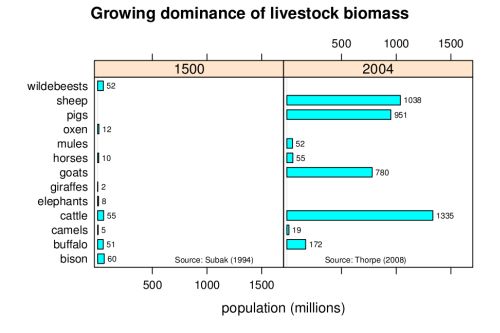
Paul Mahony: Michael, why are we forcing animals to breed for our benefit, when we could probably overcome world hunger without relying on them as a food source? The scale of the horror involved in animal agriculture goes way beyond what animals, through natural breeding, would ever have experienced in the wild. The chart “Growing dominance of livestock biomass” in this post gives some idea of the numbers involved.

rsubak-500-333

Geoff Russell, bravenewclimate.com


Additional comments (not on Facebook):

Geoff Russell, who created the chart, has pointed out that current livestock populations dwarf natural populations that preceded them.

He states: “Wildlife rates of conception, growth, and the like don’t match what can be achieved by artificial selection, artificial insemination, good fences, irrigated feed production, predator extermination and all the other paraphernalia of modern agriculture. These have produced a totally unnatural and unprecedented explosion in numbers of those animals which people have designated as livestock.”

Polly Pig

Ironically, on the day that voting ceased (three days after it started), I was able to post this comment on Facebook, following a post from Edgar’s Mission Farm Sanctuary. It highlights the true nature of pigs, as intelligent and sociable animals.

This is very timely. Polly Pig from Edgar’s Mission Farm Sanctuary today won the “Best Trick” competition at RSPCA’s Million Paws walk at Victoria Park Lake, Shepparton. An extract from the report below: “Common heard cries were ‘oh, she’s adorable’, ‘I just love her’, ‘gosh, I’ve never had a chance to meet pig before’, ‘look she’s smarter than my dog’ but no doubt the most heart-warming phrase we heard was ‘wow, I’m never going to eat bacon again!'”

Go Polly! You’re a magnificent ambassador for your species, and for all animals.

970880_10151896765465130_634135416_n_400_266

Make History!

In conclusion, I argue that it’s time to move on from entrenched social, cultural and commercial conditioning. In the words of the Vegan Society, UK, it’s time to make history.

Blog Author: Paul Mahony (also on on Twitter, Slideshare, Sribd and Viva la Vegan)

Images:

Black piglet © Kornilovdream | Dreamstime.com

Polly Pig at RSPCA’s Million Paws walk, Victoria Park Lake, Shepparton, 19th May, 2013, Edgar’s Mission Farm Sanctuary

Livestock biomass chart:

Russel, G. Forget the quality, it’s the 700 million tonnes which counts, 17 Nov 2009, http://bravenewclimate.com/2009/11/17/700-million-from-livestock/, citing Subak, S., GEC-1994-06 : Methane from the House of Tudor and the Ming Dynasty, CSERGE Working Paper, http://www.cserge.ac.uk/sites/default/files/gec_1994_06.pdf and Thorpe, A. Enteric fermentation and ruminant eructation: the role (and control?) of methane in the climate change debate, Climatic Change, April 2009, Volume 93, Issue 3-4, pp 407-431, http://link.springer.com/article/10.1007%2Fs10584-008-9506-x

Edits:

23 May, 2013: Correction of typing error

Guest post by Liz D

This guest post by Liz D is the third in a series on the nature of chickens. I aim to demonstrate that chickens are individuals, with their own lives and personalities.

Liz plunged into the world of chickens when she took in nine rescued chicks early in 2013.  Her new friends have etched a place in her heart, and she could no longer imagine living without companion chickens.  Paul Mahony

Early days

In the past I’d always interacted briefly with other people’s chickens. I’d never lived with chickens nor had ever known any personally or up close for any length of time.  I’d always thrived on other people’s stories of how individual and amazing chickens are.

In January 2013, I was given the opportunity to raise nine rescued one day old broiler (meat) chickens. They lived in my bedroom with me for the first four weeks, to be kept cool in the hot weather and warm at night under a heat lamp.

They were adorable little balls of fluff who from that very young age, had a vested interest in being alive.

2013-01-08 11.25.23-500-350

Adorable balls of fluff with a vested interest in being alive

Exploring

They explored their pen, pecked the eyes out of the toy bears I gave them to cuddle up against, huddled together under a rope mophead, as though it was their mum’s wings and coveted the food dish. They loved sleeping together on heat pads and under their heat lamp.

Four of them were easily identifiable by distinct markings, so they were named first. Blackie, Spot, Trouble and Tiny

Eventually I named the rest Big Wing, Gusto, Heckyl, Jeckyl and Gigi.

They were such happy and inquisitive little beings, always interested in everything going on around them.

Gigi in the mirror-250

Gigi: “I just can’t get this mascara right!”

One day I caught Gigi looking at herself in one of the dog’s upturned toys, which had a mirror on the base. She sat there for some time, no doubt thinking how pretty she was.

On warm days I’d load them all into a cat carrier and take them to the outside run that was set up for them. They explored their surroundings extensively, looking at sticks and bugs, and sometimes just all sitting together looking out at the garden, watching life around them.

Oh no, not the vet!

At about one week, Tiny, named because he wasn’t growing like the others, had a trip to the vet to get checked out. The vet, who said she’d never treated a chicken as young as Tiny, and didn’t really know all that much about them, suggested putting him to sleep, as he seemed to have a congenital disorder in his stomach. We took no notice of her and administered some antibiotics and lots of TLC and Tiny started to flourish and grow. He is now a feisty, happy boy.

To this day though, he doesn’t like human contact and I wonder if it was because he remembers being poked and prodded at a young age, and also having medicine syringed down his throat for five days.

Gigi is a special needs girl, as she doesn’t have strong enough bones to allow her to walk and run properly. She also had a trip to the vet at about 3 weeks old and had to be given medicine for 10 days, and isn’t so keen on being picked up or touched either, whereas Spot and Jekyl love a good scratch under the chin and a cuddle.

They say that dog’s neuroses and fears stem from the first three to four weeks of their lives, I wonder if chickens are just the same?

Now, where did I put that stick?

One day, when they were about 2 ½ weeks old, they were in the outside pen, and I had to pick up one of the girls to check her weight. She had a bit of a stick in her beak that she’d been squabbling over with another chicken, and when I picked her up, she dropped it down between my feet. I quickly weighed her and put her back down on the floor, and she ran off, then stopped suddenly, as though she remembered something and dashed back and picked up the piece of stick she’d dropped and took off again. This really displays an intelligent thought process and memory.

Just like the Waltons

I’d get home from work each night about 11 o’clock and the chicks would all cheep and chirp as I’d get into bed. Some of them would climb up on a box and peer at me sitting up in bed, wondering what I was up to. They would reach a crescendo before finally all settling down for the night. Sometimes one would then start again and I would often have to ask them all to please keep it down so I could get to sleep.

I didn’t want to plunge them into darkness, so I slept with a string of lantern lights on every night. Plus it meant that I could sit up and just look at them whenever I wanted to.  I loved hearing them all make contented little sounds as we all nodded off for the night, me, our two dogs, the cat and the nine chicks.

A big step

They graduated to a permanent outside pen at four weeks old, when they were almost fully feathered. The first night they stayed out there on their own, I was so worried about them, I got up and checked on them about three times.  I spent a lot of time just watching them grow, as being bred for meat, they have been bred to grow quickly. They almost grew feathers before my eyes.

At five weeks old, four girls Gusto, Blackie, Big Wing and Hekyl went to live at their new “forever” home. The next week, one of the boys, Trouble (now called Fabio), went to his wonderful new home too. While it was lovely having all nine here to watch and interact with, having Gigi and the three boys, Tiny, Jekyl and Spot left, meant I could really concentrate on getting to know them well.

A hot summer!

On hot days I spread out wet towels on the concrete to keep them cool and they would go mad “dust-bathing” on the towel until they were in just the right spot.

Keeping-Cool-500-333

Keeping cool on a wet towel

Tiny loves water running over his feet or standing in the water tray to cool off. They all love watching water run down the path, and love to pick things out as they float by.

Come and get it!

Watermelon is their favourite food, and I just have to yell out “’Watermelonnnnnn” from the shed door, and they’ll come running. Our youngest dog Ivy, has suddenly decided she likes watermelon too, as she is jealous of the chickens I think. The only fruit she’ll ever eat normally is apples. Jekyl has been known to jump up and pluck the chunk of watermelon from my hand if he thinks I’m too slow at putting it down for them. They hang around the shed door, as they know that their food comes out of there. If they think they should be fed outside of their meal time, they will venture into the shed and sit there until I come out, then they’ll make a racket and follow me until I give in and give them a snack. Jekyl likes to talk a lot in a little chuckling voice.

Meal time is funny to watch. When I let them out of their hutch in the morning, they chase me to the shed and storm in surrounding me while I get their breakfast ready. Tiny then stands in the food tray and scratches it up, Spot lays down and hangs his head over the side to eat. Gigi is a lady and has very good table manners.

Jekyl will eat seed for a while, then a bit of watermelon, then he’ll walk away and sit down with his back to everyone. Then he will suddenly get up like he’s remembered he was doing something important and go back and repeat the whole thing over about four times until he’s finished eating.

My partner, Chris, is their evening carer and builder of great chook sheds. He has built them a little palace that they sleep in at night.  They are free to roam around the garden until bedtime. When Chris gets home from work, his initial routine was to walk the dogs, then feed the dogs, cat and chooks in that order. Well the chooks weren’t having any of that and after about one week of this, they’d storm the back step demanding he feed them first. He of course gave in and they now are top of the list.

http://vimeo.com/62907579

Video: Dinner time for the chooks

Mutual respect

They are not afraid of our dogs and cat, and often I go out and the cat is lying in the middle with the four chooks laying around him. Tiny likes to walk under Ivy’s belly. They all seem to have worked out a mutual respect for each other.

The other day I went out into the garden and I could only see Gigi, Jekyl and Tiny. Our yard is extremely secure and there is no way that they could get out. But I couldn’t see Spot anywhere and my heart started to race. I ran down the back calling Spot, Spot, where are you? And he came running up to me as if to say, I’m here silly!! He was sleeping under the cool of a fern. Phew! I’m glad he knows his name!

When it gets near bedtime, Tiny is usually first to go in the hutch. When no one follows him, he’ll go back to the group and try and get them interested in following him. When he realises no one is taking any notice of him, after about 3 attempts he gives up and sits out with the others. When he does this, one of them decides it IS time to go to bed and they all toddle off. I’m sure they do it to annoy Tiny and have a laugh at his expense.

Reminiscing

Some days they like to come back up near the house and try and get into the hutch they spent a couple of weeks in, before they were big enough to roam free. They hang out at the door until I open it and then hop in and sit for a while, to reminisce I guess! Back to their old stomping ground. Then they’ll all hop out and go back to the garden.

If Chris is working in the shed, the chickens will usually follow him and sit around watching whatever he’s doing. When he was out there playing his guitar last week, Jekyl was making howling motions like a dog!! Chris couldn’t hear if he was making any noise though, as Jekyl stopped every time Chris stopped playing.

We will miss the boys

The chickens give us so much pleasure and are a joy to have living with us. As three of them are boys who will soon be roosters, they will have to go to their new homes, as roosters are not permitted in the suburbs. That is going to be a very sad day and I’m going to miss them terribly. I guess it just means we’ll have to get some more girls to keep Gigi (and me) company!

Da boyz-500-338

“Da boyz” in the early days. They will be greatly missed.

Having now lived with and experienced life with chickens, I can’t imagine not having them as companions.

Liz D (Edited by Paul Mahony)

Do you have any thoughts? We’d love your feedback or some news of your own experiences in the comments section below.

See also:

Saving Ester by Chantal Teague

When you’re adopting chickens, life’s like a box of chocolates by Tamara Kenneally

Confidential sources within the Australian Labor Party have indicated that there is a plan to draft the charismatic celebrity, Polly Pig, to their ranks. This move follows the aborted coup attempt this week, when Kevin Rudd declined to challenge Prime Minister Julia Gillard after being called upon to do so by former leader, Simon Crean.

We understand that Polly could not be happier in her current ambassadorial role with Edgar’s Mission Farm Sanctuary, but she may be tempted by a sense of duty to her country.

Indeed, we wonder if she may have already been considering the possibility, as some of her recent outings have resembled election campaign rallies.

One example was a recent open day at Melbourne University.

New Image-333-444

Polly sure is a big crowd-pleaser (Melbourne Uni)
Photo: Karina Leung

There was also the rally of animal rights group, Melbourne Pig Save, earlier this month, when Polly was mobbed by supporters in Melbourne’s busy Bourke St Mall.

481067_555474947818821_767222575_n-500

Polly basking in her fame. It’s best to keep the paparazzi happy if you can.
Photo: Jo-Anne McArthur | weanimals.org

Like most aspiring Australian Prime Ministers, Polly was keen to demonstrate her sporting prowess. On this occasion she chose the round ball game, scoring a magnificent goal with ease. Other talents were also evident in this short video.


Polly’s performance at the rally brought back memories of her victory in the RSPCA Million Paws Walk Best Trick Competition. Polly said proudly at the time:  “I beat all the dogs!”

The drafting of a leadership candidate in this way, should it proceed, is reminiscent of Bob Hawke’s ascent to the Prime Ministership for Labor in 1983, and the recent election of Queensland Premier Campbell Newman, representing the Liberal Nationals.

Polly would also not be the first media celebrity to be drafted. An example was former lead singer of rock band Midnight Oil, Peter Garrett, who is currently a minister in the Labor Government.

We wish Polly well if she accepts the challenge. We are confident that the standard of governance in this country would improve immeasurably.

For more information, please see:

facebook.com/MelbournePigSave
facebook.com/edgarsmission
edgarsmission.org.au/

Blog Author: Paul Mahony

Music in video: “Sometimes” by Steve Romig

Disclosure: The blog author is a co-founder of Melbourne Pig Save.