Archives for posts with tag: livestock

26598176002_10e33f86d7_o

It may be easy to assume that an organisation with the word “youth” in the title is progressive. However, there have been exceptions in the past, and sadly, it seems there are today.

I have commented previously on Australian Youth Climate Coalition’s failure to adequately consider the impact of a major contributor to climate change, animal agriculture. [1]

This article focuses on Youth Food Movement Australia (YFM) and its collaborations with Meat & Livestock Australia (MLA).

What are YFM’s mission and objectives?

Something I find a little confusing is that YFM has two mission statements.

Mission Statement as described on YFM’s website:

“To build a healthy and secure food future for all Australians.” [2]

Mission Statement as described on YFM’s 2015 annual statement to the Australian Charities and Not-for-profits Commission (ACNC):

“To grow a generation of young Australians empowered with the ability to make healthy and sustainable food choices.” [3]

The first is far broader than the second, with no hint as to which one actually applies. Neither seems to be adequately supported by the organisation’s actions, as referred to below.

YFM’s objectives (with my underlines):

Educate and empower Consumers to make informed decisions regarding food systems; including, health, environmental, biodiversity and equitable [sic] issues surrounding how food is bought, consumed and disposed of locally and in Australia.

Facilitate and organise networks and events for Producers and Consumers to strengthen individual activism and community projects and to raise awareness of food related issues as a platform for knowledge exchange and communication.

Publically [sic] advocate and make written submissions on issues of food sustainability and equality on behalf of Producers and Consumers to any Commonwealth, State of [sic] any other governmental authority or tribunal to further the advancement of food policy in Australia. [3]

That may be a mouthful, but YFM seems to be claiming it is concerned about:

  • human health;
  • the environment, including sustainability and biodiversity;
  • equity (assuming that’s what it means when referring to “equitable issues” and “equality”).

The objectives raise a key question:

As part of its objective to “educate” consumers, why does YFM largely ignore the negative impacts of animal agriculture on animals, the planet, human health and social justice?

The social justice issue partially arises from the fact that animal agriculture is a grossly and inherently inefficient way to obtain our nutritional requirements. A 2013 paper from the Institute on the Environment at the University of Minnesota indicated [4]:

“The world’s croplands could feed 4 billion more people than they do now just by shifting from producing animal feed and biofuels to producing exclusively food for human consumption.”

Animal feed crops represent 90% of that figure (in turn representing 3.6 billion people), and biofuels only 10%.

Although the authors were not advocating for another 4 billion people, the transition would enable us to feed the nearly 800 million people who are chronically under-nourished, provided we were willing to share the benefits fairly. [5]

YFM’s failure to adequately consider livestock’s negative impacts is particularly concerning when it states:

“We simply advocate for the importance of understanding your food.”

It claims that two of its values are authenticity and transparency, but are they evident?

Contrived PR?

YFM seems to try hard to match its language to that of its target market, but I find it tiresome and contrived. Here’s an example from its “Spoonled” anti-waste page:

“Gen-Y (18-30) we’re lookin’ at’choo.”

Is this really young people talking to young people, or could external PR consultants be involved, such as those used extensively by MLA? [Footnote 1]

Another example was this response when I asked on Twitter about YFM’s 2015 “beefjam” collaboration with MLA (as referred to below):

#beefjam is a project collaboration with @Target100AUS amazeballs crew.”

Amazeballs?

Really?

YFM’s Collaborations with Meat & Livestock Australia

YFM has collaborated with MLA in two exercises; a project known as “Beefjam” and a three-day visit to Bangor Farm in Tasmania. Both were organised in conjunction with MLA through its Target 100 initiative, which it claims involves “100 research, development and extension activities covering soil, water, energy, pests and weeds, biodiversity, emissions and animal welfare”.

I comment on both projects below, but firstly, it’s important to consider some aspects of MLA.

The organisation describes itself as:

“the marketing, research and development body for Australia’s red meat and livestock industry”. [6]

Is the marketing role compatible with legitimate research and development?

The question may be particularly relevant when, in the same description, MLA states (with my underlines):

“MLA’s core focus is to deliver value to its 50,000 levy paying members by:

growing demand for red meat; and

– improving profitability, sustainability and global competitiveness.”

I have challenged material from MLA in my articles “Meat, the environment and industry brainwashing“, “An industry shooting itself in the foot over “Cowspiracy” and “Emissions intensity of Australian beef“.

In the first of those (as an example), I commented on a so-called “curriculum guide” created by MLA for primary school students.

I argued that the guide:

  • inadequately allowed for livestock related water use, land clearing, land degradation (including erosion), loss of habitat and loss of biodiversity;
  • misstated the ability of livestock’s direct emissions to be absorbed by the biosphere;
  • ignored the very significant global warming impact of those emissions; and
  • misstated the extent of modern ruminant livestock numbers relative to historic figures.

I concluded with concern about the PR machine of an industry group such as MLA seeking to influence the thoughts and actions of children via publications represented as legitimate educational tools.

MLA has not limited its reach to the class room, and YFM may represent another means of extending its audience using sophisticated PR techniques.

Beefjam

The Beefjam project occurred in mid-2015. Here’s how YFM described it (with my underlines):

“BeefJam is a 3-day event that takes young producers and consumers on a crash course of the Australian beef supply chain and gives them 48hrs to reshape the way we grow, buy and eat our red meat.

Fifteen lucky applicants – 8 young consumers and 7 young producers – were given the chance to see, hear, smell and touch the whole Australian beef supply chain. That means all the different stages a piece of meat will travel through before it reaches your plate. From farm, to feedlot, to processor (you might know that as an abattoir) and then to retailer, ‘Jammers’ were able to experience the whole system, but also given the opportunity to ask big questions about how we feed ourselves, and the world, as we move into a food-challenged future.

BeefJam culminated with a 48 hour ‘jam’ where young producers and consumers collectively designed and prototyped solutions to challenges surrounding Australian beef.”

It may be insightful that a cow or lamb enjoying a warm day in an open field could be considered “a piece of meat”.

In its article about a visit to a slaughterhouse, we were presented with a photo of twenty-one mostly smiling faces, decked out in biosecurity gear, ready to check out the process. [7] YFM and MLA did not choose a “run of the mill” slaughterhouse for the visit. It was the Stanbroke Pastoral Company slaughterhouse, which the organisation’s website indicates is in the Lockyer Valley, Queensland. According to Stanbroke, it “sets world standards in equipment methods and technology”.

Regardless of what the attendees were shown, no animals at the facility or elsewhere choose to have a bolt gun fired into their skull, then hoisted by a rear leg for the purpose of having their throat cut.

Yet a Beefjam participant in a related video tells us repeatedly that slaughterhouse workers “respect” the animals.

That type of respect is something I could do without.

Some other points YFM and MLA did not raise with Beefjam attendees

Mark Pershin is the founder and CEO of climate change campaign group Less Meat Less Heat. He attended Beefjam, and I asked him about the information the attendees had been provided in their exploration of “the whole Australian beef supply chain”. Sadly, YFM and MLA said nothing about the following issues:

  • the extent of land cleared in Australia for beef production;
  • cattle’s impact on land degradation, biodiversity loss and introduction of invasive grass species;
  • legalised cruelty, such as castration; dehorning; disbudding; and hot iron branding (usually performed without anaesthetic).

slide5-1

MLA claims to be concerned about sustainability, which it suggests includes (in an unusual interpretation of the term) “good animal welfare”. [Footnote 2] Here’s what they’ve said (with my underline) [8]:

“Australian cattle and sheep farmers are committed to producing beef and lamb sustainably . . . For Australia’s cattle and sheep farmers, sustainability isn’t only about the environment, it’s also about good animal welfare, contributing to their local communities, and ensuring that cattle and sheep farming is economically viable for future generations.”

Do the practices described above represent good animal welfare? They may be legal, but that simply means that governments around Australia consider animal cruelty to be an acceptable outcome of producing various types of food we do not need.

In relation to beef production’s environmental impacts, Beefjam attendees were addressed by Steve Wiedemann, who at that time was a principal consultant with FSA Consulting. The firm provides services to the agriculture sector, describing itself as “Australia’s predominant environmental consultancy for intensive livestock industries, environmental and natural resource management and water supply and irrigation”.

Wiedemann was the corresponding author of the paper I commented on in my article “Emissions intensity of Australian beef“, as referred to earlier. [9] [10] I highlighted the following concerns about that paper and/or the related promotional efforts of MLA:

  • Out of date 100-year “global warming potential” (GWP) used for the purpose of assessing the warming impact of non-CO2 greenhouse gases.
  • 20-year GWP should be considered, in addition to the 100-year figure, in order to allow for the near-term impact of the various greenhouse gases. That is a critical factor when considering potential climate change tipping points and runaway climate change.
  • The figures were based on the live weight of the animals, rather than the more conventional carcass weight or retail weight.
  • Livestock-related land clearing is increasing despite MLA’s implication to the contrary.
  • Savanna burning was omitted.
  • Foregone sequestration was omitted.
  • Short-lived global warming agents such as tropospheric ozone and black carbon were omitted.
  • Soil carbon losses may have been understated.

There are many ways to present data and information, and the authors of the paper may legitimately argue that their findings, published in a peer-reviewed journal, were valid. However, there are valid alternative approaches that result in findings that are less favourable to the livestock sector.

When applying only some of the factors referred to above, the emissions intensity of beef nearly triples from the figure estimated by Weidemann and his co-authors. When basing the results on figures for Oceania (dominated by Australia) from the Food & Agriculture Organization of the United Nations (FAO), there is a 5.6-fold increase from Wiedemann’s figure. [Footnote 3]

Some footage YFM and MLA did not show Beefjam attendees

If you’d like to see some of the reality of Australian cattle and lamb slaughter (a key component of the industry serviced by MLA), you can check out undercover footage from the Aussie Farms website here and from Animal Liberation NSW here. [11] [12] Warning: Graphic footage.

As stated in the first video, every year, around 17-19 million lambs are killed in Australian slaughterhouses at around six months of age. Due to the high demand for meat and the resultant speed of the process, many are killed without being properly stunned. Many in the videos writhe on the kill table before and after having their throat cut.

What were the outcomes of Beefjam?

As stated earlier, YFM has reported that Beefjam participants collectively designed and prototyped solutions to challenges surrounding Australian beef.

But where are the details?

For such a commitment in terms of time and money, the output from the event seems incredibly scant.

Bangor Farm, Tasmania

While “Beefjam” involved YFM and Target 100 selecting the “lucky” participants, the role was left solely to Target 100 for the three-day visit to Bangor Farm in Tasmania.

And who should be among the three participants this time? None other than YFM co-founder, Joanna Baker. [13]

As with the slaughterhouse mentioned earlier, Target 100 did not select any old farm for the visit. A farm in northern Australian (where 70 per cent of our beef is produced), denuded of grass and losing top soil at a rapid rate, just wouldn’t do. They chose a farm in temperate Tasmania, with sweeping ocean views and much of the original forest cover in place.

Such an approach largely ignores the overall environmental impact of livestock production compared to the benefits that could be achieved with a general transition away from animal-based foods.

One of the highlights of a related Target 100 promotional video was weed control on the farm, which the grazing of sheep is said to enhance. There was no mention of comments from The Pew Charitable Trusts, who have reported on the destructive environmental impacts of livestock grazing, including the introduction of invasive pasture grasses, manipulation of fire regimes, tree clearing, and degradation of land and natural water sources. [14]

15 per cent of Bangor farm is said to have been cleared for pasture, with the balance being native grasslands and forest where light grazing occurs. [15] [16]

Regardless of how one may perceive Bangor, because we need to allow massive areas of cleared grazing lands to regenerate to something approaching their original state in order to overcome climate change, livestock farming at current levels cannot realistically be considered sustainable. [17] [18]

A report by the World Wildlife Fund has identified eastern Australia as one of eleven global “deforestation fronts” for the twenty years to 2030 due to livestock-related land clearing in Queensland and New South Wales. [19]

Here are some extracts from Target 100’s videos dealing with the visit, along with some of my thoughts:

Jo: “Hearing from Matt that we aren’t producing beyond our land’s capacity was a surprise for me.” [Terrastendo: But overall, we are Jo, and it’s primarily because of animal agriculture.]

Matt: “People talk about emissions, carbon emissions from sheep and cattle. Part of the way we address that is to try and grow them quickly.” [Terrastendo: Do we grow a cow or a sheep like a plant in a pot? Even raising the animals quickly leaves the emissions from animal agriculture on a different paradigm to those from plant-based agriculture.]

Jo: “So that there’s less inputs that go into actually growing that lamb, which in a way makes it a lot more sustainable for the farmer and the landscape.” [Terrastendo: But Jo, beef production is not sustainable at levels required to feed the masses. And do you also believe we can grow an animal like a pot plant?]

Even allowing for faster growth rates in Australia than many other countries, along with better feed digestibility and other factors, the Food & Agriculture Organization of the UN has estimated that the emissions intensity of beef production in Oceania (dominated by Australia) is around 35 kilograms of greenhouse gases per kilogram of product. That’s based on a 100-year time horizon for measuring the global warming potential (GWP) of different greenhouse gases. If we convert the figure to a 20-year estimate, it increases to around 72 kilograms. [Footnote 3]

The FAO’s global average figure for beef from grass-fed cattle is 102 tonnes of greenhouse gases per tonne of product based on a 100-year GWP. [20] That increases to 209 tonnes per tonne of product based on a twenty year figure, which is equivalent to around 774 tonnes of greenhouse gases per tonne of protein. [Footnote 3]

Compare those figures to the figure of 1 tonne of CO2 per tonne of product for cement production, as referred to by Professor Tim Flannery in his book, “Atmosphere of Hope”. [21] Flannery (who was previously contracted to MLA) expressed concern over the figure for cement, but seems unconcerned about the high level of emissions from beef production. [22]

Direct funding

The relationship between YFM and MLA includes direct funding.

As part of a crowd funding campaign in 2016, under the MLA logo and the heading “An extra big thank you”, YFM announced:

“High fives to Meat and Livestock Australia, who purchased our $5,500 perk!”

It is not known to what extent, if any, MLA contributed to YFM’s non-government income of $148,536 for the year ended 30th June 2015. The 2015/16 income statement is yet to be published by the Australian Charities and Not-for-profits Commission.

There are no “joining” or “subscription” fees for individuals who want to become involved with YFM.

In early 2016, YFM announced a three-year grant from Vincent Fairfax Family Foundation. [23]

Conclusion

To conclude, let’s consider some thoughts of Alexandra Iljadica, who co-founded YFM with Baker.

Asked about her “favourite food moment” in an interview on the YFM website, Iljadica nominated the annual family feast in Croatia with her in-laws.

“Uncle Mile is a shepherd so will slaughter a lamb for the occasion, which we’ll enjoy with home-made prsut (Croatian for prosciutto), hard cheese made from sheep and goat milk and a tomato and cucumber salad picked 30 seconds before serving.” [24]

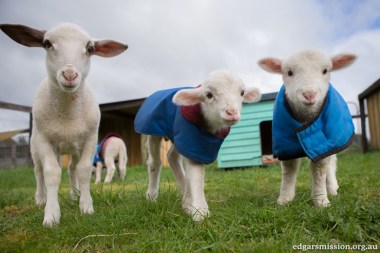
It seems that any one of the beauties shown here could be considered fair game by Uncle Mile, with Alexandra savouring the end result.
around-the-farm-august-20

Don’t they deserve much better? Luckily for these happy individuals, they are living peacefully at Edgar’s Mission Farm Sanctuary in Victoria.

Author

Paul Mahony (also on Twitter, Scribd, Slideshare, New Matilda, Rabble and Viva la Vegan)

Acknowledgement

Thank you to Greg McFarlane for information on YFM’s funding, including the donation from MLA.

Footnotes

  1. MLA has won advertising industry awards such as Marketing Team of the Year and Advertiser of the Year. [25] PR and advertising firms it has utilised include: Republic of Everyone (“Bettertarian”); Totem (“#Goodmeat”); One Green Bean (one of two firms with “You’re better on beef”); BMF (one of two firms with “You’re better on beef”, plus “Generation Lamb”, “The beef oracle”, and “The Opponent”); and The Monkeys (Australia Day 2016 “Richie’s BBQ” and 2017 “Boat People”). Republic of Everyone has also created graphics proclaiming the supposed health benefits of eating red meat. I beg to differ, as outlined in my article “If you think it’s healthy to eat animals, perhaps you should think again” and elsewhere.
  2. Australia’s National Strategy for Ecologically Sustainable Development (1992) defined ecologically sustainable development as: “using, conserving and enhancing the community’s resources so that ecological processes, on which life depends, are maintained, and the total quality of life, now and in the future, can be increased” [26]
  3. The revised figures allow for the global average percentage split of the various factors contributing to the products’ emissions intensity, and are intended to be approximations only.

Related booklet

The low emissions diet: Eating for a safe climate

Updates

Additional comments and references added on 13th January 2017 in relation to the paper co-authored by Steve Wiedemann.

Footnote 1 extended on 26th January 2017.

Images

Youth Food Movement Australia | YFM logo badge only | Flickr | Creative Commons NonCommercial 2.0 Generic (CC BY-NC 2.0) | http://tinyurl.com/j4c8ad9 | https://www.flickr.com/photos/142322734@N08/

Lambs | Edgar’s Mission Farm Sanctuary | https://www.edgarsmission.org.au/

References

[1] Mahony, P., “The real elephant in AYCC’s climate change room”, 5th September 2013, https://terrastendo.net/2013/09/05/the-real-elephant-in-ayccs-climate-change-room/

[2] Youth Food Movement Australia, “About”, http://www.youthfoodmovement.org.au/about-us/ (Accessed 9th January, 2016)

[3] Australian Charities and Not-for-profits Commission, Annual Information Statement 2015, Youth Food Movement Australia Ltd, https://www.acnc.gov.au/AIS2015?ID=8E78E032-C0CF-482B-9879-DF609B494B6E&noleft=1 (Accessed 14th Sep 2016)

[4] CassidyE.S., West, P.C., Gerber, J.S., Foley, J.A., “Redefining agricultural yields: from tonnes to people nourished per hectare”, Environ. Res. Lett. 8 (2013) 034015 (8pp), doi:10.1088/1748-9326/8/3/034015, cited in University of Minnesota News Release, 1 Aug 2013, “Existing Cropland Could Feed 4 Billion More”, http://www1.umn.edu/news/news-releases/2013/UR_CONTENT_451697.html

[5] World Hunger Education Service, Hunger Notes, “2016 World Hunger and Poverty Facts and Statistics”, http://www.worldhunger.org/2015-world-hunger-and-poverty-facts-and-statistics/ (Accessed 30th September 2016)

[6] Meat and Livestock Australia, “About MLA”, http://www.mla.com.au/about-mla/ (accessed 4th Sep 2016)

[7] Soutar, T., Youth Food Movement Australia, “Behind the scenes at an Australian abattoir”, 20th January 2016, http://www.youthfoodmovement.org.au/behind-the-scenes-at-an-australian-abattoir/

[8] Target 100, “About”, http://www.target100.com.au/About (accessed 4th Sep 2016)

[9] Mahony, P., “Emissions intensity of Australian beef”, Terrastendo, 30th June 2015, https://terrastendo.net/2015/06/30/emissions-intensity-of-australian-beef/

[10] Wiedemann, S.G, Henry, B.K., McGahan, E.J., Grant, T., Murphy, C.M., Niethe, G., “Resource use and greenhouse gas intensity of Australian beef production: 1981–2010″, Agricultural Systems, Volume 133, February 2015, Pages 109–118, http://www.sciencedirect.com/science/article/pii/S0308521X14001565 and http://ac.els-cdn.com/S0308521X14001565/1-s2.0-S0308521X14001565-main.pdf?_tid=e4c5d55e-fc16-11e4-97e1-00000aacb362&acdnat=1431813778_b7516f07332614cd8592935ec43d16fd

[11] Aussie Farms, “Australian lambs slaughtered at Gathercole’s Abattoir, Wangaratta Vic”, Undated, https://vimeo.com/117656676?lite=1

[12] Animal Liberation New South Wales, “Cruelty exposed at Hawkesbury Valley Abattoir”, 9th February 2012, https://www.youtube.com/watch?v=Zp-8PpA4upM

[13] Youth Food Movement Australia, “Can meat production and sustainability go hand in hand?”, 26th June 2014, http://www.youthfoodmovement.org.au/target-100/

[14] Woinarski, J., Traill, B., Booth, C., “The Modern Outback: Nature, people, and the future of remote Australia”, The Pew Charitable Trusts, October 2014, p. 167-171 http://www.pewtrusts.org/en/research-and-analysis/reports/2014/10/the-modern-outback

[15] True Aussie Beef and Lamb (Meat & Livestock Australia), What is Sustainable Farming | Where Does Our Meat Come From“, 4:07, https://www.youtube.com/watch?v=MGD2EAzj4SY, http://www.australian-meat.com/

[16] Paul Howard Cinematographer, “Target 100 Bettertarian Documentary”, 7:04, https://vimeo.com/138485968

[17] Hansen, J; Sato, M; Kharecha, P; Beerling, D; Berner, R; Masson-Delmotte, V; Pagani, M; Raymo, M; Royer, D.L.; and Zachos, J.C. “Target Atmospheric CO2: Where Should Humanity Aim?”, 2008. http://www.columbia.edu/~jeh1/2008/TargetCO2_20080407.pdf

[18] Stehfest, E, Bouwman, L, van Vuuren, DP, den Elzen, MGJ, Eickhout, B and Kabat, P, “Climate benefits of changing diet” Climatic Change, Volume 95, Numbers 1-2 (2009), 83-102, DOI: 10.1007/s10584-008-9534-6 (Also http://www.springerlink.com/content/053gx71816jq2648/)

[19] World Wildlife Fund (Worldwide Fund for Nature), “WWF Living Forests Report”, Chapter 5 and Chapter 5 Executive Summary, http://d2ouvy59p0dg6k.cloudfront.net/downloads/lfr_chapter_5_executive_summary_final.pdf; http://d2ouvy59p0dg6k.cloudfront.net/downloads/living_forests_report_chapter_5_1.pdf

[20] Gerber, P.J., Steinfeld, H., Henderson, B., Mottet, A., Opio, C., Dijkman, J., Falcucci, A. & Tempio, G., 2013, “Tackling climate change through livestock – A global assessment of emissions and mitigation opportunities”, Food and Agriculture Organization of the United Nations (FAO), Rome, Table 5, p. 24, http://www.fao.org/ag/againfo/resources/en/publications/tackling_climate_change/index.htm; http://www.fao.org/docrep/018/i3437e/i3437e.pdf

[21] Flannery, T., “Atmosphere of Hope: Searching for Solutions to the Climate Crisis”, Text Publishing (2015), p. 170

[22] Manning, P., “Wrestling with a climate conundrum”, 19th Feb 2011, http://www.smh.com.au/business/wrestling-with-a-climate-conundrum-20110218-1azhd.html#ixzz47IvGiZjp

[23] Youth Food Movement Australia, “Youth Food Movement Australia is getting bigger than ever”, 3rd February 2016, http://www.youthfoodmovement.org.au/youth-food-movement-australia-getting-bigger-ever/

[24] Youth Food Movement Australia, “Alexandra Iljadica: Tell us a bit about you?”,  http://www.youthfoodmovement.org.au/teams/alex-iljadica/ (Accessed 11th January 2016)

[25] Baker, R., “The Marketer: Meat & Livestock Australia, cleaving, the brave way”, AdNews, 16th November 2015, http://www.adnews.com.au/news/the-marketer-meat-and-livestock-australia-cleaving-the-brave-way

[26] Australian Government, Department of the Environment and Energy, “Ecologically sustainable development”, https://www.environment.gov.au/about-us/esd (Accessed 14th Sep 2016)

16671544056_1a7b103c3c_k

I was disappointed to see an article on the US website of Huffington Post by president and CEO of Heifer International, Pierre Ferrari. He was spruiking the supposed benefits of his organisation’s livestock programs in Africa.

Heifer International raises funds to provide “gifts” in developing countries, usually in the form of goats, cattle and water buffalo. Although the organisation claims to relieve hunger and poverty, such programs generally appear to have the opposite effect.

Here’s the comment I left on Ferrari’s article:

Please see Geoff Russell’s 2010 article “Burning the biosphere, boverty blues (Part 2)” on Prof. Barry Brook’s “Brave New Climate” website, in which he commented on the extremely negative impact of livestock grazing in Africa.

Russell coined the term “boverty blues” to mean “the human impact of too many bovines overwhelming the local biosphere’s ability to feed them”. (The FAO has since reported there were around 310 million head of cattle in its most recent reporting period, 2014.)

Russell described Heifer International as “the king in the international spread of boverty”.

Along with other material, he cited a study by Sankaran, et al. (“Determinants of woody cover in African savannas”, Nature 438, 846-849, 8 December 2005), indicating the massive potential for reforestation in the northern and southern Guinea savanna if livestock were removed and the related annual savanna burning ceased.

Cattle degrade soil through hoof action and residue grazing. He said, “. . . these grazing practices are effectively trading the long term food security of good soil management for a little milk and an even tinier amount of meat”.

Also: “Nigerian studies compared leaving residues in place with removal and showed that residue removal halved crop yields over a period of 13 years and had a range of bad impacts on soil parameters.”

And: “If you want perfection in land degradation, you need to add an animal who can clean up any young shrubs and trees which the cattle hooves miss. You don’t want any vegetation to impede the winds in their efforts to blow away your topsoil. Goats are pretty well perfect for the job.”

Commenting on an alternative approach in an October 2012 interview on Australian radio station 3CR, former principal scientist with the Queensland government, Gerard Wedderburn-Bisshop, referred to the Kenya Hunger Halt program, administered by the World Food Program. Under the program, people have been taught to grow alternatives such as root crops. The Maasai, traditional herders, have been converting to the program, growing nutritious crops and thriving.

END OF COMMENT

Similar material elsewhere

The Huffington Post article reminded me of the sort of material disseminated by other livestock related groups, such as the International Livestock Research Institute.

Interviewed on ABC Radio National Breakfast on 17th September, 2013, the institute’s Director General, Dr Jimmy Smith, sought to perpetuate the so-called “protein myth” in favour of meat production. He ignored the fact that soybeans (for example) contain around 35 per cent more protein per kilogram than beef, with all the essential amino acids.

In discussing livestock-related climate change impacts, he also ignored the fact that soybean production emits around 5.5 kilograms of greenhouse gases per kilogram of protein, while “grass-fed” beef production emits around 774 kilograms. [Footnote]

The beef figure is the global average for specialised beef, calculated over a 20-year time horizon for determining the warming impact of methane and nitrous oxide. The 20-year time horizon is critical when considering potential climate change tipping points and the possibility of runaway climate change, whereby we would lose any ability to overcome the crisis.

A major contributor to deforestation in the Amazon and Cerrado regions of South America is conversion of forest and other wooded vegetation to soy bean plantations. Most of the world’s soy is fed to livestock, including around 480 million pigs in China, in an inherently and grossly inefficient system of producing nutrition for the world’s human population.

That inefficiency also leads to under-nourished populations in developing nations, who could be adequately fed if we had the political will to distribute food equitably and decided to transition, in general, from animal-based to plant-based agriculture.

Conclusion

If we are serious about overcoming climate change and ending world hunger, we must address the livestock issue with the urgency those issues require.

Author

Paul Mahony (also on Twitter, Facebook, Scribd, Slideshare, New Matilda, Rabble and Viva la Vegan)

Footnote

See page 57 of “The Low Emissions Diet: Eating for a safe climate“, which utilised emissions intensity figures from the Food and Agriculture Organization of the United Nations (FAO) and Oxford University, and nutritional information from the United States Department of Agriculture. The combination of different emissions factors in the FAO analysis reflected overall non-dairy figures, including cattle exclusively “grass-fed” and others. As methane’s percentage contribution would be lower in mixed systems than in grazing systems, the figure of 774 kilograms shown here for “grass-fed” product may be understated.

Sources

Ferrari, P., “Surprise! Livestock Helps Farmers Become Resilient to Climate Change”, Huffington Post, 15th October 2016, http://www.huffingtonpost.com/pierre-ferrari/livestock-helps-farmers-b_b_12501722.html

Russel, G., “Burning the biosphere, boverty blues (Part 2)”, 10th February, 2010, http://bravenewclimate.com/2010/02/04/boverty-blues-p2/

Sankaran, M; Hanan, N.P.; Scholes, R.J.; Ratnam, J; Augustine, D.J.; Cade, B.S.; Gignoux, J; Higgins, S.I.; Le Roux, X; Ludwig, F; Ardo, J.; Banyikwa, F; Bronn, A; Bucini, G; Caylor, K.K.; Coughenour, M.B.; Diouf, A; Ekaya, W; Feral, C.J.; February, E.C.; Frost, P.G.H.; Hiernaux, P; Hrabar, H; Metzger, K.L.; Prins, H.H.T.; Ringrose, S; Sea, W; Tews, J; Worden, J; & Zambatis, N., Determinants of woody cover in African savannas, Nature 438, 846-849 (8 December 2005), cited in Russell, G., ibid.

Lal, R., “Crop Residues and Soil Carbon”, Carbon Management and Sequestration Center, The Ohio State University, Columbus, Ohio, USA, http://www.fao.org/ag/ca/Carbon%20Offset%20Consultation/CARBONMEETING/3FULLPAPERSBYCONSULTATIONSPEAKERS/PAPERLAL.pdf, cited in Russell, G. op. cit.

FAOSTAT, Production, Live Animals 2014, Cattle in Africa (310,277,515) and Pigs in China (480,093,253), http://faostat3.fao.org/download/Q/QA/E

3CR Freedom of SpeciesGerard Wedderburn-BisshopThe environmental impacts of livestock farming”, 7th October, 2012

ABC Radio National Breakfast, “Feeding a hungry world”, 17th September 2013, http://www.abc.net.au/radionational/programs/breakfast/feeding-a-hungry-world/4961802

Brown, L.R., “Full Planet, Empty Plates: The New Geopolitics of Food Scarcity, Chapter 9, China and the Soybean Challenge”, Earth Policy Institute, 6 November, 2013, http://www.earthpolicy.org/books/fpep/fpepch9

Image

IFPRI Images | “Cattle in Senegal” | Flickr | Attribution-NonCommercial-NoDerivs 2.0 Generic (CC BY-NC-ND 2.0)

Edit

Reference to “grass-fed” beef inserted 16th October 2016.

4152992081_2ae94081f4_o

This post contains the text of my open letter to the Sydney Peace Foundation concerning its decision to award the 2016 Sydney Peace Prize to author and activist, Naomi Klein.

The organisation is a University of Sydney foundation that was created in 1998. It says it “promotes peace with justice and the practice of nonviolence by awarding the annual Sydney Peace Prize and encouraging public interest and discussion about issues of peace, social justice, human rights, and non-violent conflict resolution”.

It describes the prize as “Australia’s international prize of peace”.

My letter

The Sydney Peace Foundation
Mackie Building K01
University of Sydney
Sydney
New South Wales
Australia, 2006

Email: peace.foundation@sydney.edu.au

30th September 2016

Dear Sydney Peace Foundation,

Re: Sydney Peace Prize 2016

I understand you have awarded the 2016 Sydney Peace Prize to author and activist Naomi Klein, with the following citation:

For exposing the structural causes and responsibility for the climate crisis, for inspiring us to stand up locally, nationally and internationally to demand a new agenda for sharing the planet that respects human rights and equality, and for reminding us of the power of authentic democracy to achieve transformative change and justice.

Unfortunately, in her writing and campaigning, Ms Klein appears to have overlooked or ignored a major “structural cause” of the climate crisis, namely animal agriculture.

Leading climate scientist, Dr James Hansen (along with his fellow researchers), argues that we will not overcome the crisis without massive reforestation and significant cuts in emissions of non-CO2 climate forcers, such as methane, nitrous oxide, tropospheric ozone and black carbon. [1] Meaningful action in that regard cannot be achieved without a general move toward a plant-based diet.

Consistent with that view were the findings of a 2009 study by the PBL Netherlands Environmental Assessment Agency, indicating that a global transition to a completely animal-free diet would reduce climate change mitigation costs by around 80 per cent. A meat-free diet would reduce them by 70 per cent. A key factor would be the ability of lands cleared or degraded for livestock grazing and feed crop production to regenerate forests and other forms of vegetation. [2]

The assessment was based on a targeted atmospheric CO2 concentration of 450 ppm. The issue is even more critical when aiming for essential lower levels.

Similarly, a paper from researchers at the Institute for Social Ecology, Vienna, published in April 2016, reported on the potential to avoid further deforestation while feeding a growing global population. [3] They considered 500 food supply scenarios using forecasts for crop yields, agricultural area, livestock feed and human diet supplied by the Food and Agriculture Organization of the United Nations (FAO). The lead author, Karl-Heinz Erb, has stated: [4]

“The only diet found to work with all future possible scenarios of yield and cropland area, including 100% organic agriculture, was a plant-based one.”

In Australia, since European settlement, we have cleared nearly 1 million square kilometres of our 7.7 million square kilometre land mass. Of the cleared land, around 70 per cent has resulted from animal agriculture, including meat, dairy and wool. [5]

The World Wildlife Fund has identified Australia as one of eleven global “deforestation fronts” in the twenty years to 2030 due to livestock production. [6]

The grossly and inherently inefficient nature of animals as a source of nutrition causes us to use far more resources, including land, than would be required on a plant-based diet.

Peace with Justice

A general transition toward a plant-based diet is also consistent with the Sydney Peace Foundation’s promotion of peace with justice and the practice of non-violence.

The issue of social justice was highlighted in a 2013 paper from the Institute on the Environment at the University of Minnesota, which stated: [7]

“The world’s croplands could feed 4 billion more people than they do now just by shifting from producing animal feed and biofuels to producing exclusively food for human consumption”.

Animal feed crops represent 90% of that figure (in turn representing 3.6 billion people), and biofuels only 10%.

The FAO estimates that around 795 million people were chronically under-nourished in the period 2014-2016. [8]

The lead author of the University of Minnesota paper, Emily Cassidy, has said:

“We essentially have uncovered an astoundingly abundant supply of food for a hungry world, hidden in plain sight in the farmlands we already cultivate. Depending on the extent to which farmers and consumers are willing to change current practices, existing croplands could feed millions or even billions more people.”

And let’s not forget the animals themselves. We currently breed and slaughter around 70 billion land animals annually, compared to a human population of around 7.4 billion. [9] The livestock reproduction rate is significantly above natural levels, and involves abuse and confinement on a massive scale, even for so-called “free range” systems.

In Australia and elsewhere, animal cruelty has been legalised by way of exemptions to so-called “prevention of cruelty to animals” legislation in favour of livestock and other industries.

Human health

I note that you support the UN’s Sustainable Development Goals, including the goal to “ensure healthy lives and promote wellbeing for all at all ages”.

The detrimental health impacts of animal-based foods have been well documented by organisations such as the World Cancer Research Fund, the World Health Organization, and others.

A recent example was the April 2016 study by researchers from the Oxford Martin School (University of Oxford) reporting on the health and climate change benefits of changing diets, including reduced consumption of animal products. [10]

The researchers estimated that if the global population were to adopt a vegetarian diet, 7.3 million lives per year would be saved by 2050. If a vegan diet were adopted, the figure would be 8.1 million per year.

More than half the avoided deaths would be due to reduced red meat consumption. The results would primarily reflect reductions in the rate of coronary heart disease, stroke, cancer, and type 2 diabetes.

Former winner calls for vegan diet

The 2002 winner of the Sydney Peace Prize, Mary Robinson, has recently called for those who care about climate change to stop eating animals and animal-based products. [11]

15334337522_4df9929220_o

Here is some of what she said:

“We have to change, we cannot go on with business as usual. We need each of us to think about our carbon footprint. Eat less meat, or no meat at all. Become vegetarian or vegan.”

Mrs Robinson was speaking at the “One Young World Summit” in Ottawa, Canada, earlier this month, attended by young leaders from 196 nations.

Conclusion

A positive gesture to highlight these critical issues would be to serve only vegan food at the Sydney Peace Prize Gala Dinner on 11th November.

You may also wish to consider broadening your approach on peace, social justice and non-violence to include animals.

I would be pleased to discuss the issues in more detail if you are interested in doing so.

Kind Regards,

Paul Mahony
Melbourne
Australia

Author

Paul Mahony (also on Twitter, Facebook, Scribd, Slideshare, New Matilda, Rabble and Viva la Vegan)

References

[1] Hansen, J; Sato, M; Kharecha, P; Beerling, D; Berner, R; Masson-Delmotte, V; Pagani, M; Raymo, M; Royer, D.L.; and Zachos, J.C. “Target Atmospheric CO2: Where Should Humanity Aim?”, 2008. http://www.columbia.edu/~jeh1/2008/TargetCO2_20080407.pdf

[2] Stehfest, E, Bouwman, L, van Vuuren, DP, den Elzen, MGJ, Eickhout, B and Kabat, P, “Climate benefits of changing diet” Climatic Change, Volume 95, Numbers 1-2 (2009), 83-102, DOI: 10.1007/s10584-008-9534-6 (Also http://www.springerlink.com/content/053gx71816jq2648/)

[3] Erb, K-H, Lauk, C., Kastner, T., Mayer, A., Theurl, M.C., Haberl, H., “Exploring the biophysical option space for feeding the world without deforestation”, Nat. Commun. 7:11382 doi: 10.1038/ncomms11382 (2016), http://www.nature.com/ncomms/2016/160419/ncomms11382/abs/ncomms11382.html and http://www.nature.com/ncomms/2016/160419/ncomms11382/pdf/ncomms11382.pdf

[4] Kehoe, L., “Can we feed the world and stop deforestation? Depends what’s for dinner”, The Conversation, 20 Apr 2016 (Updated 26 Apr 2016), https://theconversation.com/can-we-feed-the-world-and-stop-deforestation-depends-whats-for-dinner-58091

[5] Derived from Russell, G. “The global food system and climate change – Part 1”, 9 Oct 2008, (http://bravenewclimate.com/2008/10/09/the-global-food-system-and-climate-change-part-i/) and “Bulbs, bags, and Kelly’s bush: defining `green’ in Australia”, 19 Mar 2010 (p. 10) (http://hec-forum.anu.edu.au/archive/presentations_archive/2010/geoffrussell-hec-talk.pdf), which utilised: Dept. of Sustainability, Environment, Water, Population and Communities, State of the Environment Report 2006, Indicator: LD-01 The proportion and area of native vegetation and changes over time, March 2009; and ABS, 4613.0 “Australia’s Environment: Issues and Trends”, Jan 2010; and ABS 1301.0 Australian Year Book 2008, since updated for 2009-10, 16.13 Area of crops

[6] World Wildlife Fund (World Wide Fund for Nature), “WWF Living Forests Report”, Chapter 5 and Chapter 5 Executive Summary, http://d2ouvy59p0dg6k.cloudfront.net/downloads/lfr_chapter_5_executive_summary_final.pdf; http://d2ouvy59p0dg6k.cloudfront.net/downloads/living_forests_report_chapter_5_1.pdf

[7] Emily S Cassidy et al., 2013 Environ. Res. Lett. 8 034015 doi:10.1088/1748-9326/8/3/034015, cited in University of Minnesota News Release, 1 Aug 2013, “Existing Cropland Could Feed 4 Billion More”, http://www1.umn.edu/news/news-releases/2013/UR_CONTENT_451697.html

[8] World Hunger Education Service, Hunger Notes, “2016 World Hunger and Poverty Facts and Statistics”, http://www.worldhunger.org/2015-world-hunger-and-poverty-facts-and-statistics/ (Accessed 30th September 2016)

[9] FAOSTAT, Livestock Primary, Slaughter numbers 2013, http://faostat3.fao.org

[10] Springmann, M., Godfray, H.C.J., Rayner, M., Scarborough, P., “Analysis and valuation of the health and climate change cobenefits of dietary change”, PNAS 2016 113 (15) 4146-4151; published ahead of print March 21, 2016, doi:10.1073/pnas.1523119113, (print edition 12 Apr 2016), http://www.pnas.org/content/113/15/4146.full and http://www.pnas.org/content/113/15/4146.full.pdf

[11] Virk, K., “‘Eat less meat, or no meat at all’ – Mary Robinson suggests going vegan to reduce carbon footprint”, The Independent, 29 Sep 2016, http://www.independent.ie/irish-news/climate-change-and-you/eat-less-meat-or-no-meat-at-all-mary-robinson-suggests-going-vegan-to-reduce-carbon-footprint-35088537.html

Images

Troy Page | truthout.org | “Naomi Klein” | Flickr | Creative Commons | NonCommercial-ShareAlike 2.0 Generic (CC BY-NC-SA 2.0)

Simon Ruf | United Nations Information Centre | “Climate Envoy Mary Robinson” | Flickr | Creative Commons | NoDerivs 2.0 Generic (CC BY-ND 2.0)

Edits

Second paragraph introducing the letter amended 2nd October 2016.

Comment on World Wildlife Fund added 2nd October 2016.

The purpose of this post is to introduce the embedded presentation, “The link that too many ignore: Australian climate campaigners and the livestock sector”.

As mentioned in the presentation description, there are actually two links: firstly, the link between livestock production and climate change; and secondly, the link between the livestock sector and so-called environmentalists. 

The second link may be related to the fact that Australia has the highest per capita meat consumption in the world.

The link between livestock production and climate change is widely understood and well documented. Yet many climate change campaigning organisations and individuals barely mention it, or seek to dispute it. It’s ironic that such people and groups complain that climate change denialists ignore the science of climate change, while they themselves ignore the science surrounding animal agriculture’s impacts.

Here is the presentation, followed by sources and image credits. This is an updated and expanded version as at 9 Sep 2016. (The original was published on 26th August 2016.)

I recommend you view it in full screen mode. Also, it is best to view it on a desktop or laptop, as the zooming effect may not work on a phone or tablet unless the “prezi” app has been installed.

screen-shot-2016-09-10-at-12-34-52-pm

Here’s a video version that should work on any device, although full screen mode is still recommended:

https://vimeo.com/182176063/settings

xxx

An expanded version of the chart (released on 30th December 2018) can be seen in detail by clicking the image below.

Author

Paul Mahony (also on Twitter, Scribd, Slideshare, New Matilda, Rabble and Viva la Vegan)

Note

This author does not claim that the links referred to here have influenced any person or organisation, or that any person or organisation has sought to influence others, as I am not in a position to say.

Related Articles

Some Critical Omissions from Climate Change Discussions (The Greens)

Do the math: There are too many cows! (Bill McKibben, 350.org)

The real elephant in AYCC’s climate change room (Australian Youth Climate Coalition)

Emissions intensity of Australian beef (MLA-funded research)

Sources

ABC, 7.30, Reporter Sarah Dingle, “Purves throws weight behind climate science”, 22 Dec 2011, http://www.abc.net.au/7.30/content/2011/s3396867.htm

ABC, “One Plus One” Video Interview, Amanda McKenzie, 19th January, 2016, updated 16th Feb 2016, http://www.abc.net.au/news/2016-01-05/one-plus-one-‘nature-plus-nurture’-summer-series:/7173224 and https://www.youtube.com/watch?v=Ruo6qJwKD7U

Australia Institute – About, http://www.tai.org.au/content/about (accessed 19th August 2016)

Australian Conservation Foundation, “ACF leads the environmental evolution”, https://www.acfonline.org.au/about-us/our-history/acf-leads-environmental-evolution (Accessed 19th August 2016)

Australian Conservation Foundation, “Find out how 60L was conceived”, https://www.acfonline.org.au/about-us/our-home-60l/find-out-how-60l-was-conceived (Accessed 19th August 2016)

Australian Conservation Foundation, 2009-10 Annual Report, https://d3n8a8pro7vhmx.cloudfront.net/auscon/pages/520/attachments/original/1465183523/ACF_annual_report_2009-10.pdf?1465183523

Australian Youth Climate Coalition, “About AYCC”, http://www.aycc.org.au/about_aycc (Accessed 19th August 2016)

Beyond Zero Emissions and Melbourne Sustainable Society Institute of The University of Melbourne, “Zero Carbon Australia – Land Use: Agriculture and Forestry – Discussion Paper”, October, 2014, Executive Summary and pp. 97 and 168, http://bze.org.au/landuse

Boomerang Alliance, “Who we are”, http://www.boomerangalliance.org.au/who_we_are (accessed 22nd August 2016)

“Building our hopes and dreams: Australia’s building industry now has a superb green model to emulate–and there’s no reason why it can’t”, The Free Library. 2003 Australian Conservation Foundation 19 Aug. 2016 http://www.thefreelibrary.com/Building+our+hopes+and+dreams%3a+Australia%27s+building+industry+now+has…-a098415135

Bush Telegraph, “Reduce livestock numbers by 20 per cent, revegetate 55.6 million hectares of land: climate change report proposes options to reach zero carbon target”, 24th Oct 2014, http://www.abc.net.au/radionational/programs/bushtelegraph/controversial-recommendations-dominate-zero-carbon-report/5838280

Climate Action Network Australia, National Organising Committee, http://www.cana.net.au/organising_committee_contacts (accessed 19th August 2016)

Climate Council Australia Annual Report 2014/15, http://www.climatecouncil.org.au/uploads/6d06af6b4198fd83aed7c3019d71e5a2.pdf

Climate Council, “Climate Council Board Member, Rob Purves wins Australian Geographic Lifetime of Conservation Award”, 13th Nov 2015, https://www.climatecouncil.org.au/climate-council-board-member-rob-purves-wins-australian-geographic-lifetime-of-conservation-award

Climate Emergency Declaration, http://climateemergencydeclaration.org/wp-content/uploads/2016/06/TheAge_advert24June2016.pdf

The Climate Institute, “Towards Climate Friendly Farming”, Oct 2009, http://www.climateinstitute.org.au/verve/_resources/towards_climate_friendly_ag_discussion_paper.pdf and http://www.climateinstitute.org.au/articles/publications/towards-climate-friendly-farming.html

Davies, A., “Environmental philanthropist Rob Purves warns that green groups under attack”, The Sydney Morning Herald, 19th Sep 2015, http://www.smh.com.au/environment/conservation/environmental-philanthropist-rob-purves-warns-that-green-groups-under-attack-20150917-gjpavd.html

Eckard, R., “Could your diet save the planet?”, The Conversation, 2nd Nov 2011, https://theconversation.com/could-your-diet-save-the-planet-3931

Eckard, R., “It’s not enough to go vegetarian to fight climate change”, The Conversation, 24th Feb 2015, https://theconversation.com/its-not-enough-to-go-vegetarian-to-fight-climate-change-37763

Farm Weekly, “Red meat: Amazing for youth”, 30th Sep 2010, http://www.farmweekly.com.au/news/agriculture/cattle/general-news/red-meat-amazing-for-youth/1956447.aspx

Find the Company by Graphiq, “Carwoola Pastoral Company Pty Ltd”, http://listings.fta-companies-au.com/l/101458792/Carwoola-Pastoral-Co-Pty-Ltd-in-Sydney-NSW (accessed 23rd August 2016)

Friends of the Earth Australia, Annual Report 2012-13, https://www.foe.org.au/sites/default/files/FOEA%20SOFT%20COPY%202013.pdf

Green Capital, http://www.greencapital.org.au/#!total-environment-centre/ctgt (accessed 22nd August 2016)

The Greens, “10 facts about Richard Di Natale”, 6th May 2015, http://greensmps.org.au/content/news-stories/10-facts-about-richard-di-natale

Griffiths, M., “Food production driving up greenhouse gas emissions”, ABC News, PM, 10th Mar 2016, http://www.abc.net.au/pm/content/2016/s4422796.htm

Hamilton, C., “Speech at the Dinner to Celebrate the Tenth Anniversary of The Australia Institute”, 4th August 2004, http://www.tai.org.au/sites/defualt/files/WP61_8.pdf

McGilvray, A., “Diet key to feeding the world in 2050 without further deforestation, modelling suggests”, ABC news online, 20th Apr 2016, http://www.abc.net.au/news/2016-04-20/diet-key-to-feeding-the-world-in-2050-without-destroying-forests/7339644

McKibben, Bill, The only way to have a cow, Orion Magazine, Mar/Apr 2010, http://www.orionmagazine.org/index.php/articles/article/5339/

Manning, P., “Wrestling with a climate conundrum”, 19th Feb 2011, http://www.smh.com.au/business/wrestling-with-a-climate-conundrum-20110218-1azhd.html#ixzz47IvGiZjp

Meat & Livestock Australia, “Who we are”, http://www.mla.com.au/about-mla/who-we-are/ (Accessed 24th August 2016)

Melbourne Sustainable Society Institute, Annual Report 2011, p. 13, http://sustainable-dev.unimelb.edu.au/sites/default/files/docs/MSSI-Annual-Report-2011_web.pdf

Melbourne Sustainable Society Institute, Annual Report 2015, http://sustainable-dev.unimelb.edu.au/sites/default/files/docs/MSSI-Annual-Report-2015_web.pdf

Munro, K., “Climate warriors march behind little green book”, Sydney Morning Herald, 11 July 2009, http://www.smh.com.au/environment/climate-change/climate-warriors-march-behind-little-green-book-20090710-dg2t.html

Pearse, G., “The climate movement: Australia’s patrons of climate change activism”, Sep 2011, https://www.themonthly.com.au/issue/2011/september/1316399650/guy-pearse/climate-movement

Rose, A. “Thoughts on retiring from AYCC”, Powershifting Towards Tomorrow, 26 April, 2010, https://annarose.net.au/2010/04/26/thoughts-on-retiring-from-aycc/

Russell, G., Quarterly Essay 32 (2008), Correspondence in response to Now or Never (Quarterly Essay 31) by Tim Flannery, p. 104

Sinclair, L., “Junior MasterChef signs six sponsors”, The Australian, 1st Sep 2010, http://www.theaustralian.com.au/business/media/junior-masterchef-signs-six-sponsors/story-e6frg996-1225912708952

Ting, I., “Australia is the meat-eating capital of the world”, Sydney Morning Herald, 27th October 2015, http://www.smh.com.au/national/health/australia-is-the-meateating-capital-of-the-world-20151027-gkjhp4.html

Victoria McKenzie-McHarg Linkedin Profile, https://au.linkedin.com/in/victoria-mckenzie-mcharg-59900455 (accessed 17th August 2016)

Wedderburn-Bisshop, G., Longmire, A., Rickards, L., “Neglected Transformational Responses: Implications of Excluding Short Lived Emissions and Near Term Projections in Greenhouse Gas Accounting”, International Journal of Climate Change: Impacts and Responses, Volume 7, Issue 3, September 2015, pp.11-27. Article: Print (Spiral Bound). Published Online: August 17, 2015, http://ijc.cgpublisher.com/product/pub.185/prod.269

Thomas, T., “March of the Climate Cult Kiddies”, Quadrant, 19th May 2015, https://quadrant.org.au/opinion/doomed-planet/2015/05/attack-climate-cult-kiddies/

Total Environment Centre: What is TEC?, http://www.tec.org.au/our-story.html (accessed 22nd August 2016)

WWF Australia, “Robert Purves”, http://www.wwf.org.au/about_us/how_we_work/leadership_and_corporate_governance/board_of_directors/robert_purves/ (accessed 23rd August 2016)

WWF Australia, “Conservationist of the Year Anna Rose Calls for Increased Renewable Energy Target”, 29th October 2014, http://www.wwf.org.au/?uNewsID=11280

WWF International, Beef, http://www.worldwildlife.org/industries/beef (Accessed 20th August 2016)

WWF International, “WWF Living Forests Report”, Chapter 5 and Chapter 5 Executive Summary, http://d2ouvy59p0dg6k.cloudfront.net/downloads/lfr_chapter_5_executive_summary_final.pdf; http://d2ouvy59p0dg6k.cloudfront.net/downloads/living_forests_report_chapter_5_1.pdf

Images

AgriLife Today | Flickr | Brahman Cattle | Creative Commons | Attribution: NonCommercial-NoDerivs 2.0 Generic

Andrew Anderson | Flickr |Queens College – Melbourne University 2010| Creative Commons | Attribution-NonCommercial-ShareAlike 2.0 Generic (CC BY-NC-SA 2.0)

The Aspen Institute | Flickr | Bill McKibben talks about life on Earth | Creative Commons | Attribution-NonCommercial-NoDerivs 2.0 Generic (CC BY-NC-ND 2.0)

AusSMC-2009-Dec-11_IMG_0476 | Flickr | Professor Tim Flannery from Macquarie University and chair of the Copenhagen Climate Council with Amanda McKenzie from the Australian Youth Climate Coalition (AYCC) at a http://www.planetcall.org event, COP15, Copenhagen 2009 | Creative Commons | Attribution-NonCommercial-NoDerivs 2.0 Generic

Climate Council | 13 Nov 2015 | Robert Purves| Creative Commons | Attribution-3.0 Australia | “Climate Council Board Member, Rob Purves wins Australian Geographic Lifetime of Conservation Award”

Cow, cattle, livestock © Visuall2 | Dreamstime.com

Cows grazing  © Ondrez | Dreamstime.com

Dairy Cows Photo © Nengloveyou | Dreamstime.com

Earth Hour | Flickr | Earth Hour Australia 2013, Sydney Opera House Lights On | Creative Commons | Attribution: NonCommercial-ShareAlike 2.0 Generic

Environmental activists © Rrodrickbeiler | Dreamstime.com

Find an Expert – University of Melbourne | Richard Eckard | Creative Commons | Attribution 3.0 Unported (CC BY 3.0)

Gavin Tapp | Flickr |Don Henry 2011 | Creative Commons | Attribution- 2.0 Generic

Greg Johnston | Flickr | The last straw| Creative Commons | Attribution-NonCommercial-NoDerivs 2.0 Generic

Greens MPs | Flickr | Your Vote = Our Future, AYCC Youth Climate Summit | Creative Commons | Attribution-NonCommercial-NoDerivs 2.0 Generic

Indigo Skies Photography | Golden Hour | Flickr | Attribution: NonCommercial-NoDerivs 2.0 Generic (CC BY-NC-ND 2.0)

Indigo Skies Photography | Misty | Flickr | Attribution: NonCommercial-NoDerivs 2.0 Generic (CC BY-NC-ND 2.0)

Indigo Skies Photography | Rural sunset scene | Flickr | Attribution: NonCommercial-NoDerivs 2.0 Generic (CC BY-NC-ND 2.0)

Jeremy Buckingham | Flickr | Hazelwood Power Station 4 | Flickr | Creative Commons | Attribution: 2.0 Generic

Jonathan Doig | 2500 people encircle Parliament House calling for action on the climate emergency (2009) | Flickr | Creative Commons | Attribution: 2.0 Generic

Koza1983 | PS20 and PS10 in Andalusia, Spain | Wikipedia | Creative Commons | Attribution: 3.0 Unported

KnitSpirit | Sheep | Flickr | Creative Commons | Attribution: NonCommercial-NoDerivs 2.0 Generic

Labour Youth | Flickr | Friends of the Earth | Creative Commons | Attribution: NonCommercial-ShareAlike 2.0 Generic

McLac2000 | Pixabay

Mark A Coleman | Sheep | Flickr | Creative Commons | Attribution: ShareAlike 2.0 Generic

Marley Cook | Flickr | Amanda McKenzie (AYCC Co-Director) 2009 | Creative Commons | Attribution-ShareAlike 2.0 Generic (CC BY-NC-SA 2.0)

Micolo J | Flickr | Young cattle 2014 | Creative Commons | Attribution 2.0 Generic (Cropped and border removed)

National Climate Change Adaptation Research Facility (NCCARF) | Flickr | Lesley Hughes | Creative Commons | Attribution: NonCommercial 2.0 Generic

National Climate Change Adaptation Research Facility | Flickr | NCCARF Welcome Reception 1.5 Tim Flannery | Creative Commons | Attribution-NonCommercial 2.0 Generic

Newtown grafitti | Flickr | Playing God with the climate, IV (Clive Hamilton) | Creative Commons | Attribution – 2.0 Generic (CC BY 2.0)

The original facade of the 60L Green Building in Carlton, Melbourne, Australia | Nick Carson | Sep 2010| Wikimedia | Creative Commons | Attribution-Share Alike 3.0 Unported | CC BY-SA 3.0

Peter Thoeny – Quality HDR Photography | Flickr | Creative Commons | Nay for fossil fuel, yea for renewable energy (Crescent Dunes Solar Energy Project, Nevada)| Attribution: NonCommercial-ShareAlike 2.0 Generic

Philip Morton | Flickr | Outback Sunrise | Creative Commons | Attribution: NonCommercial-NoDerivs 2.0 Generic

Pierre Pouliquin | Flickr | Three mousquetaires!! 2008 | Creative Commons | Attribution – NonCommercial 2.0 Generic

Pinar Cildiroglu | University of Western Sydney | Tim Flannery | Flickr | Creative Commons | Attribution: NonCommercial-ShareAlike 2.0 Generic

Scott Anderson Imagery | Flickr | Wind Farm Outside Port Fairy | Attribution: All rights reserved (Used with permission)

Stephen Hass | Power_Of_Great_Barrier_Reef_024 | Flickr | Creative Commons | Attribution: 2.0 Generic

skeeze | Pixabay.com | CC0 Public Domain

Takver | Flickr | Ban onshore gas, Grow renewables rally | Creative Commons | Attribution: ShareAlike 2.0 Generic

Takver | Flickr | Climate Emergency campaigner David Spratt | Creative Commons | Attribution: ShareAlike 2.0 Generic

Takver | Flickr | Replace Hazelwood | Creative Commons | Attribution: ShareAlike 2.0 Generic

Takver | Flickr | Replace Hazelwood – Victorian Parliament House steps | Creative Commons | Attribution: ShareAlike 2.0 Generic

Terrastendo image: Morning mist © Anekoho | Dreamstime.com

Tony Webster | Wikimedia | Wind Energy | Creative Commons | Attribution: 2.0 Generic

theverb.org | Flickr | Anna Rose | Creative Commons | Attribution-NonCommercial 2.0 Generic

yassan-yukky | Flickr | Cooking | Creative Commons | Attribution-NonCommercial 2.0 Generic

350.org | Peter Solness | Sydney, Australia | Flickr | Creative Commons | Attribution: NonCommercial-ShareAlike 2.0 Generic

“If cattle were to form their own nation, they would rank third behind China and the United States among the world’s largest greenhouse gas emitters.”

World Resources Institute 2016 [1]


Ceres Agricultural Company Pty Ltd has applied to the Australian Competition and Consumer Commission (ACCC) to register a Free Range Pasture Finished certification trademark in respect of cattle raised for slaughter within the food production system. This is my submission (in conjunction with Vegan Australia) in response to the application.

Screen Shot 2016-07-22 at 12.16.37 am

The submission highlights some of the many detrimental impacts of beef production.

Here’s the Executive Summary:

General

  • Whether produced in free range or more intensive systems, red meat is extremely detrimental to animals, human health and the environment.

Animal Health and Welfare

  • Many exemptions in favour of the livestock sector apply to Prevention of Cruelty to Animals legislation in Australia (and similar legislation elsewhere), thereby permitting cruelty.
  • There are no legislated free range standards, and the standards proposed by Ceres offer only limited protection to animals.
  • Free range animals are usually slaughtered at the same abattoirs as more intensively farmed animals. Regardless of the effectiveness or otherwise of different stunning methods, the sights, sounds and smells of an abattoir create a terrifying experience for animals awaiting their fate.

Safety of Meat

  • The evidence of red and processed meat’s adverse health impacts is overwhelming, whether or not produced in a free range system.
  • Oxford University researchers have estimated that that if the global population were to adopt a vegetarian or vegan diet, more than 7 million lives would be saved per year by 2050 due to reductions in the rate of coronary heart disease, stroke, cancer, and type 2 diabetes. More than half the avoided deaths would be due to reduced red meat consumption.

Environment

  • Beef production is a key contributor to global warming, land degradation, air and water pollution, introduction of invasive pasture grasses, loss of biodiversity, and destruction of the Great Barrier Reef.
  • In addition to dealing with coal-fired power, we will not achieve a critical threshold level of 350 parts per million of CO2 in the atmosphere without massive reforestation. The only way to meaningfully reforest in the context of the climate emergency is to reduce the extent of animal agriculture.
  • Beef from grass-fed cattle is far more emissions intensive than beef from mixed feed systems, involving grain and grass.

What is the Answer?

  • Ceres’ proposed CTM certification may cause consumers to wrongly believe that critical problems involved in red meat production do not exist in relation to the relevant products.
  • As such, we believe the proposed certification should be considered unacceptable in terms of the spirit, and potentially the letter, of consumer protection regulations.
  • A general transition from animal-based to plant-based diets is essential if we wish to maximise our effectiveness in protecting the environment, avoiding catastrophic climate change, preventing animal cruelty, and achieving optimum human health.

Author

Paul Mahony

Reference

[1] Ranganathan, J. and Waite, R., “Sustainable Diets: What you need to know in 12 charts”, World Resources Institute, 20th April, 2016, http://www.wri.org/blog/2016/04/sustainable-diets-what-you-need-know-12-charts

Image

skeeze | Pixabay.com | CC0 Public Domain

mist-996615_1280

Doug Boucher of the Union of Concerned Scientists has published an online critique of the documentary “Cowspiracy: The Sustainability Secret“.

Boucher’s main concern is the film’s assertion that at least 51% of greenhouse gas emissions come from animal agriculture.

I have argued previously that the movie was wrong in relying so heavily on that figure, which came from a 2009 World Watch magazine article by Robert Goodland and Jeff Anhang. [1] [2] [Footnote ] However, there are some holes in Boucher’s arguments which, in turn, cause me some concern.

Livestock’s share of emissions

The main concern of Boucher and many others with the 51% figure is that it includes livestock respiration. Goodland and Anhang have argued that such respiration was overwhelming photosynthesis in absorbing carbon due to the massive human-driven increase in livestock numbers and removal of vegetation. Goodland subsequently stated, “In our assessment, reality no longer reflects the old model of the carbon cycle, in which photosynthesis balanced respiration”. [3]

Based on my interpretation of their figures, Goodland and Anhang’s non-respiration factors would have resulted in a livestock contribution of 43%.

However, Boucher also argues against other components of their estimate.

He suggests that, according to scientific “consensus” (a word he uses seven times), livestock are “currently” responsible for “about 15%” of global emissions. The paper he cites for that figure actually uses a range of 8% to 18%. [4] Its references, in turn, are from five papers published from 2005 to 2013, so they are hardly current, particularly when their reference periods are even earlier. The 2013 paper is from the Food and Agriculture Organization of the United Nations, which used a figure of 14.5%. [5]

Within the figure of 51%, Boucher’s main concern is the use by Goodland and Anhang of a 20-year time horizon for estimating the warming impact of the various greenhouse gases. Boucher’s case against that approach is poorly argued. Let’s look at his key points.

Firstly, like many others, he claims methane’s global warming potential (GWP) (although not using that term) is 25 when measured over 100 years. Despite claiming that the figure is based on “recent scientific consensus” (there’s that word again), his figure is out of date.

The Intergovernmental Panel on Climate Change (IPCC) used a 100-year GWP of 25 in 2007 but increased it to 34 (with climate-carbon feedbacks) and 28 (without those feedbacks) in its 2013 Fifth Assessment Report. It also increased the figure for 20 years from 72 to 86 (with climate-carbon feedbacks) and 84 (without them). [6]

I have argued elsewhere that a 20-year GWP for methane may be more valid than the 100-year figure used by most reporting bodies. That’s because methane, a critical factor in livestock’s climate change impacts, generally breaks down in the atmosphere to a significant extent within around 12 years. Accordingly, a 100-year GWP (which shows the average impact over a period of 100 years) greatly understates its shorter term impact.

Boucher fails to recognise that the issue is critical when considering the impact of climate change tipping points, with potentially catastrophic and irreversible consequences due to the prospect of runaway climate change over which (as the term implies) humanity will have virtually no control.

In applying the 20-year (or shorter) time horizon, Goodland, Anhang, and others (including me) are reflecting profound concern for “our children, our grandchildren, and future generations”, despite Boucher asserting that we are selfishly ignoring them.

Secondly, Boucher says that those who apply a 20-year time horizon do not count methane’s impact “in the same way that most scientists do”. In other words, they are not using “the standard method”.

He seems to have overlooked the fact that the IPCC, in its 2013 Fifth Assessment Report, acknowledged that the 100-year figure is not always appropriate, when it stated:

“There is no scientific argument for selecting 100 years compared with other choices. The choice of time horizon is a value judgement because it depends on the relative weight assigned to effects at different times.” [7]

Does Boucher consider the IPCC to be beyond the scope of his much-loved scientific “consensus”?

Environmental Organisations

Boucher claims that the creators of Cowspiracy gave the impression that various environmental groups are part of a conspiracy because they don’t accept that livestock are responsible for 51% of global emissions. However, the issues discussed in the movie with those organisations extended well beyond that one. For example, when the interviewer questioned the sustainability of industrial scale fishing with Geoff Shester of Oceana (26:50), and rainforest destruction with Lindsey Allen of the Rainforest Action Network (31:30), the 51% figure was not mentioned.

Boucher also claims that Greenpeace politely declined to be interviewed. But why wouldn’t they be willing to discuss the issue, particularly when one of their “core values” is to “promote open, informed debate about society’s environmental choices”? [8]

Here’s an extract of the movie’s interview with Emily Meredith, spokesperson for Animal Agriculture Alliance (57:50), which seems to raise serious questions in relation to Greenpeace:

Question: “Does the meat and dairy industry ever support or donate to environmental non-profits?”

Emily Meredith (looking across to President and CEO, Kay Smith, who is out of sight): “I don’t know that I would want to comment on that.”

Voice of Kay Smith: “I don’t know that we would know what they donate to or don’t donate to.”

Question: “Does the meat and dairy industry ever support or donate to, say, Greenpeace?”

Emily Meredith (laughing nervously and looking across to Kay Smith): “Again, I don’t know that I would feel comfortable . . .”

Conclusion

If Boucher wishes to criticise Cowspiracy under the seemingly authoritative banner of the Union of Concerned Scientists, then his arguments should be based more on fact than they have been in this instance.

For my part, I will continue to argue that we will not overcome climate change unless we deal with both fossil fuels and animal agriculture, and that arguing over relative percentages may serve little purpose.

Author

Paul Mahony (also on Twitter, Scribd, Slideshare, New Matilda, Rabble and Viva la Vegan)

Footnote

The late Robert Goodland was the lead environmental adviser to the World Bank. Jeff Anhang is a research officer and environmental specialist at the World Bank’s International Finance Corporation.

At the time of writing, the full documentary could be seen here.

References

[1] Mahony, P. “Livestock and climate change: Do percentages matter?”, Terrastendo, 15th November, 2014, https://terrastendo.net/2014/11/15/livestock-and-climate-do-percentages-matter/

[2] Goodland, R & Anhang, J, “Livestock and Climate Change – What if the key actors in climate change are cows, pigs, and chickens?”, World Watch, Nov/Dec, 2009, pp 10-19, http://www.worldwatch.org/files /pdf/Livestock%20and%20Climate%20Change.pdf

[3] Goodland, R., “Lifting lifestock’s long shadow”, Nature Climate Change 3, 2 (2013) doi:10.1038/nclimate1755, Published online 21 December 2012, http://www.nature.com/nclimate/journal/v3/n1/full/nclimate1755.html and http://www.readcube.com/articles/10.1038/nclimate1755

[4] Herrero, M., Wirsenius, S., Henderson, B., Rigolot, C., Thornton, P., Havlik, P., de Boer, I., Gerber, P.J., “Livestock and the Environment:What Have We Learned in the Past Decade?”, Annu. Rev. Environ. Resour. 2015. 40:177–202, https://www.researchgate.net/publication/283528658_Livestock_and_the_Environment_What_Have_We_Learned_in_the_Past_Decade and http://www.annualreviews.org/doi/pdf/10.1146/annurev-environ-031113-093503

[5] Gerber, P.J., Steinfeld, H., Henderson, B., Mottet, A., Opio, C., Dijkman, J., Falcucci, A. & Tempio, G., 2013, “Tackling climate change through livestock – A global assessment of emissions and mitigation opportunities”, Food and Agriculture Organization of the United Nations (FAO), Rome, pp. xii and 15, http://www.fao.org/ag/againfo/resources/en/publications/tackling_climate_change/index.htm; http://www.fao.org/docrep/018/i3437e/i3437e.pdf

[6] Myhre, G., Shindell, D., Bréon, F.-M., Collins, W., Fuglestvedt, J., Huang, J., Koch, D., Lamarque, J.-F., Lee, D., Mendoza, B., Nakajima, T., Robock, A., Stephens, G., Takemura, T., and Zhang, H., 2013: “Anthropogenic and Natural Radiative Forcing. In: Climate Change 2013: The Physical Science Basis. Contribution of Working Group 1 to the Fifth Assessment Report of the Intergovernmental Panel on Climate Change” , Table 8.7, p. 714 [Stocker, T.F., D. Qin, G.-K. Plattner, M. Tignor, S.K. Allen, J. Boschung, A. Nauels, Y. Xia, V. Bex and P.M. Midgley (eds.)]. Cambridge University Press, Cambridge, United Kingdom and New York, NY, USA, http://www.ipcc.ch/report/ar5/wg1/

[7] Myhre, G., et al., ibid. pp. 711-712

[8] Greenpeace International, “Our Core Values”, http://www.greenpeace.org/international/en/about/our-core-values/

Image

Skitterphoto | Pixabay | CC0 Public Domain

1383556_571159776266593_1626058394_n

I recently posted an article containing the text of a letter I had sent to Victorian Minister for Agriculture, Jaala Pulford.

My key point was that the website of Agriculture Victoria claims that exemptions to the Prevention of Cruelty to Animals Act do not permit cruelty to occur.

That claim seems to ignore the fact that the relevant exemptions, relating to practices permitted under “other legislation, codes of practice . . . and the Livestock Management Act Standards”, allow practices that cause certain animals to experience extreme pain and suffering.

How can it not be considered cruel to deliberately inflict pain and suffering on another being?

Yet that is what our state government is claiming.

Their comments remind me of Don Watson’s book Death Sentence: the decay of public language“, which has been summarised by the publishers (in part) this way:

“Today’s corporations, government departments, news media, and, perhaps most dangerously, politicians, speak to each other and to us in cliched, impenetrable, lifeless sludge.”

Much of the so-called communication emanating from governments, corporations and increasingly the broader community, to the extent it can be comprehended at all, does not reflect reality.

Anyway, I’m pleased to report that Ms Pulford has responded to my letter, for which I’m grateful.

On the other hand, I’m disappointed, but not surprised, that her letter suffers from the same “decay of public language” highlighted by Watson, along with certain omissions.

Firstly, she did not respond to my suggestions:

  • Agriculture Victoria amend its website by noting that cruelty is permitted when it involves animals bred for food and other purposes.
  • Alternatively, simply remove the exemptions.

Secondly, she stated that the Prevention of Cruelty to Animals Act “applies equally to all species and use of animal”, when the exemptions dictate otherwise.

Thirdly, she told me what I had already stated in my letter, which is that standards for the treatment of animals are specified in codes of practice for the “welfare” of animals.

Something that’s a little frightening, which highlights some of the horror the poor animals experience, is the fact that she notes (with my underlines) the codes of practice have been developed “to ensure that the appropriate levels of animal welfare are detailed in each code for the particular species or use”.

So for some animals, it seems it is “appropriate” that we inflict pain and suffering.

Imagine you are an animal for whom such an approach has been decreed by those in power. Those with the ability and desire to abuse you are fully within their rights to do so.

She mentioned that the livestock codes of practice are being reviewed at the national level, and are being replaced with Australian Animal Welfare Standards and Guidelines. I had referred to an example of those arrangements in my letter, noting that they allow (in respect of cattle at certain ages or under particular circumstances) castration, dehorning, disbudding (prior to horns growing) and hot iron branding, all without anaesthetic.

iStock_000023137213_Large

Unsurprisingly, the Royal Society for the Prevention of Cruelty to Animals (RSPCA) was mentioned. Ms Pulford said they should only be contacted in relation to matters involving non-commercial or domestic animals, and that the Department of Economic Development, Jobs, Transport and Resources (what a mouthful) should be contacted in relation to livestock issues.

So the government department that is responsible for “economic development and job creation across Victoria” is also responsible for the well being of animals who are regarded as products to be slaughtered and exploited in other ways. What hope do the animals have when there is no one officially responsible for protecting their true interests?

In any event, the RSPCA earns royalties from the livestock sector in exchange for its “paw of approval” product endorsements. Is it just me, or does that also seem an “inappropriate” arrangement to you?

Perhaps the most extraordinary claim in the letter was that “animal welfare is a high priority for the Andrews Labor Government”.

Why do I consider that claim extraordinary?

Well, the Andrews Labor government is one of two in Australia that permit jumps racing for horses.

Untitled design

Also, the Andrews Labor government is one of three in Australia that permit duck shooting on public lands.

IMG_4022

Conclusion

As governments, elected representatives, and the public sector in general have established a legal framework that permits and condones the mental and physical abuse of animals, they must acknowledge that such standards exist, and stop pretending that we live in a civilised society.

We are quick to condemn other nations and cultures for what we consider to be heinous acts of cruelty, when we need look no further than our own backyard to see equally reprehensible acts that are enshrined in the laws that govern our way of life.

It’s time to either wake up and change, or stop pretending.

I feel that the march toward the former is gaining momentum, and am hopeful it will soon become the norm.

Author

Paul Mahony (also on Twitter, Scribd, Slideshare, New Matilda, Rabble and Viva la Vegan)

Update

10th July, 2016: Additional comments on the Department of Economic Development, Jobs, Transport and Resources.

Sources

Department of Economic Development, Jobs, Transport and Resources, http://economicdevelopment.vic.gov.au/about-us

Reports on RSPCA commissions:

“RSPCA stamp ‘dupes buyers'”, Alexandra Smith, Sydney Morning Herald, 9th January 2012, smh.com.au/business/rspca-stamp-dupes-buyers-20120108-1pq6z.html

“Consumers duped by RSPCA, farmers claim” Alexandra Smith, Sydney Morning Herald, 9th January 2012, smh.com.au/environment/animals/consumers-duped-by-rspca-farmers-claim-20120108-1pq77.html

Images

“Aubrey”, Pete Crosbie, Willowite Animal Sanctuary

Branding a calf | © anrodphoto | iStock

Coalition for the Protection of Racehorses

Coalition Against Duck Shooting


blue-wildebeest-164473_1280

I was recently requested to comment on a 2011 TEDx presentation by Tony Lovell. [1] It seems the video of the presentation has been posted in recent climate change discussions involving the impact of animal agriculture.

Lovell is a director and co-founder of Sustainable Land Management Partners (SLM). The Australian firm describes itself as an asset manager acquiring and managing rural land on behalf of institutional investors. It focuses on so-called “holistic management” or “short duration grazing” systems of livestock production developed by Allan Savory. I have argued against Savory’s approach previously, and many of my comments from the relevant articles apply equally to Lovell’s presentation. [2] [3] [4]

The need to draw down carbon: Arguing a point over which no argument exists

Lovell spends much of the first half of the presentation seeking to convince the audience that we need to draw carbon from the atmosphere in order to reduce the impact of climate change.

He might be surprised to learn that, even at the time of his presentation in 2011, there was nothing new in that argument, and that most of us who argue for a reduction in livestock numbers would agree.

The same comment applies to his point that biological sequestration in particular, in the form of improved vegetation, is beneficial.

People’s thinking abilities relative to climate change and the carbon cycle

Lovell discussed what he felt were limitations in many people’s ability to adopt “complex, cyclical thinking”. Specifically, he bemoaned the supposed preponderance of “simplistic linear thinking” that links effects to a cause.

The example he gave was his belief that many people see greenhouse gases solely in a negative light. He argues that, because methane is a greenhouse gas, they don’t like it and, because cattle emit methane, they don’t like them either.

He argues that the supposed inability to think soundly is one of several reasons for people finding it difficult to deal with climate change. The others are: fear of the unknown or unusual; difficulty in dealing with large numbers; difficulty in understanding compound growth; and being loss averse.

It was not clear from his comments, but his reference to compound growth may have related to feedback mechanisms in the climate system that create exponential trends or compounding impacts.

Seemingly related to those points, he talks about people behaving irrationally in relation to economic decisions, and says, rather loosely, “climate change is talking about cost benefits and that”.

His points seem largely irrelevant to the case he tries to mount for his preferred form of agriculture.

The specific cycle he discussed in terms of “complex, cyclical thinking” was the carbon cycle.

He seems to contend that most people who are concerned about climate change do not realise that greenhouse gases are essential to avoid freezing temperatures, and that the problem is one of excess.

Once again, he might be surprised to learn that most of us who argue for a reduction in livestock numbers would agree.

He then uses the carbon cycle as a means to defend ruminant animals emitting methane, which contains carbon. He says, “these things are actually cycling carbon”.

They are, but he neglects to mention the extreme climate warming potential of the methane (comprising carbon and hydrogen atoms) created by those cattle and sheep.

Methane is “carbon on steroids”

Although it eventually breaks down to water and CO2 as part of the carbon cycle, methane is an extremely potent greenhouse gas prior to that time.

Over a 20-year time horizon, the IPCC estimates it is 86 times as potent as CO2. [5] NASA’s estimate is 105 times after allowing for aerosol (atmospheric particulates) responses. [6]

In the words of Kirk Smith, Professor of Global Environmental Health at the University of California, Berkeley, it is “truly carbon on steroids”. [7]

The fact that the carbon in methane is eventually recycled provides little comfort while it is doing its damage.

The issue is critical as we march toward potential tipping points that could lead to runaway climate change over which, by definition, we will have virtually no control. [8]

Modern livestock numbers are unnatural and massive

Lovell cites the wildebeest on the Serengeti Plain in Africa to effectively contend, like Savory, that cattle grazing can be arranged in a way that mimics nature. However, the forced and selective breeding of food production animals for increased population size and accelerated growth is an unnatural process, and has greatly increased the overall animal biomass and related environmental impacts.

How do the numbers compare? [9] [10]

  • Wildebeest in Africa: 1.2 million [Footnote 1]
  • Cattle in Africa: 310 million
  • Cattle in countries where wildebeest exist: 72 million
  • Cattle in Tanzania and Kenya where the annual wildebeest migration occurs: 43 million
  • Biomass of cattle in countries where both species exist: 28.8 million tonnes
  • Biomass of wildebeest: 0.24 million tonnes [Footnote 2]

Let’s see how those numbers look in charts.

Figure 1: Wildebeest and Cattle (Millions)

Animal-numbers

Figure 2: Estimated biomass of cattle and wildebeest in countries where wildebeest exist (Million tonnes)

Biomass-2

Cattle’s estimated biomass is 120 times that of wildebeest in the countries where they co-exist.

Images shown by Lovell included another ruminant animal, the giraffe. With only around 80,000 remaining in the wild, it’s hard to believe they represent a threat in terms of climate change, relative to other factors. [11]

Lovell says ruminant animals evolved between 10 and 26 million years ago, and that there have been billions of them. There may have been over that time frame, but the number and biomass of ruminants in the wild are minuscule relative to those used as livestock.

An extraordinary contradiction

Around twelve minutes into his presentation, Lovell states that land-based plants draw around 8 per cent of carbon dioxide from the atmosphere every year. He contends that “if we didn’t have ruminant animals or breakdown or oxidation or whatever is happening to cycle the material back up, in 12 years there would be no carbon dioxide in the atmosphere.”

What he doesn’t mention is that we don’t require ruminant animals for the carbon cycle to work. The breakdown and oxidation of organic matter would occur without them.

It seems extraordinary that Lovell can spend so much time early in his presentation arguing that we need to draw CO2 from the atmosphere, then argue that we need ruminant animals in order to prevent that atmospheric CO2 from disappearing.

In any event, a critical problem is loss of vegetation due to meat production, reducing the ability of the biosphere to draw carbon from the atmosphere.

Livestock production reduces biodiversity

At around the 18:30 mark, Lovell seems to blame crop production (along with removal of predators and microbes) for loss of biodiversity and related negative environmental impacts.

A key point globally is that we could reduce the area used for food production significantly if we were to increase the proportion of people on a plant-based diet. The reason is that such diets are far more efficient than the animal-based alternative in supplying our nutritional requirements, thereby requiring fewer resources, including land.

The Food and Agriculture Organization of the United Nations (FAO) has stated that livestock production is one of the major causes of biodiversity loss, along with other examples of our “most pressing environmental problems”.

Tropical rainforest stores ten times as much carbon as perennial grasses

Lovell claims (13:40) that a hectare of healthy, functioning perennial grass contains more carbon than tropical rainforest. He says:

“The reason is the gaps between the trees versus the soil.”

Profound indeed.

An authoritative independent source disagrees. Australia’s Chief Scientist has reported:

“Based on data from typical perennial grasslands and mature forests in Australia, forests are typically more than 10 times as effective as grasslands at storing carbon on a hectare per hectare basis.”

In any event, grazing has a devastating effect on perennial grasslands.

The Pew Charitable Trusts have commented extensively on the destructive environmental impacts of Australian livestock grazing, including land clearing, introduction of invasive pasture grasses, degradation of land and natural water sources, and manipulation of fire regimes. Importantly, they have reported on improvements to land when pastoralists transition from grazing to eco tourism.

Lovell’s prejudice

Lovell displays clear prejudice at two points.

Firstly, in discussing linear versus complex thinking, he says (at 3:50):

“You ask somebody anything past that, you’ll find that is the full depth of their knowledge of the topic. They’re opposed to cattle, they’re opposed to ruminant animals, they’re opposed to agriculture, and that’s about the level of depth they get to.”

That is a gross generalisation.

Secondly (at 6:20):

“We go to solar power, wind power, and it’s all peace, love and mung beans, etc.”

Like the rest of his argument, both points lack substance.

Conclusion

The systems promoted by Lovell and Savory may have some merit on a small scale where water points are plentiful and labour relatively cheap. However, despite the romantic notion of cattle grazing harmlessly on natural grasslands, those systems could not be scaled up sufficiently, in an environmentally friendly manner, to satisfy the needs of a growing global population.

Footnotes

  1. The wildebeest population is limited to Botswana, Kenya, Mozambique, Namibia, South Africa, Tanzania, Zambia and Zimbabwe.
  2. The average weight of adult cattle is more than twice that of wildebeest. A reduced weight of 400 kg has been assumed for cattle, allowing for the fact that younger animals represent a higher proportion of a herd than that of wild animals, as they are slaughtered at a relatively young age. The figure is conservative, as members of the most common breed in Africa, Bos indicus, typically weigh 800-1,100 kg (adult bull) or 500-700 kg (adult cow). [12] [13] The full adult weight of wildebeest (assumed at 200 kg and typically 150 – 250 kg) has been used. [14]

Author

Paul Mahony (also on Twitter, Scribd, Slideshare, New Matilda, Rabble and Viva la Vegan)

References

[1] Lovell, A. Soil carbon – Putting carbon back where it belongs – In the Earth”, TEDx, Dubbo, https://www.youtube.com/watch?v=wgmssrVInP0 (uploaded 9th September, 2011)

[2] Mahony, P. “Livestock and climate: Why Allan Savory is not a saviour”, Terrastendo, 26th March, 2013, https://terrastendo.net/2013/03/26/livestock-and-climate-why-allan-savory-is-not-a-saviour/

[3] Mahony, P. “Savory and McKibben: Another postscript”, Terrastendo, 7th August, 2014, https://terrastendo.net/2014/08/07/savory-and-mckibben-another-postscript/

[4] Mahony, P. “More on Savory, livestock and climate change”, Terrastendo, 23rd August, 2014, https://terrastendo.net/2014/08/23/more-on-savory-livestock-and-climate-change/

[5] Myhre, G., D. Shindell, F.-M. Bréon, W. Collins, J. Fuglestvedt, J. Huang, D. Koch, J.-F. Lamarque, D. Lee, B. Mendoza, T. Nakajima, A. Robock, G. Stephens, T. Takemura and H. Zhang, 2013: “Anthropogenic and Natural Radiative Forcing. In: Climate Change 2013: The Physical Science Basis. Contribution of Working Group 1 to the Fifth Assessment Report of the Intergovernmental Panel on Climate Change” , Table 8.7, p. 714 [Stocker, T.F., D. Qin, G.-K. Plattner, M. Tignor, S.K. Allen, J. Boschung, A. Nauels, Y. Xia, V. Bex and P.M. Midgley (eds.)]. Cambridge University Press, Cambridge, United Kingdom and New York, NY, USA, http://www.ipcc.ch/report/ar5/wg1/

[6] Shindell, D.T.; Faluvegi, G.; Koch, D.M.; Schmidt, G.A.; Unger, N.; Bauer, S.E. “Improved Attribution of Climate Forcing to Emissions”, Science, 30 October 2009; Vol. 326 no. 5953 pp. 716-718; DOI: 10.1126/science.1174760,  http://www.sciencemag.org/content/326/5953/716.figures-only

[7] Smith, K.R., “Carbon dioxide is not the only greenhouse gas”, ABC Environment, 25th January, 2010, http://www.abc.net.au/environment/articles/2010/01/25/2778345.htm; Smith, K.R., “Carbon on Steroids:The Untold Story of Methane, Climate, and Health”, Slide 67, 2007, http://www.arb.ca.gov/research/seminars/smith/smith.pdf

[8] Spratt, D. and Dunlop, I., “Dangerous Climate Warming: Myth, reality and risk management”, Oct 2014, p. 5, http://www.climatecodered.org/p/myth-and-reality.html

[9] Poole, R.M., “For Wildebeests, Danger Ahead”, Smithsonian Magazine, May, 2010, http://www.smithsonianmag.com/science-nature/for-wildebeests-danger-ahead-13930092/?no-ist

[10] Food & Agriculture Organization of the United Nations, FAOSTAT, Live animals, 2013, http://faostat.fao.org/site/573/DesktopDefault.aspx?PageID=573#ancor

[11] Schaul, J.C., “Safeguarding Giraffe Populations From Extinction in East Africa”, National Geographic, 17th June, 2014, http://voices.nationalgeographic.com/2014/06/17/safeguarding-giraffe-populations-from-extinction-in-east-africa/

[12] Mwai, O., Hanotte, O., Kwon, Y., Cho, S., “African Indigenous Cattle: Unique Genetic Resources in a Rapidly Changing World”, Asian-Australas J Anim Sci. 2015 Jul; 28(7): 911–921, 10.5713/ajas.15.0002R and http://ajas.info/upload/pdf/ajas-28-7-911.pdf

[13] Fasae, O.A., Sowande, O.S., Adewumi, O.O., “Ruminant animal production and husbandry”, Department of Animal Production and Health, University of Agriculture, Abeokuta, Nigeria, http://www.unaab.edu.ng/attachments/461_APH301%20NOTES%20[1].pdf

[14] National Geographic, “Wildebeest” (undated), http://animals.nationalgeographic.com.au/animals/mammals/wildebeest/

Image

Blue wildebeest | PublicDomainPictures 18043 images | CC0 Public Domain | Pixabay

Around-The-Farm-August-61

Here is my letter of 31st March 2016 to Victorian Minister for Agriculture, Jaala Pulford. I have informed Ms Pulford that I would be posting the content of the letter online. Some of the material was included in my article “When does ‘cruel’ not mean ‘cruel’?” of 31st August 2014.

The Hon. Jaala Pulford MLC
Level 16
8 Nicholson Street
East Melbourne
Victoria, 3002

jaala.pulford@parliament.vic.gov.au

31st March 2016

Dear Ms Pulford,

Prevention of Cruelty to Animals Act

I note that the Agriculture Victoria website states as follows regarding exemptions under the Prevention of Cruelty to Animals Act:

“There are a number of exemptions built into the POCTA Act for activities undertaken in accordance with other legislation, codes of practice made under this Act, and the Livestock Management Act Standards. However this does not permit cruelty to occur.”

I also note the following definition of the word “cruel” from the Oxford Dictionary:

Wilfully causing pain or suffering to others, or feeling no concern about it.”

When one considers the practices that are permitted under the codes of practice, standards and related legislation, I wonder how they could not be considered cruel.

Here are some examples from a small sample of codes and guidelines:

Model Code of Practice for the Welfare of Animals: Pigs (3rd Edition)

The code permits the following practices, most of which apply routinely to the vast majority of pigs used for food:

  • life-long confinement indoors;
  • confinement in a sow stall, with insufficient room to turn around, for up to 16.5 weeks, day and night;
  • confinement in a farrowing crate, with insufficient room to turn around or interact with piglets, for up to 6 weeks, day and night;
  • tail docking without anaesthetic;
  • ear notching without anaesthetic;
  • teeth clipping without anaesthetic;
  • castration without anaesthetic.

The Australian industry’s so-called voluntary ban on sow stalls, scheduled to commence in 2017, will allow them to be used for up to eleven days per pregnancy, and will not be binding on individual producers. In any event, the ability to monitor compliance must be questionable.

The industry has not indicated any action in respect of farrowing crates.

Model Code of Practice for the Welfare of Animals: Domestic Poultry (4th Edition)

The code permits:

  • life-long confinement indoors, including cages;
  • beak trimming of chickens without anaesthetic;
  • removing the snood of turkeys (the skin drooping from the forehead) without anaesthetic;
  • removing terminal segment of males’ inward pointing toes without anaesthetic;
  • killing of “surplus” chicks (mainly male) in the egg industry through gassing with CO2 or by “quick maceration”. (The Oxford defines “macerate” as “soften or become softened by soaking in a liquid”. In the case of chicks, there is no soaking in liquid. They are sent along a conveyor belt to an industrial grinder while still alive.)

Australian Animal Welfare Standards and Guidelines for Cattle

The standards permit:

  • castration without anaesthetic if under six months old or, under certain circumstances, at an older age;
  • dehorning without anaesthetic if under six months old or, under certain circumstances, at an older age;
  • disbudding (prior to horns growing) without anaesthetic. Caustic chemicals may be used for that process under certain circumstances, including an age of less than fourteen days;
  • hot iron branding without anaesthetic.

Please also see comments regarding the dairy industry below.

National Animal Welfare Standards for Livestock Processing Establishments

  • The standards allow stunning prior to slaughter by: pneumatic captive bolt guns; controlled atmosphere (CO2) stunning; and electrical stunning
  • They state that CO2 concentration should be greater or equal to 90% by volume, and no less than 80% when gaseous mixtures are used. (Variations are allowed following a monitoring and verification procedure that demonstrates effective stunning.)

Model Code of Practice for the Welfare of Animals: Livestock at Slaughtering Establishments

  • Like the standard referred to above, in respect of pigs, the code allows stunning prior to slaughter by: pneumatic captive bolt guns; controlled atmosphere (CO2) stunning; and electrical stunning.
  • It notes that the CO2 concentration recommended in Europe is 70% by volume, and that the recommendation may need to be modified for Australian conditions as experience with local conditions increases.

Evidence of a standard procedure in action: CO2 stunning of pigs

The great majority of pigs in Australia are stunned using the CO2 method.

Many people may wrongly believe that the process is free of pain and stress for animals.

Donald Broom, Emeritus Professor in the Department of Veterinary Medicine at Cambridge University, made the following points after viewing a video recording of the process from an Australian abattoir:

  • The use of CO2 stunning represented a major welfare problem, as the gas is very aversive to pigs.
  • The extreme reactions were typical for pigs lowered into a high concentration of CO2.
  • The best gas to use in the stunning chamber is argon, or a mixture of argon and up to 20 per cent CO2. Pigs do not detect argon, so are stunned without being aware of the gas.
  • For financial reasons, efforts are generally made to reduce the time taken to unconsciousness, so CO2 is often used. It is somewhat cheaper than argon.

From Professor Broom’s comments, it would appear that there are options available that would cause less stress to pigs than high concentrations of CO2, and that many in the industry may be avoiding those methods for financial reasons.

Additional comments on the dairy industry

Cows are continually impregnated in order to produce milk. However, the milk is intended for humans, so the cow and calf are separated almost immediately after birth, with the calves either going back into the dairy industry, to veal production or almost immediate slaughter. This process is an inherent component of dairy production and seems almost unimaginably cruel to the cow and calf.

Although not legislated, relevant industries have established a national standard whereby they can avoid feeding calves aged 5 to 30 days, who are being transported without their mothers, for up to 30 hours at a time.

The RSPCA and potential mandatory reporting

The RSPCA has called for mandatory reporting of animal cruelty. The organisation’s Chief Executive, Heather Neil, has said:

“But there are some people who, by the nature of their role, are expected to know what animal cruelty is and when action should be taken. These people should have a legal obligation to report cruelty when they see it.”

Although the RSPCA may not have identified the issue itself, its proposal highlights the strange dichotomy that exists between legal and non-legal cruelty. The organisation’s proposal is presumably aimed at non-legal cruelty, without seeming to acknowledge the extent of the legal variety.

Conclusion

Agriculture Victoria’s claim that exemptions to the POCTA Act do not allow cruelty to occur could be construed as an attempt to hide the truth.

I am reminded of the following statement from former Labor Premier, Steve Bracks:

“When you’re proud of what you’re doing, you don’t want it hidden; you want people to know about it. You only keep secret the things that you’re ashamed of.”

He also said a feature that would differentiate his government from that of his predecessor was:

“leadership that believes in openness and accountability, that isn’t afraid of scrutiny, that credits the people of this state with the intelligence to make their own judgements”

In the spirit of the comments from Steve Bracks, I feel that Agriculture Victoria should amend the relevant page by noting that cruelty is permitted when it involves animals bred for food and other purposes. That would assist consumers to “make their own judgements” based on a clearer understanding of the truth.

Another option would be to remove the exemptions. Surely it is unjust to have one law for certain animals, and a different law for others.

Regardless of the outcome, better-informed consumers may choose to avoid animal products altogether on the basis that any use of animals for food and other purposes is a form of exploitation, and arguably unethical.

I would welcome the opportunity to discuss the matter with you if you would like to do so.

Yours faithfully


Paul Mahony
Co-founder Melbourne Pig Save
melbournepigsave.org

END OF LETTER

Image: Edgar’s Mission Farm Sanctuary

Footnote: This article also appears on the Melbourne Pig Save website.

Link: Agriculture Victoria’s Prevention of Cruelty to Animals page

dreamstime_xs_44876628

Imagine you’re a committed climate change campaigner. You’ve just spent a few hours with tens of thousands of like-minded souls, gathering and marching in protest against the fossil fuel sector and governments who pander to it.

You’re confident that you and your friends have made an impact. Media representatives were there, and you reckon you’ll get a minute or two on the evening news and maybe some decent coverage online and in print.

By the time it’s over, you’re tired and hungry, so you head home with your partner and a couple of campaigning pals for a celebratory dinner. You travel from the city to your hip inner suburban neighbourhood by tram, keeping your transport emissions to a minimum. Tomorrow you’ll head back to the city, but you’ll ride your bike for some exercise.

You volunteer to cook, and serve your signature dish of grass-fed beef steak with peppercorn sauce and vegetables. Your partner had offered to cook her favourite spicy sweet potato and bean enchiladas, but you reckon you need a decent dose of protein and iron after all that activity.

You devour your meal, enjoy some chat, then get ready for bed, satisfied with your day’s efforts in helping to save the planet.

But not so fast.

Before you snuggle up for the night, let’s check how you’ve performed in terms of greenhouse gas emissions. We’ll focus on two things; food and transport.

Food

Based on estimates from the Food and Agriculture Organization of the United Nations, by cooking grass-fed steak for four, you may have generated over 200 kilograms of greenhouse gas.[1]

If you’d accepted your partner’s offer to cook enchiladas, the figure would have been around 3 kilograms.

The beef figure is based on the global average emissions intensity of grass-fed beef, allowing for a 20-year time horizon to determine the “global warming potential” of methane and other greenhouse gases.[2] If you live in the United States, Australia or other countries with well-developed agricultural systems, the figure may be lower, but still potentially more than 30 times that of the enchilada option.

How about the tram?

Researchers investigating food’s greenhouse gas impacts, published in the American Journal of Clinical Nutrition, have estimated that the consumption of 1 kilogram of beef is equivalent to 160 kilometres (99 miles) of automobile use.[3] That estimate was conservative for several reasons, but let’s use it in that knowledge.

You traveled 4 kilometres each way by tram, so your total distance of 8 kilometres has prevented greenhouse gas emissions equivalent to consuming 50 grams of steak. That means those steaks (1 kilogram between the four of you) have resulted in 20 times the emissions that would have been generated if you drove (noting that 8 kilometres is one 20th of 160 kilometres and 50 grams is one 20th of 1 kilogram).

The big picture

It’s time you and your friends looked at the big picture of emissions, and stopped slapping each other on the back over your current campaigning efforts.

Sure, it’s essential that we move away from coal and other fossil fuels, but it’s also essential that we move away from animals as a food source.

Or do culinary habits override any desire to retain a habitable planet? (Even relatively low emissions intensity animal-based products may have a catastrophic impact.)[4]

Habits can change with a little effort, so why not try?

Nutrition

Okay, I understand you’re worried about nutrition, but you needn’t be.

Here’s what Australia’s National Health and Medical Research Council says about vegetarian and vegan diets: [5]

“Appropriately planned vegetarian diets, including total vegetarian or vegan diets, are healthy and nutritionally adequate. Well-planned vegetarian diets are appropriate for individuals during all stages of the lifecycle. Those following a strict vegetarian or vegan diet can meet nutrient requirements as long as energy needs are met and an appropriate variety of plant foods are eaten throughout the day. Those following a vegan diet should choose foods to ensure adequate intake of iron and zinc and to optimise the absorption and bioavailability of iron, zinc and calcium. Supplementation of vitamin B12 may be required for people with strict vegan dietary patterns.”

The Council’s suggestion to supplement vitamin B12 is a more natural approach than destroying rainforests and operating other aspects of livestock production systems. Because of more widespread fortification of foods in the US, the American Dietetic Association didn’t even mention B12 when making a similar statement.[6]

Obtaining other nutrients such as protein, iron, zinc and calcium should also not be a problem.[7] The US Department of Agriculture has shown us some reality by confirming (for example) that soybeans have 35 per cent more protein per kilogram than beef, with all the essential amino acids.[8]

The way ahead

So what’s the next step? It’s simple. Keep campaigning for meaningful action on climate change. All you need to do is broaden your scope by including action on animal agriculture, and preferably modifying your eating habits to be consistent with that approach.

Author

Paul Mahony (also on Twitter, Scribd, Slideshare, New Matilda, Rabble and Viva la Vegan)

Additional Resources

Veganeasy from Animal Liberation Victoria

Vegetarian Starter Kit from Animals Australia

References

[1] Derived from Food and Agriculture Organization of the United Nations, “Tackling climate change through livestock: A global assessment of emissions and mitigation opportunities”, Nov 2013, Figure 7 and Table 5, p. 24 http://www.fao.org/ag/againfo/resources/en/publications/tackling_climate_change/index.htm; http://www.fao.org/docrep/018/i3437e/i3437e.pdf and Myhre, G., D. Shindell, F.-M. Bréon, W. Collins, J. Fuglestvedt, J. Huang, D. Koch, J.-F. Lamarque, D. Lee, B. Mendoza, T. Nakajima, A. Robock, G. Stephens, T. Takemura and H. Zhang, 2013: “Anthropogenic and Natural Radiative Forcing. In: Climate Change 2013: The Physical Science Basis. Contribution of Working Group 1 to the Fifth Assessment Report of the Intergovernmental Panel on Climate Change” , Table 8.7, p. 714 [Stocker, T.F., D. Qin, G.-K. Plattner, M. Tignor, S.K. Allen, J. Boschung, A. Nauels, Y. Xia, V. Bex and P.M. Midgley (eds.)]. Cambridge University Press, Cambridge, United Kingdom and New York, NY, USA, http://www.ipcc.ch/report/ar5/wg1/, cited in Mahony, P., “The Low Emissions Diet: Eating for a safe climate”, 5th February, 2016, , Table 1, p. 6 and Figure 4, p. 7, https://terrastendo.net/wp-content/uploads/2016/02/low-emissions-diet-4u.pdf

[2] Myhre, G., et al., ibid. cited in Mahony, P. “GWP Explained”, 14th June 2013, updated 15th March 2015, https://terrastendo.net/gwp-explained/

[3] Carlsson-Kanyama, A. & Gonzalez, A.D. “Potential Contributions of Food Consumption Patterns to Climate Change”, The American Journal of Clinical Nutrition Vol. 89, No. 5, pp. 1704S-1709S, May 2009, http://www.ajcn.org/cgi/content/abstract/89/5/1704S

[4] Mahony, P., “The climatarian diet must exclude pig, chicken, fish, egg and dairy”, Terrastendo, 31st January, 2016, https://terrastendo.net/2016/01/31/the-climatarian-diet-must-exclude-pig-chicken-fish-egg-and-dairy/

[5] National Health and Medical Research Council, Australian Dietary Guidelines (2013), p. 35, http://www.nhmrc.gov.au/guidelines-publications/n55

[6] Craig, W.J., Mangels, A.R., American Dietetic Association, “Position of the American Dietetic Association: vegetarian diets.”, J Am Diet Assoc. 2009 Jul;109(7):1266-82, http://www.ncbi.nlm.nih.gov/pubmed/19562864

[7] Mahony, P., Eating for a safe climate: Protein and other nutrients, Terrastendo, 12th February, 2016

[8] USDA National Nutrient Database for Standard Reference at http://www.nal.usda.gov/fnic/foodcomp/search/http://www.nal.usda.gov/fnic/foodcomp/search/ via Nutrition Data at http://www.nutritiondata.com

Image

Environmental activists © Rrodrickbeiler | Dreamstime.com


xx