Archives for category: Animal Rights

998602_10151673410472384_21498128_n

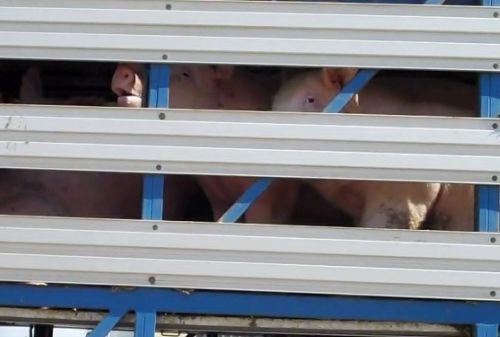
This month’s edition of The Australian Women’s Weekly magazine included a six-page article by Mark Whittaker on the Australian pig meat industry, titled “The Truth About Pig Farms”. Here are my thoughts:

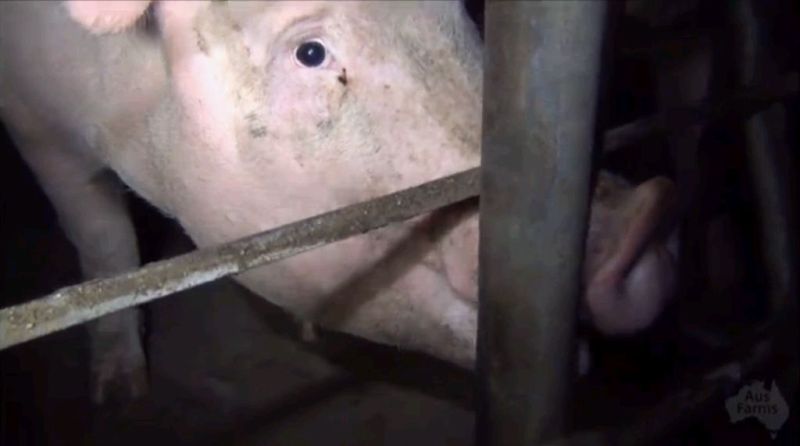
  • It was interesting that the journalist, Mark Whittaker, had already arranged to visit Ean Pollard’s piggery just before its sow stalls were filmed by activists.
  • Whittaker seemed blasé in reporting the results of tail docking: “He [Pollard] points out some piglets smeared with a little blood from where their tails were cut off this morning. ‘They clean themselves up’ he says, pointing to another crate. ‘See, this lot were docked four days ago and they’re fine.'”
  • He was similarly blasé in reporting sows transferring from weaning to insemination: “The mothers get about a week off before they are inseminated and sent off to the area which has been a subject of much contention, the sow stalls.” His apparent attitude seems to highlight the fact that sows are considered to be production machines.
  • In describing Animals Australia’s “Make it Possible” advertisements, Pollard says, “These ads are all emotive. They dress it up with sympathetic music.” So meat, dairy and egg producers never undertake similar PR practices?
  • I was pleased to read that Lisa Chalk of Animals Australia had “warned” Whittaker that the industry would “put up . . . their best intensive pig farm in Australia”, and that they wouldn’t call it a factory farm. She was correct. Pollard calls it “indoor farming”. (Does that sound much more attractive?)
  • Chalk cited the case of Westpork in WA, where the activists’ video showed “hundreds of pigs living in muck”. “Porker wallow in excrement. There’s one dying, struggling to keep its snout above the level of faecel goop. A few dead ones are piled outside.” (It’s a shame that Whittaker refers to the pigs as “it”, rather than “he” or “she”.)
  • Whittaker reports that supermarket chain Coles’ “sow stall” free pig meat comes from sows who still live their 16 week pregnancy on “hard, slatted floors”. It would be impossible to follow their instincts in such surroundings.
  • He also reported that “Coles says it is now 100 per cent sow stall free.” That statement is only likely to be correct if Coles only sells home brand pork, because that’s the only brand it has committed to being sow stall free.
  • Whittaker spoke to Emily McKintosh of peak industry body, Australian Pork Ltd, who claimed that animal activists who enter industry properties “think they are above the law”. However, a key problem for animals is that industry members who mutilate them without anaesthetic or who confine them indoors for the entire lives, or in sow stalls and farrowing crates for extended periods, are protected by the law. If they were to treat domestic pets in that way, there’s a reasonable chance they would be prosecuted. In any event, there are many examples where activists have discovered practices that went beyond the law. Would those practices have ever been discovered without their involvement?
  • An activist who posed as a worker at a northern NSW piggery described “pigs getting dragged by their ears and being shot in the head . . . all their tails getting cut off, their teeth getting pulled with no anaesthetic. . . . Every day, you’d see animals getting hit with things. Dragged around, kicked around, sworn at, screamed at, things thrown at them. They use cattle prods and all that stuff as well.” He described a co-worker grabbing a sick piglet by the hind legs and smashing his or her head into the concrete.
  • Some unfortunate terminology was used in relation to free range farmers Matt and Sue Simmons, e.g.: they have been “growing pigs” for five years; Matt said the piglets “stay outdoors until they go to chop chop”.
  • There were some interesting insights from them too. The mainstream pig meat industry claims that farrowing crates are used in order to protect the piglets, yet Matt sees less mortality without the crates than what occurs with them. Also, “A lot of people have this romantic idea of free-range pig farming, but it’s still got to be intensive enough to be profitable”. Also, he said “you can’t farrow [give birth] in a crate”, but that’s what sows are being forced to do, as demonstrated at around the 2:20 mark in this 2009 video of Bangalow Pork in Queensland (“Super Butcher: from farm gate to your plate”).
  • Some comments from Lee McCosker of Humane Choice regarding free range: “A lot of people probably think they’re doing the right thing by buying ‘bred free-range’ or Coles Finest free-range or Primo free-range in Woolworths. Those farms, no one even knows where they are. There’s no transparency. . . . a lot of them say they are RSPCA accredited. But the RSPCA doesn’t accredit free-range” . . . “there is no legal definition of free-range”. She describes “bred free-range” as “half-hearted free-range, where the sows give birth outside, but the piglets are put inside after weaning at three to four weeks”.
  • Whittaker wanted to see a “bred free-range” system at Otway Pork, who supply Coles. However, Otway declined, “citing bio security”. Whittaker said: “It didn’t fill me with confidence in their transparency or the physical resilience of their animals.”
  • Whittaker’s concluding comments: “I began researching this story expecting to be horrified by intensive pig farming. Indeed, the YouTube videos of the Gingin [Westpork] piggery confirm that the worst is possible and that the animal liberationists have an important role to play in continuing to push for improvements. Yet the activist’s video of Ean’s farm [Lansdowne piggery] also demonstrated that cruelty is in the eye of the beholder. Farmers are improving in response to the pressure. Ultimately, though, it is the consumer that will drive this bus and they have to be prepared to pay to get to their chosen destination.”

Conclusion

Although I feel that Whittaker did a reasonable job in preparing the article, I wonder how anyone would feel if they were castrated, had their teeth clipped, tail cut off (if they had one) or ears notched, all without anaesthetic, or were forced to live their entire life indoors. The idea of cruelty being “in the eye of the beholder” wouldn’t offer much comfort in such circumstances.

Blog Author: Paul Mahony

Image: Extracted from the video “Australian sow stalls at Westmill Products ‘Lansdowne’ Piggery NSW, 2013”, courtesy aussiepigs.com.au
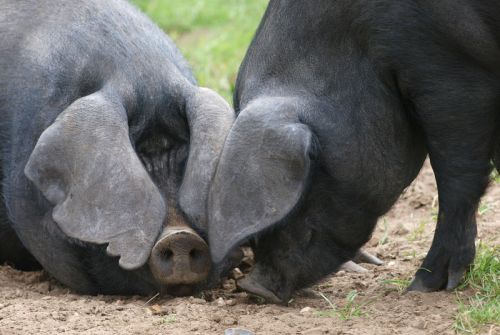
Two rare breed Large Black pigs, like those at Jonai Farms

This is an open letter to Tammi Jonas of Jonai Farms in relation to a project recently launched by ABC Radio National’s Bush Telegraph program.

The letter was prepared by Paul Mahony on behalf of Melbourne Pig Save and co-signed with MPS co-founder Karina Leung. It first appeared on the Facebook pages of Melbourne Pig Save and the ABC’s Bush Telegraph program, and in the comments section of the article “Why we will be castrating Wilbur 101” (refer below).

The program’s web page introduced the exercise this way:

RN’s chronicler of all things rural – Bush Telegraph – is staging a bold experiment, raising a pig to start a debate about free range farming and animal welfare. Over the coming months you can decide how to rear Wilbur 101 by voting in our Facebook polls

Here are links that provide some additional background:

Should we castrate this pig?“, Bush Telegraph, 16 May, 2013

Wilbur’s Woe’s“, Paul Mahony, 21 May, 2013

Why we will be castrating Wilbur 101“, Tammi Jonas, 22 May, 2013

Farmers choose to castrate Wilbur 101“, Bush Telegraph, 23 May, 2013

Bush Telegraph Facebook page

Bush Telegraph Facebook voting page

Humane Choice “True Free Range” Standards – Pigs – 2011 – Version 1.1 (Refer to Section 15.2, page 12)

OPEN LETTER TO TAMMI JONAS OF JONAI FARMS
129 Morgantis Rd, Eganstown, Victoria, 3461
4th June, 2013

Dear Tammi,

We’ve been following your “bold experiment, raising a pig to start a debate about free range farming and animal welfare”.

In the article dealing with your decision to castrate Wilbur, you said that you had asked omnivores to vote, not vegans. However, we could not see where the voting was intended to be limited in that way. We are vegans, and feel that we have a right to respond to a question asked by our national broadcaster, the ABC.

You have mentioned that you’ve been farming free-range rare breed Large Black pigs for a year and a half. You have also indicated that you had not previously used anaesthetic when castrating piglets, and initially did not intend using it for Wilbur. We note that you subsequently decided to use it for him as a result of feedback on Facebook.

We are concerned that it took the Facebook discussion for you to eventually decide on that approach, particularly when the Humane Choice “true free range” standards for pigs stipulate that anaesthetic should be used. However, the discussions on this topic in Facebook and on the Bush Telegraph forum have highlighted the lack of uniform, legally enforceable standards for free range farming.

Even the Humane Choice standards appear to allow ear notching without anaesthetic, provided it is “shown to be necessary”. The standards refer to the practice as “surgery”, rather than “mutilation”, which is not permitted.

Whether it is “surgery” or “mutilation”, we would like to think that anaesthetic would be used.

We understand from your radio interview with Cameron Wilson that ear notching occurs at Jonai Farms.

If you had intended from the beginning to use anaesthetic for Wilbur’s castration, the outcome of voting may have been different to that which eventuated.

Although vegans generally seek to avoid all forms of animal exploitation, when dealing with a situation where an animal is to be exploited regardless of their actions, they will almost invariably aim for the approach that involves the least suffering. If they could have been convinced that the castration option represented such an approach, then they may have supported it. Many voters may have been unaware that you changed your position on the use of anaesthetic, or may have voted before you did so.

Despite being treated better than pigs in factory farms, Wilbur is clearly a commodity who was brought into the world to be killed and eaten. His full name, “Wilbur 101”, appears to be consistent with that understanding when one considers the fact that all male pigs on your farm are named Wilbur. Each of the pig’s name is distinguished from the others’ names by a number, so each “name” is effectively just a number.

You’ve suggested that your pigs have only “one bad day”. But what a bad day it is! Here’s how Patty Mark of Animal Liberation Victoria described her experience of seeing a free range pig awaiting slaughter:

“The most prolonged suffering I’ve ever had to witness was in New South Wales when a free-range pig was approaching the stunner. She was hysterical, frothing at the mouth. Her chest heaved and caved as she struggled valiantly and continuously to escape. I ached to yell out, ‘Stop, enough!’ and hold her in my arms, soothe her, give her a drink of cool water, then take her to a safe place. Smoke rose from her temples as the man held the electric stunner firmly, longer than normal, to both sides of her head.”

Apart from the terror experienced by that poor pig, any day when your life is taken from you in order to satisfy the unnecessary culinary habits of humans would represent an unjust and horrific experience.

Besides, we believe the day of castration or ear notching (or other relevant procedures) without anaesthetic would have been another “bad day” for your piglets.

You have said: “Unfortunately, while the omnivorous public might have wanted to discuss the practicalities and ethics of castrating boars, a significant number of those opposed to eating meat joined the discussion and turned it into a rant against us, farmers generally, and meat eaters specifically. We were called ‘sick freaks’, ‘Neanderthals’, and ‘animal abusers’, to name some of the milder insults.”

Please note that we have not used terminology of that type in any comments. We simply aim to inform people of the facts behind their animal consumption, to assist them in purchasing in an informed manner.

We would be pleased to discuss these issues with you at any time that was convenient.

Kind Regards,

Karina Leung and Paul Mahony
Melbourne Pig Save

Image: Two Black Pigs © Nigel Baker | Dreamstime.com

The “Bush Telegraph” program on the Australian Broadcasting Corporation’s Radio National recently launched an exercise on Facebook involving a so-called “free range” piglet. The piglet was selected from his litter to carry the pre-determined name of Wilbur 101. I prefer to call him Wilbur, without the number.

Black piglet

Black piglet (not the “Large Black” breed like Wilbur)

This is how Bush Telegraph introduced the story on its web page:

Stuart and Tammi Jonas of Jonai Farms in central Victoria have agreed to let you decide how best to rear one of their pigs. They’ve given Bush Telegraph custody of a newborn male Large Black piglet called Wilbur 101. Wilbur 101 will be ready for slaughter by about Christmas, between now and then it’s up to you to vote in regular online polls and decide how best to be a free range farmer.

The first decision was whether or not to castrate Wilbur. The “no” vote won, but as in all decisions involved in the exercise, the farmers reserved the right of veto if they believed the majority decision would be contrary to Wilbur’s interests.

Implicit in the exercise is the assumption that we have the right to control the lives of animals from before they are born, when we decide to impregnate the mothers-to-be, until we decide when and how they will die.

The supposed benefits of free range farming, relative to the alternatives, seem to sit within those parameters.  While better for animals than alternatives such as factory farming, I find free range farming unacceptable, as I do not believe we have the right to control animals’ lives solely for our benefit.

Here’s a link to another Bush Telegraph page on this subject, including an audio file containing an interview between the host, Cameron Wilson, and farmers Stuart and Tammi Jonas. This extract highlights some of my main concerns with the position of the farmers:

Cameron Wilson: And Stuart, it’s important to point out here that we’re talking about a food production system; our program is not taking hold of one of these piglets as a pet at all, this pig will be ready for the kitchen table by the end of the year.

Stuart Jonas: Yes, and just back-tracking a little bit, I don’t personally like the word “processed”. We don’t process production units; they are living, breathing creatures that we care for, and at the end of the day, they are food and we do send them to the abattoirs and then cut them up, ready for meat products on our table. But just a personal choice of mine, I steer away from the word “processed”. We kill them, we cut them up and then we eat them.

Cameron Wilson: Killed and butchered?

Stuart Jonas: Yes.

I struggle to hear much compassion or empathy in Stuart’s comments. I doubt they’d provide much comfort to Wilbur.

The comments caused me to recall some words from Patty Mark, founder of Animal Liberation Victoria:

The most prolonged suffering I’ve ever had to witness was in New South Wales when a free-range pig was approaching the stunner. She was hysterical, frothing at the mouth. Her chest heaved and caved as she struggled valiantly and continuously to escape. I ached to yell out, “Stop, enough!” and hold her in my arms, soothe her, give her a drink of cool water, then take her to a safe place. Smoke rose from her temples as the man held the electric stunner firmly, longer than normal, to both sides of her head.

Lee McCosker, Chief Operating Officer for Humane Choice, participated in the discussion on Radio National’s Facebook page. Humane Choice is part of Humane Society International. Its website states, “Humane Choice True Free Range is a whole of farm accreditation system for Australian and New Zealand true free range, pasture raised pork, beef, lamb, chicken and egg producers.” Here is one of Ms McCosker’s comments, along with my response:

Lee McCosker: I think it should be noted that all rational discussion on the actual question asked has ceased and the voting has become about should we eat meat. The reality is that 5,000,000 pigs are slaughtered here every year and sabotaging this post is not going to change that. What we can change is how these animals are farmed and educate the meat-eating public. Trying to force your choices onto others is fruitless. I understand why you have chosen not to eat animal products but you are a minority. Lets get back to the question at hand or forget it. Either way it will not change Wilbur’s fate. Sensible discussion however may impact on how he lives until that final day.

Paul Mahony: Lee, just because we are the minority now, doesn’t mean we will always be. Whatever the decision, Wilbur is being treated as a commodity. Would a pet dog or cat be treated this way? People should respect the right of all animals to live and to be treated with dignity. That includes the avoidance of forced breeding programs. What right do we have to bring animals into the world, simply to be killed for food? Humans are the only species that controls other species in that way.

Although domestic pets are regularly sterilised, the procedure is not related to any desire to eventually consume them as food.

A particularly interesting aspect of this exercise was the initial decision that anaesthetic would not be used if Wilbur was castrated.  That decision reflected standard practice of Stuart and Tammi Jonas, but was contrary to Section 15.2 of Humane Choice’s standards for pigs. The farmers’ position in this instance seemed to reflect the lack of uniform standards for free range farming.

Based on feedback received on the Facebook page, the farmers subsequently decided that anaesthetic would be used if Wilbur was to be castrated.

Here’s a comment from another participant in the discussion, along with my response:

Michael Trant: Look at it this way. Livestock are raised to be eaten. They get access to feed, water, protection for predators, immunized against disease and other such. Compare that to a wild herd of wilderbeaste [sic]. When the rains don’t come, no one is there to feed out hay, make sure their water hole still has water. If one breaks its leg, no one is there to put it down, instead it hobbles along for weeks until it either dies from starvation or a lion crushes it throat. Nature is a cruel mistress, and the price livestock pay for not having to worry about all those nasty things is they get a quick death and we eat them. Anyone who thinks a natural death in the wild is better than a knife to the throat has frankly lost touch with nature.

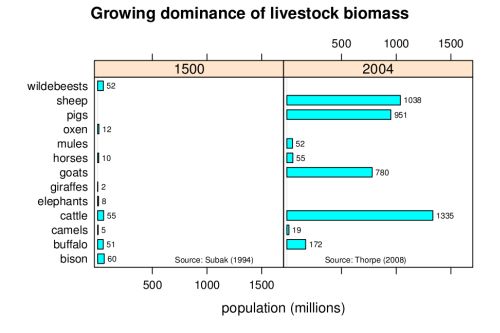
Paul Mahony: Michael, why are we forcing animals to breed for our benefit, when we could probably overcome world hunger without relying on them as a food source? The scale of the horror involved in animal agriculture goes way beyond what animals, through natural breeding, would ever have experienced in the wild. The chart “Growing dominance of livestock biomass” in this post gives some idea of the numbers involved.

rsubak-500-333

Geoff Russell, bravenewclimate.com


Additional comments (not on Facebook):

Geoff Russell, who created the chart, has pointed out that current livestock populations dwarf natural populations that preceded them.

He states: “Wildlife rates of conception, growth, and the like don’t match what can be achieved by artificial selection, artificial insemination, good fences, irrigated feed production, predator extermination and all the other paraphernalia of modern agriculture. These have produced a totally unnatural and unprecedented explosion in numbers of those animals which people have designated as livestock.”

Polly Pig

Ironically, on the day that voting ceased (three days after it started), I was able to post this comment on Facebook, following a post from Edgar’s Mission Farm Sanctuary. It highlights the true nature of pigs, as intelligent and sociable animals.

This is very timely. Polly Pig from Edgar’s Mission Farm Sanctuary today won the “Best Trick” competition at RSPCA’s Million Paws walk at Victoria Park Lake, Shepparton. An extract from the report below: “Common heard cries were ‘oh, she’s adorable’, ‘I just love her’, ‘gosh, I’ve never had a chance to meet pig before’, ‘look she’s smarter than my dog’ but no doubt the most heart-warming phrase we heard was ‘wow, I’m never going to eat bacon again!'”

Go Polly! You’re a magnificent ambassador for your species, and for all animals.

970880_10151896765465130_634135416_n_400_266

Make History!

In conclusion, I argue that it’s time to move on from entrenched social, cultural and commercial conditioning. In the words of the Vegan Society, UK, it’s time to make history.

Blog Author: Paul Mahony (also on on Twitter, Slideshare, Sribd and Viva la Vegan)

Images:

Black piglet © Kornilovdream | Dreamstime.com

Polly Pig at RSPCA’s Million Paws walk, Victoria Park Lake, Shepparton, 19th May, 2013, Edgar’s Mission Farm Sanctuary

Livestock biomass chart:

Russel, G. Forget the quality, it’s the 700 million tonnes which counts, 17 Nov 2009, http://bravenewclimate.com/2009/11/17/700-million-from-livestock/, citing Subak, S., GEC-1994-06 : Methane from the House of Tudor and the Ming Dynasty, CSERGE Working Paper, http://www.cserge.ac.uk/sites/default/files/gec_1994_06.pdf and Thorpe, A. Enteric fermentation and ruminant eructation: the role (and control?) of methane in the climate change debate, Climatic Change, April 2009, Volume 93, Issue 3-4, pp 407-431, http://link.springer.com/article/10.1007%2Fs10584-008-9506-x

Edits:

23 May, 2013: Correction of typing error

Guest post by Liz D

This guest post by Liz D is the third in a series on the nature of chickens. I aim to demonstrate that chickens are individuals, with their own lives and personalities.

Liz plunged into the world of chickens when she took in nine rescued chicks early in 2013.  Her new friends have etched a place in her heart, and she could no longer imagine living without companion chickens.  Paul Mahony

Early days

In the past I’d always interacted briefly with other people’s chickens. I’d never lived with chickens nor had ever known any personally or up close for any length of time.  I’d always thrived on other people’s stories of how individual and amazing chickens are.

In January 2013, I was given the opportunity to raise nine rescued one day old broiler (meat) chickens. They lived in my bedroom with me for the first four weeks, to be kept cool in the hot weather and warm at night under a heat lamp.

They were adorable little balls of fluff who from that very young age, had a vested interest in being alive.

2013-01-08 11.25.23-500-350

Adorable balls of fluff with a vested interest in being alive

Exploring

They explored their pen, pecked the eyes out of the toy bears I gave them to cuddle up against, huddled together under a rope mophead, as though it was their mum’s wings and coveted the food dish. They loved sleeping together on heat pads and under their heat lamp.

Four of them were easily identifiable by distinct markings, so they were named first. Blackie, Spot, Trouble and Tiny

Eventually I named the rest Big Wing, Gusto, Heckyl, Jeckyl and Gigi.

They were such happy and inquisitive little beings, always interested in everything going on around them.

Gigi in the mirror-250

Gigi: “I just can’t get this mascara right!”

One day I caught Gigi looking at herself in one of the dog’s upturned toys, which had a mirror on the base. She sat there for some time, no doubt thinking how pretty she was.

On warm days I’d load them all into a cat carrier and take them to the outside run that was set up for them. They explored their surroundings extensively, looking at sticks and bugs, and sometimes just all sitting together looking out at the garden, watching life around them.

Oh no, not the vet!

At about one week, Tiny, named because he wasn’t growing like the others, had a trip to the vet to get checked out. The vet, who said she’d never treated a chicken as young as Tiny, and didn’t really know all that much about them, suggested putting him to sleep, as he seemed to have a congenital disorder in his stomach. We took no notice of her and administered some antibiotics and lots of TLC and Tiny started to flourish and grow. He is now a feisty, happy boy.

To this day though, he doesn’t like human contact and I wonder if it was because he remembers being poked and prodded at a young age, and also having medicine syringed down his throat for five days.

Gigi is a special needs girl, as she doesn’t have strong enough bones to allow her to walk and run properly. She also had a trip to the vet at about 3 weeks old and had to be given medicine for 10 days, and isn’t so keen on being picked up or touched either, whereas Spot and Jekyl love a good scratch under the chin and a cuddle.

They say that dog’s neuroses and fears stem from the first three to four weeks of their lives, I wonder if chickens are just the same?

Now, where did I put that stick?

One day, when they were about 2 ½ weeks old, they were in the outside pen, and I had to pick up one of the girls to check her weight. She had a bit of a stick in her beak that she’d been squabbling over with another chicken, and when I picked her up, she dropped it down between my feet. I quickly weighed her and put her back down on the floor, and she ran off, then stopped suddenly, as though she remembered something and dashed back and picked up the piece of stick she’d dropped and took off again. This really displays an intelligent thought process and memory.

Just like the Waltons

I’d get home from work each night about 11 o’clock and the chicks would all cheep and chirp as I’d get into bed. Some of them would climb up on a box and peer at me sitting up in bed, wondering what I was up to. They would reach a crescendo before finally all settling down for the night. Sometimes one would then start again and I would often have to ask them all to please keep it down so I could get to sleep.

I didn’t want to plunge them into darkness, so I slept with a string of lantern lights on every night. Plus it meant that I could sit up and just look at them whenever I wanted to.  I loved hearing them all make contented little sounds as we all nodded off for the night, me, our two dogs, the cat and the nine chicks.

A big step

They graduated to a permanent outside pen at four weeks old, when they were almost fully feathered. The first night they stayed out there on their own, I was so worried about them, I got up and checked on them about three times.  I spent a lot of time just watching them grow, as being bred for meat, they have been bred to grow quickly. They almost grew feathers before my eyes.

At five weeks old, four girls Gusto, Blackie, Big Wing and Hekyl went to live at their new “forever” home. The next week, one of the boys, Trouble (now called Fabio), went to his wonderful new home too. While it was lovely having all nine here to watch and interact with, having Gigi and the three boys, Tiny, Jekyl and Spot left, meant I could really concentrate on getting to know them well.

A hot summer!

On hot days I spread out wet towels on the concrete to keep them cool and they would go mad “dust-bathing” on the towel until they were in just the right spot.

Keeping-Cool-500-333

Keeping cool on a wet towel

Tiny loves water running over his feet or standing in the water tray to cool off. They all love watching water run down the path, and love to pick things out as they float by.

Come and get it!

Watermelon is their favourite food, and I just have to yell out “’Watermelonnnnnn” from the shed door, and they’ll come running. Our youngest dog Ivy, has suddenly decided she likes watermelon too, as she is jealous of the chickens I think. The only fruit she’ll ever eat normally is apples. Jekyl has been known to jump up and pluck the chunk of watermelon from my hand if he thinks I’m too slow at putting it down for them. They hang around the shed door, as they know that their food comes out of there. If they think they should be fed outside of their meal time, they will venture into the shed and sit there until I come out, then they’ll make a racket and follow me until I give in and give them a snack. Jekyl likes to talk a lot in a little chuckling voice.

Meal time is funny to watch. When I let them out of their hutch in the morning, they chase me to the shed and storm in surrounding me while I get their breakfast ready. Tiny then stands in the food tray and scratches it up, Spot lays down and hangs his head over the side to eat. Gigi is a lady and has very good table manners.

Jekyl will eat seed for a while, then a bit of watermelon, then he’ll walk away and sit down with his back to everyone. Then he will suddenly get up like he’s remembered he was doing something important and go back and repeat the whole thing over about four times until he’s finished eating.

My partner, Chris, is their evening carer and builder of great chook sheds. He has built them a little palace that they sleep in at night.  They are free to roam around the garden until bedtime. When Chris gets home from work, his initial routine was to walk the dogs, then feed the dogs, cat and chooks in that order. Well the chooks weren’t having any of that and after about one week of this, they’d storm the back step demanding he feed them first. He of course gave in and they now are top of the list.

http://vimeo.com/62907579

Video: Dinner time for the chooks

Mutual respect

They are not afraid of our dogs and cat, and often I go out and the cat is lying in the middle with the four chooks laying around him. Tiny likes to walk under Ivy’s belly. They all seem to have worked out a mutual respect for each other.

The other day I went out into the garden and I could only see Gigi, Jekyl and Tiny. Our yard is extremely secure and there is no way that they could get out. But I couldn’t see Spot anywhere and my heart started to race. I ran down the back calling Spot, Spot, where are you? And he came running up to me as if to say, I’m here silly!! He was sleeping under the cool of a fern. Phew! I’m glad he knows his name!

When it gets near bedtime, Tiny is usually first to go in the hutch. When no one follows him, he’ll go back to the group and try and get them interested in following him. When he realises no one is taking any notice of him, after about 3 attempts he gives up and sits out with the others. When he does this, one of them decides it IS time to go to bed and they all toddle off. I’m sure they do it to annoy Tiny and have a laugh at his expense.

Reminiscing

Some days they like to come back up near the house and try and get into the hutch they spent a couple of weeks in, before they were big enough to roam free. They hang out at the door until I open it and then hop in and sit for a while, to reminisce I guess! Back to their old stomping ground. Then they’ll all hop out and go back to the garden.

If Chris is working in the shed, the chickens will usually follow him and sit around watching whatever he’s doing. When he was out there playing his guitar last week, Jekyl was making howling motions like a dog!! Chris couldn’t hear if he was making any noise though, as Jekyl stopped every time Chris stopped playing.

We will miss the boys

The chickens give us so much pleasure and are a joy to have living with us. As three of them are boys who will soon be roosters, they will have to go to their new homes, as roosters are not permitted in the suburbs. That is going to be a very sad day and I’m going to miss them terribly. I guess it just means we’ll have to get some more girls to keep Gigi (and me) company!

Da boyz-500-338

“Da boyz” in the early days. They will be greatly missed.

Having now lived with and experienced life with chickens, I can’t imagine not having them as companions.

Liz D (Edited by Paul Mahony)

Do you have any thoughts? We’d love your feedback or some news of your own experiences in the comments section below.

See also:

Saving Ester by Chantal Teague

When you’re adopting chickens, life’s like a box of chocolates by Tamara Kenneally

Confidential sources within the Australian Labor Party have indicated that there is a plan to draft the charismatic celebrity, Polly Pig, to their ranks. This move follows the aborted coup attempt this week, when Kevin Rudd declined to challenge Prime Minister Julia Gillard after being called upon to do so by former leader, Simon Crean.

We understand that Polly could not be happier in her current ambassadorial role with Edgar’s Mission Farm Sanctuary, but she may be tempted by a sense of duty to her country.

Indeed, we wonder if she may have already been considering the possibility, as some of her recent outings have resembled election campaign rallies.

One example was a recent open day at Melbourne University.

New Image-333-444

Polly sure is a big crowd-pleaser (Melbourne Uni)
Photo: Karina Leung

There was also the rally of animal rights group, Melbourne Pig Save, earlier this month, when Polly was mobbed by supporters in Melbourne’s busy Bourke St Mall.

481067_555474947818821_767222575_n-500

Polly basking in her fame. It’s best to keep the paparazzi happy if you can.
Photo: Jo-Anne McArthur | weanimals.org

Like most aspiring Australian Prime Ministers, Polly was keen to demonstrate her sporting prowess. On this occasion she chose the round ball game, scoring a magnificent goal with ease. Other talents were also evident in this short video.


Polly’s performance at the rally brought back memories of her victory in the RSPCA Million Paws Walk Best Trick Competition. Polly said proudly at the time:  “I beat all the dogs!”

The drafting of a leadership candidate in this way, should it proceed, is reminiscent of Bob Hawke’s ascent to the Prime Ministership for Labor in 1983, and the recent election of Queensland Premier Campbell Newman, representing the Liberal Nationals.

Polly would also not be the first media celebrity to be drafted. An example was former lead singer of rock band Midnight Oil, Peter Garrett, who is currently a minister in the Labor Government.

We wish Polly well if she accepts the challenge. We are confident that the standard of governance in this country would improve immeasurably.

For more information, please see:

facebook.com/MelbournePigSave
facebook.com/edgarsmission
edgarsmission.org.au/

Blog Author: Paul Mahony

Music in video: “Sometimes” by Steve Romig

Disclosure: The blog author is a co-founder of Melbourne Pig Save.

Guest post by Tamara Kenneally

Tamara Kenneally is an award-winning, animal based photographic artist living in Melbourne, Australia. Tamara is  passionately interested in animal behaviour, animal rights and animal welfare, all of which greatly influence her work.

Tamara cares for over thirty rescued hens (ex-battery and broiler) and four rescued sheep. She also has many dearly beloved, departed animals from the past locked forever in her heart.

You can see Tamara’s superb photography in this post and on her Facebook page at http://www.facebook.com/tamarakenneallyphotography.

Here we learn of five very different characters in Tamara’s very busy
life. 
Paul Mahony

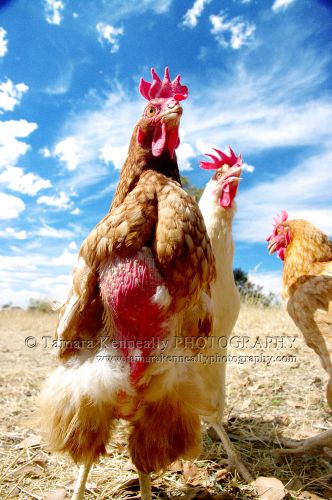
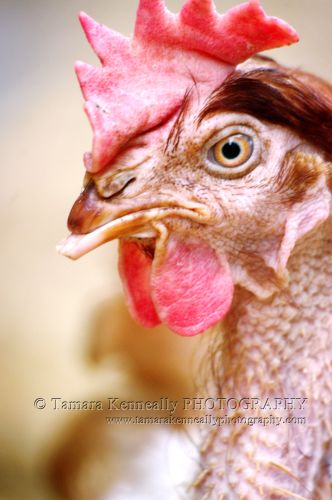
With so many chickens living with us, we’d have to be blind if we didn’t realise chickens had different personalities, just like people. Some chickens are quiet and shy. Some chickens are in your face and loud and brash. Some chickens prefer corn to watermelon. Some prefer to sleep in the corner rather than roost at night. Chickens make firm friends with other chickens that they like and get along with, just like people. Here are some stories about some of my dearest friends.

Retro, a real sweetie

Retro, one of our ex-battery hens (a Brown Isa cross Leghorn) is a sweet chicken who never pecks or starts a fight. She can be picked up without a fuss, sits on my knee without stressing and is generally just a very chilled-out girl. She waits at the back whilst all the bossier chickens get food. Other chickens don’t pick on her; her sweet nature seems to be appreciated by the other hens. Our rooster, Super Chicken, loves her the most of all the hens. Retro chooses to sleep on perch number four of coop number two. All of our chickens choose where they are going to sleep at night, and they all have their favourite spots.

Retro1WEB-500-332

Retro – a beautiful girl indeed.

RetroWEB-332-500

Retro may be a little quiet, but she stands tall and proud.


Willow and Boudica, sticking up for each other every day

Willow came to us after she was pulled from a pile of dead and rotting hen bodies at an ex-battery hen factory farm. She was unconscious and only now, ten months after rescue, has she started to re-grow her feathers. That’s how badly damaged her little body was. She may be small and delicate, but her personality makes up for it. Willow is the first to cause trouble. She is the first to plot an escape plan from the chicken run. She’s the first to find a way into the feed shed and she’s the first to come running when I call her name. Willow is a dominant hen, which means she fights a lot to keep her spot as “top” hen. She pecks anyone who gets in her way, everyone except Boudica.

Boudica was saved unconscious from the same pile as Willow and they recovered together. Willow was very protective of Boudica throughout their recovery period and, to this day, they sleep cuddled up to each other and call each other over when the other has found something delicious. If one accidentally wanders into coop number one to go to bed and the other is in coop number two, they will peck the tin walls between the coops all night trying to get to each other and this is why we always ensure they are together.

Willow has a very strange habit of pecking my back whenever I am crouching down to take a photograph. She does it every single time. I don’t need to ask who it is who is pecking me; I always know that it’s Willow.

WillowandBoudicaWEB-500-332

Willow and Boudica happily sharing

Willow1WEB-332-500

Willow standing tall and proud, just like Retro


Rhonda the roughead

Roughead Rhonda is named that for a reason. If she was a person, she would be drinking Jim Beam and cola on the street in front of the Aldi supermarket yelling for her five kids to “get the hell back here”. She is our chicken who would get tattoos if she could. Rhonda tells everyone where to go, including us. She barges through everyone to get to food, pecks anyone who gets in her way and generally makes everyone scared of her. Rhonda is a beautiful looking chicken, a pure Rhode Island Red, who was given to us by a couple who no longer wanted chickens in their small suburban backyard. Her looks do not reflect her personality that’s for sure.

RhondaWEB-332-500

Rhonda may look like a dainty lady but looks can be deceiving.


Mrs. Gideon is relishing her freedom

Mrs. Gideon was rescued about 6 weeks ago, and now that she has tasted freedom, she wants nothing else. Mrs. Gideon is the hardest chicken to put back into the chicken run at night. She wont be enticed with watermelon, lettuce or grapes. She doesn’t care if all of the other chickens have gone or not, she just continues to scratch up dirt and dust bathe to her heart’s content. I should have called her “Freedom”.

Gideon1WEB-332-500

Mrs Gideon: “I’ll just pretend I don’t hear them calling.”

Each chicken in my life makes me smile and adds a great deal of joy to every day, each for their own different reasons.

Tamara Kenneally (Edited by Paul Mahony)

Acknowledgement: Thanks to Tom Hanks in the movie “Forrest Gump” for the quotation: “My mama always said, ‘Life was like a box of chocolates. You never know what you’re gonna get.'”

See also:

Saving Ester by Chantal Teague

Life with chickens: a whole new world! by Liz Dealey

Guest post by Chantal Teague.

This guest post by Chantal Teague is the first in a series of Terrastendo posts on the nature of chickens. I aim to demonstrate that chickens are individuals, with their own lives and personalities. I will contrast that information in subsequent posts with information on what humans do to them in the name of food and profits, and the enormous scale of the industry.

Ester entered Chantal’s life via the school at which Chantal was teaching. I am confident that the story of their journey together will open many eyes and hearts.   Paul Mahony

IMG_3938_500

Ester likes to be in the house, and feels like a member of the family. That feeling is reciprocated.

How we came together

Ester came into my life quite unexpectedly. Hanging on to life with stoic determination, Ester’s days were seemingly numbered, or so I thought.

A schoolyard chicken, Ester’s existence had been no more than a novelty. Deemed to be of ‘educational’ use, Ester’s role in life was to teach children about animal husbandry. Yet, when she fell gravely ill, instead of being cared for, she was locked in a shed and left to die.

Days later, when I found Ester, she was alone in a darkened, cramped shed, unable to move, let alone eat or drink.

Things were touch and go

The school refused to pay for any medical care and I was ridiculed for ‘bothering’ to take her to the vet. On the way, I had to lift her head or wings, just to see if she was still breathing. Things did not look good.

Ester spent three nights and four long days having x-rays, needles, antibiotics and numerous tests at my demand. I was determined to not give up on her like everyone else had. It was on the fourth day that she began to eat again.

The new family member comes home

Having absolutely no experience in caring for chickens, I took Ester home. Disgusted at how the school had blatantly disregarded her life, I refused to bring her back. I had no idea how I would look after her; she was still unable to walk unassisted to get to her food and water. But as far as I was concerned, every day that she lived was a hard battle won.

Our bathroom became a chicken rehabilitation unit fitted out with a nesting box, straw, newspapers and a heat lamp. Each morning I would clean, feed and tend to Ester’s every need. Evenings were spent watching and hoping to see signs of improvement.

Getting to know each other

She was so unusual; big floppy comb, little black and orange eyes, prehistoric gnarly looking feet. I was used to the soft fur, wet black noses and big brown eyes of my dogs, and this was all a new experience. But what originally seemed so foreign soon became a comfort as I softened to Ester’s face and her quirky characteristics.

During those long nights, Ester and I would just sit and look at each other. I would stroke her feathers and comb, talking gently to her. She was eating more but was yet to walk.

It’s not only cats who purr

One night, I started to swirl my fingers gently around her head. It was then that I heard it for the first time; Ester started to purr. Not like a cat, in fact, not like any other animal. It was a thick, rolling of small clucks accompanied by a deep inhale and exhale. Her eyes closed, and Ester fell asleep.

The next night, I decided to pick her up. I wasn’t particularly good at handling her, but she patiently allowed me to put her on my knee. She looked up at me quizzically, but soon settled down as I stroked the back of her head once more. Shortly, I felt her sink into my lap. Her head fell slightly to the side and once again, she started to purr. Before I knew it, she was in a deep sleep. I sensed that she trusted me, and in that one action, I felt a great sense of responsibility to always look after her.

This became a nightly ritual. I would come in and give Ester her medication, drop water into her beak, and give her fresh food. Once Ester began to walk again, she would hobble over to me and wait for me to pick her up so she could sleep on my knee.  She craved my company and affection and would seek the comfort of my touch. If for any reason, I could not get to her at the usual time, I would find her sitting at the door, out of her nesting box, waiting for me, her food and water untouched.

Ester ventures outside

It took three months before I could bring myself to allow Ester into her outside pen. I’d spend evenings settling her in, and she would follow me to the door. I’d have to keep putting her back into her nesting box and talk to her gently before she’d settle. If we left the back door open, Ester would follow me inside and sit at my feet, waiting for me to lift her.

IMG_4016_500_333

A confident Ester after gaining strength and becoming accustomed to her external surroundings

She was becoming more confident by the day. Her strength was improving and we allowed her to come and go as she pleased. On cold nights, Ester would come inside and place herself next to our log fire. She’d ruffle up all her feathers, shake herself off a few times and slowly sink to her feet and go to sleep. She has been known to jump up on the arm of the couch to sit by me as I rode my exercise bike or next to my computer chair. Ester had to be near me at all times.

I’d often find, while I was preparing meals in the kitchen, Ester would follow me around like one of the dogs. She’d stand patiently waiting for a little treat to fall off the bench. I’d bend down and give her a pat and a piece of bread or some veggie scraps and she’d ‘tut tut’ back at me with a beak full of happiness.

That was over two years ago, and Ester is still a very affectionate little lady. Whenever she hears me coming she starts her little ‘chicken’ dance, picks up her petticoat and prepares to follow me with every step I take. She still follows me inside and waits by my side. It’s often a race to the back door to get in before Ester does.

A major scare

The night before my birthday last year, Ester went missing. We went outside to put her in her pen but she wasn’t in her usual place at the back door, where she’d wait for us. We spent hours searching for her by torchlight. I was hysterical; she had never done this before and was too weak to have jumped a fence and escape.

I spent the night listening to each and every miniscule sound. Was it a fox? A cat? Was Ester in trouble? Was she caught in something? Had she been taken by someone? The hypotheticals kept me awake all night, and by morning I was exhausted. At the first hint of sunlight I was back out searching for her, hoping she’d be by the back door waiting for me as usual. But she wasn’t there.

I sat by the door crying and calling for her. I pictured Ester there on my knee, looking up at me cooing and clucking softly as I preened her terracotta coloured feathers. I had no idea where she was or what had happened. Back to bed I crawled, despairing at the loss of my precious Ester. I kept hearing the sound of ‘pecking’ on the floorboards, but convinced myself I was imagining it.

When I got back up, I started walking around the house, I walked past the spare room and saw something I was convinced wasn’t there the night before; a clean, white egg. It was next to a fabric-covered chair. I lifted the chair slightly only to spot two orange, wrinkled chicken feet underneath. I threw the chair aside only to find Ester staring back at me. She’d trapped herself under the chair to lay her egg, and had spent the night in our spare room. Needless to say, she was the best gift I got all day.

Ester has a habit of leaving her eggs around our house. She prefers to lay in our home and will seek out the most unusual places to nest in. I’ve found eggs in the shower, on the top of stairs, and in the bedroom. Despite having the most luxurious of chicken beds, Ester thinks of herself as one of us, which she is, and prefers to be in the house where the action is.

Just one of the crew (or maybe the ringleader)

Every Sunday, the local fire brigade starts its siren as part of its training drills. Our dogs always start to howl. Ester happily joins in the chorus and will howl and cluck along with them. She puffs up her chest, fluffs her wings, lifts her head and parades around the house or backyard with the dogs. Sometimes, she will hear something and start howling first and the dogs will join in. She has the most entertaining personality; a fact I never even imagined when I first brought her home.

IMG_4004_333

Just one of the crew? Maybe the ringleader!

A deep emotional attachment

Having Ester in my home has enriched my life in ways I could never have imagined. Her intelligence, affectionate nature and charismatic personality were always there. It’s just that nobody had ever taken the time to get to know her before.

Ester had been a forgotten creature, stuck in a schoolyard and no more than a chore for the staff and students. Had her health not deteriorated like it had, and had I never been made aware, she may have died meaning nothing to anyone, like so many others. This incredibly deserving, brave and deeply determined little lady has forever etched herself into my heart. Her life is far more than an educational novelty, or an egg-laying machine, she is part of my family where she is loved immensely, and loves back in her own chicken way.

Chantal Teague (Edited by Paul Mahony)

See also:

When you’re adopting chickens, life’s like a box of chocolates by Tamara Kenneally

Life with chickens: a whole new world! by Liz Dealey

Are you aware of the television commercials from Meat and Livestock Australia spruiking the supposed nutritional benefits of eating red meat? They featured actor Sam Neill and an orangutan named Dennis (surname unknown).

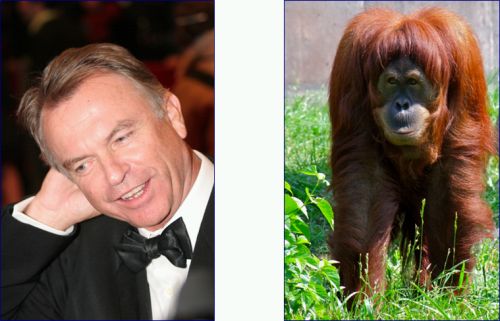
Sam

There’s no doubt he’s handsome, charismatic and intelligent.

I just wish I could say the same about Sam.

If I was wanting information on the health and nutritional benefits of red meat,  I’d rather rely on more objective sources than the industry that sells it.

The following authors and organisations have highlighted serious health concerns involving animal food products or commented on the benefits of the plant-based alternative:

Dr T. Colin Campbell and Thomas M. Campbell II, “The China Study” [1]

  • Dr. Campbell is the Jacob Gould Schurman Professor Emeritus of Nutritional Biochemistry at Cornell University.
  • The China Study website says, “The research project culminated in a 20-year partnership of Cornell University, Oxford University, and the Chinese Academy of Preventive Medicine, a survey of diseases and lifestyle factors in rural China and Taiwan. More commonly known as the China Study, ‘this project eventually produced more than 8,000 statistically significant associations between various dietary factors and disease.'”
  • Dr Campbell says, “People who ate the most animal-based foods got the most chronic disease … People who ate the most plant-based foods were the healthiest and tended to avoid chronic disease. These results could not be ignored.”

Physicians Committee for Responsible Medicine [2]

  • “Scientific research shows that health benefits increase as the amount of food from animal sources in the diet decreases, so vegan diets are the healthiest overall.”
  • “The 9 essential amino acids, which cannot be produced by the body, must be obtained from the diet. A variety of grains, legumes, and vegetables can also provide all of the essential amino acids our bodies require.  It was once thought that various plant foods had to be eaten together to get their full protein value, otherwise known as protein combining or protein complementing. We now know that intentional combining is not necessary to obtain all of the essential amino acids. As long as the diet contains a variety of grains, legumes, and vegetables, protein needs are easily met.”
  • “With the traditional Western diet, the average American consumes about double the protein her or his body needs. Additionally, the main sources of protein consumed tend to be animal products, which are also high in fat and saturated fat.”
  • And on calcium [3]Get your protein from plants, not animal products. Animal protein – in fish, poultry, red meat, eggs, and dairy products – tends to leach calcium from the bones and encourages its passage into the urine. Plant protein – in beans, grains, and vegetables – does not appear to have this effect.”

World Cancer Research Fund [4]

  • “There is strong evidence that red and processed meats are causes of bowel cancer, and that there is no amount of processed meat that can be confidently shown not to increase risk.”
  • “Aim to limit intake of red meat to less than 500g cooked weight (about 700-750g raw weight) a week. Try to avoid processed meats such as bacon, ham, salami, corned beef and some sausages.”

????????????????????????????????????????

Harvard University [5]

  • “Eating red meat is associated with a sharply increased risk of death from cancer and heart disease, according to a new study, and the more of it you eat, the greater the risk. The analysis, published online Monday in Archives of Internal Medicine, used data from two studies that involved 121,342 men and women who filled out questionnaires about health and diet from 1980 through 2006.”
  • “Previous studies have linked red meat consumption and mortality, but the new results suggest a surprisingly strong link.”
  • “‘When you have these numbers in front of you, it’s pretty staggering,’ said the study’s lead author, Dr. Frank B. Hu, a professor of medicine at Harvard.”

Geoff Russell, “CSIRO Perfidy”  [6]

  • CSIRO is the Commonwealth Scientific and Industrial Research Organisation.
  • The “plot” from the book:
  • Researchers in the 1990s discovered the similarities between damage to lung DNA from cigarettes and damage to bowel DNA caused by red meat:  . . . red meat induced . . . [a reaction in the bowel] similar to . . . cigarette smoke.” UK medical researchers, 1996
  • CSIRO research scientists, early 2006: “Earlier reports suggested that high intake of red or processed meats could be a risk factor [for bowel cancer]. Three large population studies have recently confirmed those earlier reports.”
  • Documents obtained under Freedom of Information legislation show that CSIRO researchers informed the CSIRO Board “Recent findings from [CSIRO] scientists have established that diets high in red meat, processed meats and the dairy protein casein can significantly increase the risk of bowel cancer.” CSIRO scientists inform the CSIRO Board, April 2006
  • Despite the above, CSIRO Total Wellbeing Diet, Book 2, October 2006: “Studies have shown that fresh red meat (beef and lamb) is not a significant risk factor for colorectal cancer.”

American Dietetic Association [7]

  • “It is the position of the American Dietetic Association that appropriately planned vegetarian diets, including total vegetarian or vegan diets, are healthful, nutritionally adequate, and may provide health benefits in the prevention and treatment of certain diseases. Well-planned vegetarian diets are appropriate for individuals during all stages of the life cycle, including pregnancy, lactation, infancy, childhood, and adolescence, and for athletes. A vegetarian diet is defined as one that does not include meat (including fowl) or seafood, or products containing those foods.”

Dr Caldwell Esselstyn  [8]

  • Dr. Caldwell Esselstyn has served as President of the American Association of Endocrine Surgeons and was the first recipient of the Benjamin Spock Award for Compassion in Medicine. He is a former Olympic gold medal rower, and received the Bronze Star while serving as an army surgeon in the Vietnam war. He is a former member of the Board of Governors at the Cleveland Clinic, and has been credited by former President Bill Clinton as a key person responsible for his transition to a vegan diet. (Dr T. Colin Campbell, referred to above, was another. They have both been featured in the documentary film “Forks Over Knives“.)
  • “If the truth be known coronary artery disease is a toothless paper tiger that need never, ever exist and if it does exist it need never, ever progress.”
  • The cause of heart disease “is the typical western diet of processed oils, dairy, and meat which destroys the life jacket of our blood vessels known as our endothelial cells. This cell layer is a one cell thick lining of all of our blood vessels. Endothelial cells manufacture a magical protective molecule of gas called nitric oxide, which protects our blood vessels. It keeps our blood flowing smoothly, it is the strongest dilator (widener), of our blood vessels, it inhibits the formation of blockages (plaques), and it inhibits inflammation.”
  • Dr Esselstyn argues that most of the medical profession’s focus in relation to heart disease is on treating symptoms, rather than curing or preventing the underlying disease. [9]
  • He recommends a diet comprising vegetables, legumes, whole grains and fruit.
  • Something that may surprise some is that he recommends against consuming avocado, nuts and oils, including olive oils. (More on that in a future post.)

National Cancer Institute and Loma Linda University [10]

  • Kathy Freston reported in Huffington Post in December 2012:
  • “A new study . . . reported that vegans have lower rates of cancer than both meat-eaters and vegetarians. Vegan women, for example, had 34 percent lower rates of female-specific cancers such as breast, cervical, and ovarian cancer. And this was compared to a group of healthy omnivores who ate substantially less meat than the general population (two servings a week or more), as well as after controlling for non-dietary factors such as smoking, alcohol, and a family history of cancer.”
  • Studies comparing levels of [cancer-promoting growth hormone] IGF-1 in meat-eaters vs. vegetarians vs. vegans suggest that we should lean toward eliminating animal products from our diets altogether. This is supported by the new study in which the thousands of American vegans studied not only had lower rates of obesity, diabetes, and hypertension, but significantly lower cancer risk as well.”
  • “This makes sense when you consider the research done by Drs. Dean Ornish and Nobel Prize winner Elizabeth Blackburn; they found that a vegan diet caused more than 500 genes to change in only three months, turning on genes that prevent disease and turning off genes that cause breast cancer, heart disease, prostate cancer, and other illnesses.”
  • “This is empowering news, given that most people think they are a victim of their genes, helpless to stave off some of the most dreaded diseases.”

Will Tuttle, “The World Peace Diet” [11]

  • In his 2005 book, “The World Peace Diet”, Will Tuttle referred extensively to the detrimental health impacts of eating animals, including comments on the growth hormone IGF-1, as referred to above.
  • Also included in his comments is material on the main protein in cow’s milk, casein, which has a molecular weight more than 16 times that of a human mother’s milk.
  • In respect of casein, he states: ” . . . because it is so durable and sticky, [it] is used as a binder in paint, and as the glue that holds plywood together and sticks labels to bottles. It is perfect for building a calf’s tissues but causes incalculable harm to humans.”
  • In addition to referring to various conditions linked with dairy products, he writes: “Can the sensitive human tissues that make up the young child’s mind-body system possibly be properly formed with the gluey and cumbersome casein and excess fat that are meant for growing young bovines?”. (Let’s remember that dairy cows can commonly weigh over 400 kilograms or 880 pounds.)
  • “To continue to eat dairy products into adolescence and adulthood compounds and reinforces the tragedy.”

Conclusion

It seems common sense that the food we eat will affect our health. Based on the evidence referred to here and elsewhere, a general move away from animal products seems essential if we are to meaningfully reduce the risk of experiencing chronic diseases that are reaching epidemic proportions. We need to consider the matter objectively, rather than acting on the basis of cultural, social and commercial conditioning. The power is in our hands.

Images:

“Sam Neill” | © Denis Makarenko | Dreamstime.com

“Orangutan | © Valariej | Dreamstime.com (This is not Dennis from the commercials)

“Medical team in operating room” | © Nyul | Dreamstime.com

References:

[1] Campbell, T.C. & Campbell, T.M. “The China Study”, Wakefield Press, 2007, http://www.thechinastudy.com/

[2] Physicians Committee for Responsible Medicine, http://www.pcrm.org/about/about/about-pcrm; http://www.pcrm.org/health/diets/vegdiets/how-can-i-get-enough-protein-the-protein-myth http://www.pcrm.org/health/diets/vegdiets/vegetarian-foods-powerful-for-health

[3] Physicians Committee for Responsible Medicine, “Calcium and Strong Bones” http://www.tcolincampbell.org/courses-resources/article/calcium-and-strong-bones/?tx_ttnews[backPid]=76&cHash=ecaa8da224c1dcd787275de3da8dcffd

[4] World Cancer Research Fund “Cancer prevention recommendations and videos”, http://www.wcrf.org/cancer_research/cup/recommendations.php

[5] Bakalar, N., “Risks: More Red Meat, More Mortality”, The New York Times, 12 March, 2012, http://www.nytimes.com/2012/03/13/health/research/red-meat-linked-to-cancer-and-heart-disease.html?_r=1&scp=2&sq=red%20meat%20harvard&st=cse#

[6] Russell, G., “CSIRO Perfidy”, Vivid Publishing, 2009, http://www.perfidy.com.au/

[7] Craig, W.J., Mangels, A.R., American Dietetic Association, “Position of the American Dietetic Association: vegetarian diets.”, J Am Diet Assoc. 2009 Jul;109(7):1266-82, http://www.ncbi.nlm.nih.gov/pubmed/19562864

[8] Freston, K., “Heart Disease: A Toothless Paper Tiger That Need Never Exist”, Huffpost Healthy Living, 27 October 2009, http://www.huffingtonpost.com/kathy-freston/heart-disease-a-toothless_b_334285.html

[9] Caldwell B Esselstyn Jr, MD “Prevent and Reverse Heart Disease” http://www.heartattackproof.com/excerpt.htm

[10] Freston, K., “A Vegan Diet (Hugely) Helpful Against Cancer”, Huffpost Healthy Living, 9 December 2012, http://www.huffingtonpost.com/kathy-freston/vegan-diet-cancer_b_2250052.html?ref=topbar&utm_hp_ref=fb&src=sp&comm_ref=false#sb=3513286,b=facebook

[11] Tuttle, W. “The World Peace Diet”, Lantern Books, 2005, pp. 114 & 124, http://www.theworldpeacediet.com/

Blog Author: Paul Mahony (Also on Twitter, Scribd and Slideshare)

Note: None of the information in this article is intended to represent health, medical, dietary, nutritional or similar advice.

Horse and pig meat has been found in so-called “beef” burgers sold in Britain and Ireland.

https://www.youtube.com/watch?v=2rHL34vY1Hg

Video: Horse and pig meat found in British “beef” burgers (2.09).

Is this a problem? Certainly not!

The people of Britain, Ireland (and Australia) ought to get over their hang-up about eating horse meat. If we can eat cows, then we can eat horses. And why stop there? If we can eat pigs and lambs, then we can eat dogs and cats.

Surely, if farm animals exist for our culinary benefit, then horses, dogs, cats and others should also “step up to the plate” when required.

With our rapidly growing population, those animals should accept that they will be required to help out sooner, rather than later. After all, they’re very popular components of the diet in many other countries.

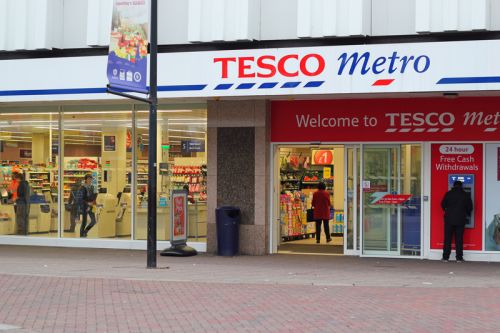
Tesco supermarket

Tesco: one of the supermarket chains with horse and pig meat in “beef” burgers

Something else that should allay consumers’ concerns is this assurance from a long-term Tesco customer:

Video: No side-effects from Tesco’s burgers (0.20)

Blog Author: Paul Mahony (Also on Twitter & Slideshare)

Image: Tesco Metro store. © Clearvista | Dreamstime.com

Note: First video link replaced on 13th Feb, 2013 after the original version was removed from Youtube.

One of Australia’s leading supermarket chains, Coles, has been running a major advertising campaign highlighting the fact that its “Coles Brand” fresh pork and local and imported ham and bacon products are now sow stall free.

Here’s celebrity chef Curtis Stone with Coles’ Head of Responsible Sourcing and Quality, Jackie Healing, discussing the firm’s recent initiatives:

http://www.youtube.com/watch?v=af1MqQGW61U&feature=player_embedded

Some extracts:

Curtis Stone: So now that we’ve changed the production of pork, what does that actually mean for the customer?

Jackie Healing: Well, it means they can buy great quality pork and they can be confident that the animals used to make that pork have been treated properly. It’s really important to treat the animals with respect.

Unfortunately, the act of removing sow stalls will not, on its own, guarantee a good outcome for pigs.

Going back to Jackie Healing’s comment, let’s consider the question of respect.

Is it respectful to:

  • confine an animal indoors for her entire life, in a continual cycle of pregnancy and birth?
  • confine her in a farrowing crate (which is even more restrictive than a sow stall) for twenty-four hours per day for up to six weeks on end?
  • cart her off to the slaughterhouse when she can no longer become pregnant?
  • kill pigs for food between four and twelve months of age, when they would otherwise live for around ten years?
  • cut an animal’s tail off without pain relief in the first few days of life?
  • cut large pieces out of the animal’s ears without pain relief?
  • clip his or her teeth to the gum line without pain relief?
  • castrate him without pain relief?[i]

Some of those horrors occur in traditional farming, so the cruelty is not limited to the “factory” variety.

VID00096-2Image: Pigs awaiting slaughter, Melbourne, Australia, January, 2013

Has factory farming ended?

Contrary to what campaigning group Care2 recently reported, the move by Coles on sow stalls does not mean an end to the factory farming of pigs among Coles’ suppliers. Sow stalls are only one aspect of factory farming, and even Coles is allowing them to be used for up to 24 hours per pregnancy.

Similarly, this video from Mercy for Animals indicates that sow stalls have been banned in Australia. That is incorrect. A partial, voluntary ban by producer-owned Australian Pork Ltd (APL) will be phased in by 2017, but there is no legislative ban. The APL ban will still allow for up to 11 days of confinement, and is not binding on individual producers.

A partial legislative ban to be  introduced in Tasmania will allow sow stalls to be used for up to 10 days after mating. This will occur despite the Tasmanian government previously announcing that it would introduce a 6 week limit on sow stalls in 2014, and then ban them altogether by 2017.

Even to the extent that the conditions and treatment of pigs may improve as a result of Coles’ initiative, the appropriate inspection regime is critical. Pigs were let down horrifically in that regard in the cases of (for example) Oliver’s Piggery and Wally’s Piggery. At the time of the Oliver’s investigation, the piggery was supplying 20 percent of the fresh pork sold by Coles’ major competitor, Woolworths, in Tasmania.

Do Coles’ customers really understand how pigs are treated?

Rather than a desire on its own part to reduce suffering, Coles says the initiative to remove sow stalls “is a response to demand from our customers for more responsibly sourced products”.

Accordingly, it would be helpful to know the extent to which Coles’ customers are aware of other forms of cruelty that are legally and routinely imposed on the pigs they eat. In focus group sessions and other forms of interaction with customers, has Coles informed them that (for example) piglets are routinely mutilated without pain relief and that sows may still live their entire lives indoors?

If Coles’ customers want to avoid cruelty, then more action is required

ABC Radio National’s  Bush Telegraph program, together with the Department of Agriculture, Fisheries and Forestry, presented the inaugural “AgTalks” event in Melbourne on 22nd November, 2012.

A live panel discussion and audience Q&A considered the notion: “Australians don’t care where their food comes from, as long as it’s cheap and looks good”.

The panel included John Durkan, Merchandise Director of Coles.

The event was broadcast on Monday, 26 November, 2012. You can see details of the program, and hear the podcast, here.

Question to John Durkan, Coles from Paul Mahony, Melbourne Pig Save:

In terms of animal cruelty, do you think your customers are aware  . . . of the legalised cruelty that still exists in terms of mutilation of piglets, for example, without anaesthetic? That is tail docking, ear notching, teeth clipping, castration, etc., and should consumers be made aware of those sorts of things to help their [purchasing] choices?

Response from John Durkan:

It’s quite a deep and broad issue, so do consumers think that deeply and broadly about it? . . . We get no information back to say that they do. What they do want to know is that there is no cruelty to animals, that they’re treated well, they are grown in the right conditions, and exactly what we’re doing with sow stalls and free range and not selling caged eggs is for the very reason that consumers tell us that they want to move in this direction.

If, as John Durkan says, customers “want to know that there is no cruelty to animals, that they’re treated well, they are grown in the right conditions”, then why is legalised cruelty still occurring routinely?

As reported in an earlier blog post, animal food production is exempt from cruelty laws in relation to many routine practices.

556603_10152104860180422_369496804_n

Image showing some of the joys of a farrowing crate. Credit: Jo-Anne McArthur / We Animals with Igualdad Animal / Animal Equality

How to avoid cruelty

The only way to avoid treating animals cruelly is to stop using them in food and other products.

If you haven’t already adopted that approach, why not think about it? You have the power to fundamentally improve the lives of animals who are deprived of that power themselves.

How do you go about it?

Vegan Easy is a great place to start, including recipes, information and inspirational stories.

Best of luck on an enlightening journey!

Blog Author

Paul Mahony (Also on Twitter & Slideshare)

Update

Various edits on 2 October 2017


[i]   It should be noted that castration, while permitted, does not occur as routinely in Australia as in some other countries.