Archives for posts with tag: Factory farming

Guest post by Tamara Kenneally

Tamara Kenneally is an award-winning, animal based photographic artist living in Melbourne, Australia. Tamara is  passionately interested in animal behaviour, animal rights and animal welfare, all of which greatly influence her work.

Tamara cares for over thirty rescued hens (ex-battery and broiler) and four rescued sheep. She also has many dearly beloved, departed animals from the past locked forever in her heart.

You can see Tamara’s superb photography in this post and on her Facebook page at http://www.facebook.com/tamarakenneallyphotography.

Here we learn of five very different characters in Tamara’s very busy
life. 
Paul Mahony

With so many chickens living with us, we’d have to be blind if we didn’t realise chickens had different personalities, just like people. Some chickens are quiet and shy. Some chickens are in your face and loud and brash. Some chickens prefer corn to watermelon. Some prefer to sleep in the corner rather than roost at night. Chickens make firm friends with other chickens that they like and get along with, just like people. Here are some stories about some of my dearest friends.

Retro, a real sweetie

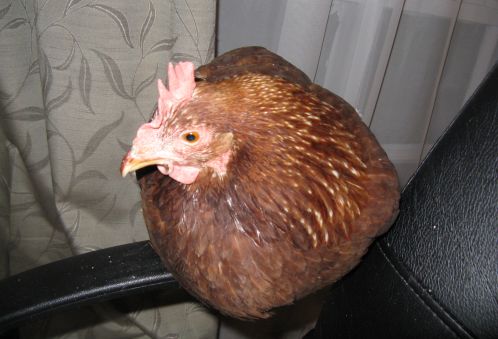
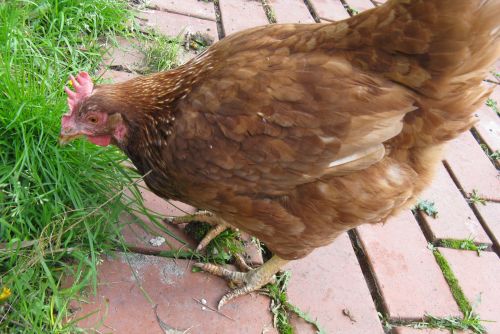
Retro, one of our ex-battery hens (a Brown Isa cross Leghorn) is a sweet chicken who never pecks or starts a fight. She can be picked up without a fuss, sits on my knee without stressing and is generally just a very chilled-out girl. She waits at the back whilst all the bossier chickens get food. Other chickens don’t pick on her; her sweet nature seems to be appreciated by the other hens. Our rooster, Super Chicken, loves her the most of all the hens. Retro chooses to sleep on perch number four of coop number two. All of our chickens choose where they are going to sleep at night, and they all have their favourite spots.

Retro1WEB-500-332

Retro – a beautiful girl indeed.

RetroWEB-332-500

Retro may be a little quiet, but she stands tall and proud.


Willow and Boudica, sticking up for each other every day

Willow came to us after she was pulled from a pile of dead and rotting hen bodies at an ex-battery hen factory farm. She was unconscious and only now, ten months after rescue, has she started to re-grow her feathers. That’s how badly damaged her little body was. She may be small and delicate, but her personality makes up for it. Willow is the first to cause trouble. She is the first to plot an escape plan from the chicken run. She’s the first to find a way into the feed shed and she’s the first to come running when I call her name. Willow is a dominant hen, which means she fights a lot to keep her spot as “top” hen. She pecks anyone who gets in her way, everyone except Boudica.

Boudica was saved unconscious from the same pile as Willow and they recovered together. Willow was very protective of Boudica throughout their recovery period and, to this day, they sleep cuddled up to each other and call each other over when the other has found something delicious. If one accidentally wanders into coop number one to go to bed and the other is in coop number two, they will peck the tin walls between the coops all night trying to get to each other and this is why we always ensure they are together.

Willow has a very strange habit of pecking my back whenever I am crouching down to take a photograph. She does it every single time. I don’t need to ask who it is who is pecking me; I always know that it’s Willow.

WillowandBoudicaWEB-500-332

Willow and Boudica happily sharing

Willow1WEB-332-500

Willow standing tall and proud, just like Retro


Rhonda the roughead

Roughead Rhonda is named that for a reason. If she was a person, she would be drinking Jim Beam and cola on the street in front of the Aldi supermarket yelling for her five kids to “get the hell back here”. She is our chicken who would get tattoos if she could. Rhonda tells everyone where to go, including us. She barges through everyone to get to food, pecks anyone who gets in her way and generally makes everyone scared of her. Rhonda is a beautiful looking chicken, a pure Rhode Island Red, who was given to us by a couple who no longer wanted chickens in their small suburban backyard. Her looks do not reflect her personality that’s for sure.

RhondaWEB-332-500

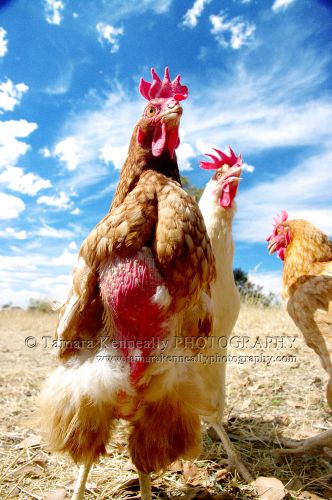
Rhonda may look like a dainty lady but looks can be deceiving.


Mrs. Gideon is relishing her freedom

Mrs. Gideon was rescued about 6 weeks ago, and now that she has tasted freedom, she wants nothing else. Mrs. Gideon is the hardest chicken to put back into the chicken run at night. She wont be enticed with watermelon, lettuce or grapes. She doesn’t care if all of the other chickens have gone or not, she just continues to scratch up dirt and dust bathe to her heart’s content. I should have called her “Freedom”.
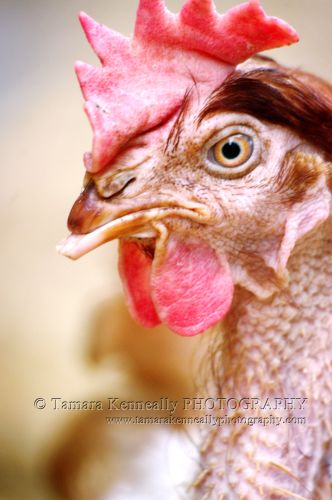
Gideon1WEB-332-500

Mrs Gideon: “I’ll just pretend I don’t hear them calling.”

Each chicken in my life makes me smile and adds a great deal of joy to every day, each for their own different reasons.

Tamara Kenneally (Edited by Paul Mahony)

Acknowledgement: Thanks to Tom Hanks in the movie “Forrest Gump” for the quotation: “My mama always said, ‘Life was like a box of chocolates. You never know what you’re gonna get.'”

See also:

Saving Ester by Chantal Teague

Life with chickens: a whole new world! by Liz Dealey
Guest post by Chantal Teague.

This guest post by Chantal Teague is the first in a series of Terrastendo posts on the nature of chickens. I aim to demonstrate that chickens are individuals, with their own lives and personalities. I will contrast that information in subsequent posts with information on what humans do to them in the name of food and profits, and the enormous scale of the industry.

Ester entered Chantal’s life via the school at which Chantal was teaching. I am confident that the story of their journey together will open many eyes and hearts.   Paul Mahony

IMG_3938_500

Ester likes to be in the house, and feels like a member of the family. That feeling is reciprocated.

How we came together

Ester came into my life quite unexpectedly. Hanging on to life with stoic determination, Ester’s days were seemingly numbered, or so I thought.

A schoolyard chicken, Ester’s existence had been no more than a novelty. Deemed to be of ‘educational’ use, Ester’s role in life was to teach children about animal husbandry. Yet, when she fell gravely ill, instead of being cared for, she was locked in a shed and left to die.

Days later, when I found Ester, she was alone in a darkened, cramped shed, unable to move, let alone eat or drink.

Things were touch and go

The school refused to pay for any medical care and I was ridiculed for ‘bothering’ to take her to the vet. On the way, I had to lift her head or wings, just to see if she was still breathing. Things did not look good.

Ester spent three nights and four long days having x-rays, needles, antibiotics and numerous tests at my demand. I was determined to not give up on her like everyone else had. It was on the fourth day that she began to eat again.

The new family member comes home

Having absolutely no experience in caring for chickens, I took Ester home. Disgusted at how the school had blatantly disregarded her life, I refused to bring her back. I had no idea how I would look after her; she was still unable to walk unassisted to get to her food and water. But as far as I was concerned, every day that she lived was a hard battle won.

Our bathroom became a chicken rehabilitation unit fitted out with a nesting box, straw, newspapers and a heat lamp. Each morning I would clean, feed and tend to Ester’s every need. Evenings were spent watching and hoping to see signs of improvement.

Getting to know each other

She was so unusual; big floppy comb, little black and orange eyes, prehistoric gnarly looking feet. I was used to the soft fur, wet black noses and big brown eyes of my dogs, and this was all a new experience. But what originally seemed so foreign soon became a comfort as I softened to Ester’s face and her quirky characteristics.

During those long nights, Ester and I would just sit and look at each other. I would stroke her feathers and comb, talking gently to her. She was eating more but was yet to walk.

It’s not only cats who purr

One night, I started to swirl my fingers gently around her head. It was then that I heard it for the first time; Ester started to purr. Not like a cat, in fact, not like any other animal. It was a thick, rolling of small clucks accompanied by a deep inhale and exhale. Her eyes closed, and Ester fell asleep.

The next night, I decided to pick her up. I wasn’t particularly good at handling her, but she patiently allowed me to put her on my knee. She looked up at me quizzically, but soon settled down as I stroked the back of her head once more. Shortly, I felt her sink into my lap. Her head fell slightly to the side and once again, she started to purr. Before I knew it, she was in a deep sleep. I sensed that she trusted me, and in that one action, I felt a great sense of responsibility to always look after her.

This became a nightly ritual. I would come in and give Ester her medication, drop water into her beak, and give her fresh food. Once Ester began to walk again, she would hobble over to me and wait for me to pick her up so she could sleep on my knee.  She craved my company and affection and would seek the comfort of my touch. If for any reason, I could not get to her at the usual time, I would find her sitting at the door, out of her nesting box, waiting for me, her food and water untouched.

Ester ventures outside

It took three months before I could bring myself to allow Ester into her outside pen. I’d spend evenings settling her in, and she would follow me to the door. I’d have to keep putting her back into her nesting box and talk to her gently before she’d settle. If we left the back door open, Ester would follow me inside and sit at my feet, waiting for me to lift her.

IMG_4016_500_333

A confident Ester after gaining strength and becoming accustomed to her external surroundings

She was becoming more confident by the day. Her strength was improving and we allowed her to come and go as she pleased. On cold nights, Ester would come inside and place herself next to our log fire. She’d ruffle up all her feathers, shake herself off a few times and slowly sink to her feet and go to sleep. She has been known to jump up on the arm of the couch to sit by me as I rode my exercise bike or next to my computer chair. Ester had to be near me at all times.

I’d often find, while I was preparing meals in the kitchen, Ester would follow me around like one of the dogs. She’d stand patiently waiting for a little treat to fall off the bench. I’d bend down and give her a pat and a piece of bread or some veggie scraps and she’d ‘tut tut’ back at me with a beak full of happiness.

That was over two years ago, and Ester is still a very affectionate little lady. Whenever she hears me coming she starts her little ‘chicken’ dance, picks up her petticoat and prepares to follow me with every step I take. She still follows me inside and waits by my side. It’s often a race to the back door to get in before Ester does.

A major scare

The night before my birthday last year, Ester went missing. We went outside to put her in her pen but she wasn’t in her usual place at the back door, where she’d wait for us. We spent hours searching for her by torchlight. I was hysterical; she had never done this before and was too weak to have jumped a fence and escape.

I spent the night listening to each and every miniscule sound. Was it a fox? A cat? Was Ester in trouble? Was she caught in something? Had she been taken by someone? The hypotheticals kept me awake all night, and by morning I was exhausted. At the first hint of sunlight I was back out searching for her, hoping she’d be by the back door waiting for me as usual. But she wasn’t there.

I sat by the door crying and calling for her. I pictured Ester there on my knee, looking up at me cooing and clucking softly as I preened her terracotta coloured feathers. I had no idea where she was or what had happened. Back to bed I crawled, despairing at the loss of my precious Ester. I kept hearing the sound of ‘pecking’ on the floorboards, but convinced myself I was imagining it.

When I got back up, I started walking around the house, I walked past the spare room and saw something I was convinced wasn’t there the night before; a clean, white egg. It was next to a fabric-covered chair. I lifted the chair slightly only to spot two orange, wrinkled chicken feet underneath. I threw the chair aside only to find Ester staring back at me. She’d trapped herself under the chair to lay her egg, and had spent the night in our spare room. Needless to say, she was the best gift I got all day.

Ester has a habit of leaving her eggs around our house. She prefers to lay in our home and will seek out the most unusual places to nest in. I’ve found eggs in the shower, on the top of stairs, and in the bedroom. Despite having the most luxurious of chicken beds, Ester thinks of herself as one of us, which she is, and prefers to be in the house where the action is.

Just one of the crew (or maybe the ringleader)

Every Sunday, the local fire brigade starts its siren as part of its training drills. Our dogs always start to howl. Ester happily joins in the chorus and will howl and cluck along with them. She puffs up her chest, fluffs her wings, lifts her head and parades around the house or backyard with the dogs. Sometimes, she will hear something and start howling first and the dogs will join in. She has the most entertaining personality; a fact I never even imagined when I first brought her home.

IMG_4004_333

Just one of the crew? Maybe the ringleader!

A deep emotional attachment

Having Ester in my home has enriched my life in ways I could never have imagined. Her intelligence, affectionate nature and charismatic personality were always there. It’s just that nobody had ever taken the time to get to know her before.

Ester had been a forgotten creature, stuck in a schoolyard and no more than a chore for the staff and students. Had her health not deteriorated like it had, and had I never been made aware, she may have died meaning nothing to anyone, like so many others. This incredibly deserving, brave and deeply determined little lady has forever etched herself into my heart. Her life is far more than an educational novelty, or an egg-laying machine, she is part of my family where she is loved immensely, and loves back in her own chicken way.

Chantal Teague (Edited by Paul Mahony)

See also:

When you’re adopting chickens, life’s like a box of chocolates by Tamara Kenneally

Life with chickens: a whole new world! by Liz Dealey
Horse and pig meat has been found in so-called “beef” burgers sold in Britain and Ireland.

https://www.youtube.com/watch?v=2rHL34vY1Hg

Video: Horse and pig meat found in British “beef” burgers (2.09).

Is this a problem? Certainly not!

The people of Britain, Ireland (and Australia) ought to get over their hang-up about eating horse meat. If we can eat cows, then we can eat horses. And why stop there? If we can eat pigs and lambs, then we can eat dogs and cats.

Surely, if farm animals exist for our culinary benefit, then horses, dogs, cats and others should also “step up to the plate” when required.

With our rapidly growing population, those animals should accept that they will be required to help out sooner, rather than later. After all, they’re very popular components of the diet in many other countries.

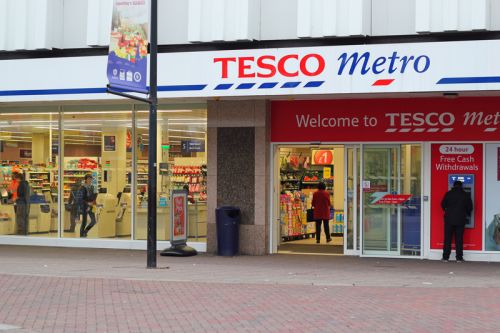
Tesco supermarket

Tesco: one of the supermarket chains with horse and pig meat in “beef” burgers

Something else that should allay consumers’ concerns is this assurance from a long-term Tesco customer:

Video: No side-effects from Tesco’s burgers (0.20)

Blog Author: Paul Mahony (Also on Twitter & Slideshare)

Image: Tesco Metro store. © Clearvista | Dreamstime.com

Note: First video link replaced on 13th Feb, 2013 after the original version was removed from Youtube.

One of Australia’s leading supermarket chains, Coles, has been running a major advertising campaign highlighting the fact that its “Coles Brand” fresh pork and local and imported ham and bacon products are now sow stall free.

Here’s celebrity chef Curtis Stone with Coles’ Head of Responsible Sourcing and Quality, Jackie Healing, discussing the firm’s recent initiatives:

http://www.youtube.com/watch?v=af1MqQGW61U&feature=player_embedded

Some extracts:

Curtis Stone: So now that we’ve changed the production of pork, what does that actually mean for the customer?

Jackie Healing: Well, it means they can buy great quality pork and they can be confident that the animals used to make that pork have been treated properly. It’s really important to treat the animals with respect.

Unfortunately, the act of removing sow stalls will not, on its own, guarantee a good outcome for pigs.

Going back to Jackie Healing’s comment, let’s consider the question of respect.

Is it respectful to:

  • confine an animal indoors for her entire life, in a continual cycle of pregnancy and birth?
  • confine her in a farrowing crate (which is even more restrictive than a sow stall) for twenty-four hours per day for up to six weeks on end?
  • cart her off to the slaughterhouse when she can no longer become pregnant?
  • kill pigs for food between four and twelve months of age, when they would otherwise live for around ten years?
  • cut an animal’s tail off without pain relief in the first few days of life?
  • cut large pieces out of the animal’s ears without pain relief?
  • clip his or her teeth to the gum line without pain relief?
  • castrate him without pain relief?[i]

Some of those horrors occur in traditional farming, so the cruelty is not limited to the “factory” variety.

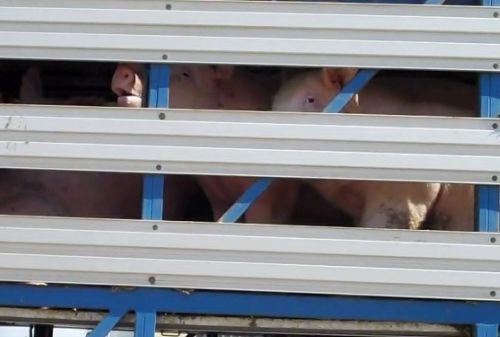
VID00096-2Image: Pigs awaiting slaughter, Melbourne, Australia, January, 2013

Has factory farming ended?

Contrary to what campaigning group Care2 recently reported, the move by Coles on sow stalls does not mean an end to the factory farming of pigs among Coles’ suppliers. Sow stalls are only one aspect of factory farming, and even Coles is allowing them to be used for up to 24 hours per pregnancy.

Similarly, this video from Mercy for Animals indicates that sow stalls have been banned in Australia. That is incorrect. A partial, voluntary ban by producer-owned Australian Pork Ltd (APL) will be phased in by 2017, but there is no legislative ban. The APL ban will still allow for up to 11 days of confinement, and is not binding on individual producers.

A partial legislative ban to be  introduced in Tasmania will allow sow stalls to be used for up to 10 days after mating. This will occur despite the Tasmanian government previously announcing that it would introduce a 6 week limit on sow stalls in 2014, and then ban them altogether by 2017.

Even to the extent that the conditions and treatment of pigs may improve as a result of Coles’ initiative, the appropriate inspection regime is critical. Pigs were let down horrifically in that regard in the cases of (for example) Oliver’s Piggery and Wally’s Piggery. At the time of the Oliver’s investigation, the piggery was supplying 20 percent of the fresh pork sold by Coles’ major competitor, Woolworths, in Tasmania.

Do Coles’ customers really understand how pigs are treated?

Rather than a desire on its own part to reduce suffering, Coles says the initiative to remove sow stalls “is a response to demand from our customers for more responsibly sourced products”.

Accordingly, it would be helpful to know the extent to which Coles’ customers are aware of other forms of cruelty that are legally and routinely imposed on the pigs they eat. In focus group sessions and other forms of interaction with customers, has Coles informed them that (for example) piglets are routinely mutilated without pain relief and that sows may still live their entire lives indoors?

If Coles’ customers want to avoid cruelty, then more action is required

ABC Radio National’s  Bush Telegraph program, together with the Department of Agriculture, Fisheries and Forestry, presented the inaugural “AgTalks” event in Melbourne on 22nd November, 2012.

A live panel discussion and audience Q&A considered the notion: “Australians don’t care where their food comes from, as long as it’s cheap and looks good”.

The panel included John Durkan, Merchandise Director of Coles.

The event was broadcast on Monday, 26 November, 2012. You can see details of the program, and hear the podcast, here.

Question to John Durkan, Coles from Paul Mahony, Melbourne Pig Save:

In terms of animal cruelty, do you think your customers are aware  . . . of the legalised cruelty that still exists in terms of mutilation of piglets, for example, without anaesthetic? That is tail docking, ear notching, teeth clipping, castration, etc., and should consumers be made aware of those sorts of things to help their [purchasing] choices?

Response from John Durkan:

It’s quite a deep and broad issue, so do consumers think that deeply and broadly about it? . . . We get no information back to say that they do. What they do want to know is that there is no cruelty to animals, that they’re treated well, they are grown in the right conditions, and exactly what we’re doing with sow stalls and free range and not selling caged eggs is for the very reason that consumers tell us that they want to move in this direction.

If, as John Durkan says, customers “want to know that there is no cruelty to animals, that they’re treated well, they are grown in the right conditions”, then why is legalised cruelty still occurring routinely?

As reported in an earlier blog post, animal food production is exempt from cruelty laws in relation to many routine practices.

556603_10152104860180422_369496804_n

Image showing some of the joys of a farrowing crate. Credit: Jo-Anne McArthur / We Animals with Igualdad Animal / Animal Equality

How to avoid cruelty

The only way to avoid treating animals cruelly is to stop using them in food and other products.

If you haven’t already adopted that approach, why not think about it? You have the power to fundamentally improve the lives of animals who are deprived of that power themselves.

How do you go about it?

Vegan Easy is a great place to start, including recipes, information and inspirational stories.

Best of luck on an enlightening journey!

Blog Author

Paul Mahony (Also on Twitter & Slideshare)

Update

Various edits on 2 October 2017


[i]   It should be noted that castration, while permitted, does not occur as routinely in Australia as in some other countries.

“If every Australian got to see inside a factory farm, there would soon be no factory farms.” Emma Haswell, Brightside Farm Sanctuary

Emma Haswell of Brightside Farm Sanctuary and Diana Simpson entered the premises of Oliver’s Piggery in Winnaleah, Tasmania on a Saturday night in early 2009. They discovered horrific conditions. Here are some extracts from a report in the Tasmanian Times of 1st October, 2009:

  • The three animals over which the owner was prosecuted were destroyed by a vet soon after police arrived at the property.
  • The sows were extremely emaciated, and unwilling or unable to stand.
  • Two had festering ulcers up to 12 centimetres in diameter, and one of that pair was unable to move because her snout was stuck under the bar of a mesh divider.
  • She could not get to food or water and her wounds were flyblown with adult and juvenile maggots.
  • The court was also told that layers of faeces were deposited in group pig pens. Mr Oliver admitted the pens hadn’t been cleaned for two months.
  • Mr Oliver’s pigs had one visit per year from a vet, based in South Australia.
  • Police found that more than 70 per cent of the 46 sows in farrowing stalls had pressure sores on their sides needing treatment.

Without the involvement of Emma and Diana, would we have known about the horrors within Oliver’s Piggery? Let’s consider some of the facts (which are expanded on below):

  • Just three months before their visit, the piggery was inspected by a quality auditor. According to presenter Liam Bartlett in Channel 9’s60 Minutes” episodeThe Hidden Truth“, the auditor gave the piggery “the all-clear”. He says it was only a clerical error by Mr Oliver that prevented the piggery from being accredited by Australian Pork Ltd (APL) at the time of the evening raid.
  • A shareholder and director of the company operating the piggery was also a director of Australian Pork Ltd.
  • Gary Oliver, had been featured in a brochure for Woolworths supermarkets as one of its “fresh food people”.
  • The RSPCA refused to inspect the premises after being informed of the horrendous conditions.

Here are some extracts from the trial:

  • Defence Lawyer: “What has in fact happened is that an animal activist has entered the farm without any invitation from Mr Oliver or the family and that is a concern.”
  • Magistrate: “Is that how the report was made?”
  • Defence Lawyer: “I understand that is how it was made, Your Honour.”
  • Magistrate: “It might well have turned out to be in the public interest  . . . if that is the cost of intensive farming, that animals will be neglected and get to the sort of situation that these animals were in, then I would have thought that the community would expect that intensive farming would not be a viable option in our society.”

Gary Oliver pleaded guilty to animal cruelty. He was fined $2,500 and his company $10,000.

At the time the video was recorded, Mr Oliver was appearing in brochures as one of Woolworths “fresh food people”. The business had been supplying Woolworths for ten years, and at the time of the video was supplying 20% of the fresh pork sold in their Tasmanian supermarkets.

So who is looking out for the pigs? Let’s consider the roles of the RSPCA and APL.

RSPCA

The RSPCA’s hands are tied to a large extent by the fact that animal food production is exempt from cruelty laws in relation to many routine practices. In respect of pigs, those practices include mutilations, without pain relief, that are illegal in respect of domestic pets. Here are some examples of what’s permitted:

  • cutting off the tail
  • cutting large pieces out of the ears
  • clipping teeth almost to the gum line
  • castration
  • lifelong confinement indoors

However, the poor regulatory approach to pigs and other food-production animals would not seem to explain why the RSPCA refused to inspect Oliver’s Piggery when approached by Emma with evidence of cruelty beyond what was permitted at law. Here’s an extract from ABC TV’s Stateline program of 8th May, 2009:

“The chief executive of the RSPCA, Greg Tredinnick, refused to do an interview. Stateline asked Mr Tredinnick if he had said to Ms Haswell that they didn’t really operate on weekends, and he answered, ‘Yes, something along those lines . . . We don’t run a 24-hour a day service.’”

When the RSPCA refused to become involved, Emma approached the police. They inspected the premises and laid charges.

Although seemingly unrelated to the Oliver’s Piggery matter, is it appropriate that the RSPCA receives royalties equal to 2% of sales from food producers in exchange for its “Paw of Approval” accreditation?

This is what Animal Liberation Victoria (ALV) says on its “RSPCA Watchdog” page:

“The RSPCA is not there for ‘all creatures great and small’ when they enter into financial business arrangements with the very industry that breeds, confines, mutilates and brutally kills animals. The RSPCA’s ‘Paw of Approval’ scheme is an absolute betrayal to the defenceless animals in dire need of their help. The animals are suffering while the public (who trust the RSPCA to help and save animals) is deceived.”

On 9th January, 2009, The Age newspaper reported, “Free-range farmers are urging the consumer watchdog to investigate the RSPCA’s standards for pork products sold in supermarkets, warning the RSPCA logo dupes consumers into thinking they are buying free-range.”

Much good work of the RSPCA and its personnel may be offset to some extent by the issues referred to by ALV and The Age. It may be unwise for the RSPCA to enter into commercial arrangements with a business sector in which cruel practices are inherent and widespread.

Australian Pork Ltd

Australian Pork Ltd is an industry body owned by pig producers. Under a Federal Act of Parliament, it is the declared national industry service provider for the industry. It administers the quality accreditation scheme relating to food safety, biosecurity and animal welfare.

Producers who are in the industry to earn profits own the body that is responsible for monitoring their operations in terms of product quality and animal welfare.

Here’s a comment from presenter Liam Bartlett of “60 Minutes”:

“It turns out that a shareholder and director of the company operating that filthy piggery is Dr Ian Parish, who also sits on the board running the pork industry.”

Here are some further comments from 60 Minutes in relation to APL and Woolworths: “Michael Batyski, Woolworths Fresh Food Manager, says he relied on standards, administered by Australian Pork Limited, that are supposed to certify producers and maintain quality. Woolies says the piggery was inspected and recommended for re-accreditation just three months before Emma’s incriminating video.”

APL seems to believe that the un-edited version of the 60 Minutes interview presents them in a better light than the version that appeared on the program. That’s debatable, but you can make up your own mind by viewing it here (in eight parts of between six and nine minutes each).

Conclusion

A very unfortunate aspect of the Oliver’s Piggery case is that it has not been an isolated incident. Subsequent cases will be covered in future blog posts.

Animals are in no position to stand up for themselves. The best way to prevent acts of cruelty such as those that occurred in this instance is to avoid consuming animal products.

Blog Author: Paul Mahony