So, it took an anonymous whistleblower to tell the world that 500 pigs died two weeks earlier from heat stress when an air cooling system failed at Grong Grong Piggery in New South Wales, Australia. [1]
The CEO of the company that owns the piggery subsequently said:
The welfare of our animals is our highest priority at all times
Sure, sure, higher than earning profits.
He also said:
Losses like this cut deep emotionally for all staff.
But only after he had said:
These animals are their livelihoods and they care for them every day.
So, they care for them every day because they are their livelihood?
Besides, how well do they really care for them?
Here’s what animal rights group Aussie Farms has reported in respect of this piggery [2]:
The piggery features the largest sow stall shed we’ve ever received footage from, with 8 rows of tiny metal cages stretching far into the distance, confining hundreds and hundreds of pregnant sows for up to 16 weeks at a time.
Several piglets were found in pieces – some in the farrowing crates, some in the aisles of the farrowing crates, and some outside. One piglet had been ripped in half with his legs nearby. Another piglet’s head was found in the aisle near his legs. The back half of a piglet was found in a farrowing crate. Several buckets of dead piglets were found inside and outside the farrowing sheds. It is unclear what is causing the pigs to be severed into pieces and scattered throughout the facility – most likely a combination of cannibalism and worker mistreatment.
Trolleys full of rotting piglet tails were found in the farrowing crate sheds.
Many sows were found with pressure sores and other injuries.
Of course, the producer-owned organisation that administers the quality audit program (including animal welfare), Australian Pork Ltd, defended the producer in respect of Aussie Farms’ revelations. [3]
Aussie Farms is an animal rights group exposing the cruel reality of pig farming in Australia. They go far behind the veneer of “feel good” advertising campaigns such as those of major supermarket chain, Coles, featuring celebrity chef, Curtis Stone. (See “Pig Cruelty with Curtis and Coles“. [1])
A recent exposé of Aussie Farms (its thirty-second overall, and the first in Western Australia) was said by the group to be of the Narrogin Piggery, owned by Craig Mostyn Farms, which is a division of Craig Mostyn Group. [2] The company has an impressive list of directors and executives, and its CEO, David Lock, was named Agribusiness Leader of the Year in the 2012 NAB Agribusiness Awards for Excellence. [3]
On the “Policies and Regulations” page of Craig Mostyn’s website, the following comments appear under the heading “Prevention of Cruelty to Animals” [4]:
Each state has legislation aimed at protecting the welfare of animals. In Western Australia, Craig Mostyn operates under the Animal Welfare Act 2002, which prohibits an act of cruelty on an animal. It also requires that a person in charge of an animal exercise reasonable care to prevent such acts occurring.
Section 19(1) of the Act, part of the “Cruelty to animals” section, simply says (in addition to specifying the relevant penalties), “A person must not be cruel to an animal”.
Something Craig Mostyn has omitted from its statement is the fact that the Animal Welfare Act contains the following exemption (Section 25, “Defence – code of practice”):
It is a defence to a charge under section 19(1) for a person to prove that the person was acting in accordance with a relevant code of practice.
Which practices are exempt, based on the fact that they are permitted under the code?
Here are some examples:
life-long confinement indoors;
confinement in a sow stall, with insufficient room to turn around, for up to 16.5 weeks, day and night;
confinement in a farrowing crate, with insufficient room to turn around or interact with piglets, for up to 6 weeks, day and night;
tail docking without anaesthetic;
ear notching without anaesthetic;
teeth clipping without anaesthetic;
castration without anaesthetic.
However, part 4.5.1 of the code states:
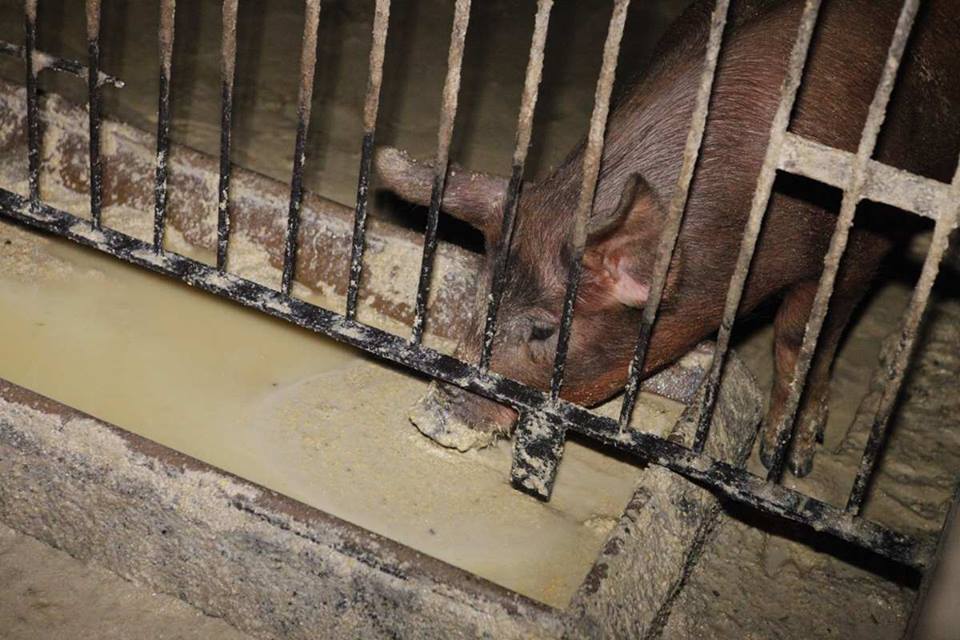
Faeces and urine must not be permitted to accumulate to the stage where there is no clean area for pigs to lie down.
It seems that the code may have been interpreted rather loosely in this instance. That’s because the pigs in the images shown here appear to have been forced to live in their own excrement. In nature, pigs are clean animals, who avoid defecating or urinating where they sleep. They roll in mud or muddy water in order to cool down in hot weather, and to remove parasites.
The standards shown in the images are inconsistent with the following statement from Craig Mostyn’s website (with my underline).
Operating under the Linley Valley Pork brand, Craig Mostyn is the largest pork supplier in Western Australia servicing the domestic and export markets. Our pigs are grown under industry best practice, with the highest standard of animal welfare.
Some other points to consider
The company’s free range brand was the first in Australia to be accredited under the RSPCA’s “paw of approval” program. The Age newspaper has reported that the RSPCA earns a royalty equal to 2 percent of sales in relation to such accreditations. [5] Major problems have been exposed with other brands accredited by the RSPCA on the “Free Range Fraud” website of Animal Liberation Victoria. [6]
It’s Nambeelup piggery was allegedly exposed by Aussie Farms soon after Narrogin. Aussie Farms stated, “as is typical in many Australian pig farms, sows are confined to small cages on hard metal floors for weeks at a time, with their dead piglets left nearby”. [7]
Aussie Farms has reported that Craig Mostyn is a part-owner of Linley Valley Abattoir, a large pig slaughterhouse in Western Australia that kills around 500,000 pigs per year. [8] It stuns pigs in a carbon dioxide chamber, which has been shown to be excruciatingly painful, despite industry claims to the contrary. (See “When does ‘cruel’ not mean ‘cruel’?“) [9]
The company is a major supplier to Coles. If some of Coles’ so-called “sow stall free” pork is supplied from the Narrogin piggery, and conditions are as bad as indicated here, then one needs to ask what benefits are being achieved for pigs.
It also supplies Woolworths “Select” brand products.
Conclusion
No matter how reputable the livestock industry participant appears to be, the only way for consumers to ensure they are not contributing to cruelty is to avoid consuming animal products.
This article first appeared on the website of Melbourne Pig Save on 2nd November, 2014.
Acknowledgement
Thanks to Melbourne Pig Save co-founder, Karina Leung, for her recent post on this issue on the group’s Facebook page, which prompted the writing of this post.
Definition of “cruel” (Oxford dictionary):Wilfully causing pain or suffering to others, or feeling no concern about it.
Many people and organisations who use animals as units of production seem to use the word “cruel” in a different way to those at the Oxford Dictionary.
Here’s an example.
Prevention of Cruelty to Animals (POCTA) Act, Victoria, Australia
This is an extract from the website of the Victorian Department of Environment and Primary Industries (with my underline): [1] [Footnote 1]
“There are a number of exemptions built into the POCTA Act for activities undertaken in accordance with other legislation, codes of practice made under this Act, and the Livestock Management Act Standards. However this does not permit cruelty to occur.”
How could the department, which is responsible for administering the local prevention of cruelty to animals legislation, justify saying that the arrangements do not permit cruelty to occur? A small sample of the “activities” it refers to are outlined below. Would they be acceptable if performed on a conventional companion animal, such as a dog or a cat?
Model Code of Practice for the Welfare of Animals: Pigs (3rd Edition) [2]
The code, like other codes, is used as the basis of legislation in various states. It permits the following practices, most of which apply routinely to the vast majority of pigs (where relevant) used for food:
life-long confinement indoors;
confinement in a sow stall, with insufficient room to turn around, for up to 16.5 weeks, day and night;
confinement in a farrowing crate, with insufficient room to turn around or interact with piglets, for up to 6 weeks, day and night;
tail docking without anaesthetic;
ear notching without anaesthetic;
teeth clipping without anaesthetic;
castration without anaesthetic.
Model Code of Practice for the Welfare of Animals:Domestic Poultry (4th Edition) [3]
The code permits:
life-long confinement indoors, including cages;
beak trimming of chickens without anaesthetic;
removing the snood of turkeys (the skin drooping from the forehead) without anaesthetic;
removing terminal segment of males’ inward pointing toes without anaesthetic;
killing of “surplus” chicks (mainly male) in the egg industry through gassing with CO2 or by “quick maceration”. (The Oxford defines “macerate” as “soften or become softened by soaking in a liquid“. In the case of chicks, there is no soaking in liquid. They are sent along a conveyor belt to an industrial grinder while still alive.)
Australian Animal Welfare Standards and Guidelines for Cattle [4]
The standards permit:
castration without anaesthetic if under six months old or, under certain circumstances, at an older age;
dehorning without anaesthetic if under six months old or, under certain circumstances, at an older age (see video below);
disbudding (prior to horns growing) without anaesthetic. Caustic chemicals may be used for that process under certain circumstances, including an age of less than fourteen days;
hot iron branding without anaesthetic (see video below).
Please also see comments regarding the dairy industry below.
National Animal Welfare Standards for Livestock Processing Establishments [5]
The standards allow stunning prior to slaughter by: pneumatic captive bolt guns; controlled atmosphere (CO2) stunning; and electrical stunning
They state that CO2 concentration should be greater or equal to 90% by volume, and no less than 80% when gaseous mixtures are used. (Variations are allowed following a
monitoring and verification procedure that demonstrates effective stunning.)
Model Code of Practice for the Welfare of Animals: Livestock at Slaughtering Establishments [6]
Like the standard referred to above, in respect of pigs, the code allows stunning prior to slaughter by: pneumatic captive bolt guns; controlled atmosphere (CO2) stunning; and electrical stunning.
It notes that the CO2 concentration recommended in Europe is 70% by volume, and that the recommendation may need to be modified for Australian conditions as experience with local conditions increases.
Evidence of a standard procedure in action: CO2 stunning of pigs
Activist group, Aussie Farms, says that the great majority of pigs in Australia are stunned using the CO2 method. [7]
Many people may wrongly believe that the process is free of pain and stress for animals. They may rely on statements from people such as free range farmer, Tammi Jonas of Jonai Farms, who has said that the pigs are lowered into a carbon dioxide chamber and rendered immediately unconscious. [8] An undercover video released by Aussie Farms appears to show otherwise. It is from the Corowa, New South Wales establishment of major pig meat producer, Rivalea. Jonai Farms reported in June, 2013 that they were sending their pigs to another Rivalea facility, Diamond Valley Pork in Laverton, near Melbourne.
Here’s an edited version of the Aussie Farms video, released by Animals Australia.
x
Some thoughts from Professor Donald Broom, Cambridge University
Aussie Farms sought comments in relation to the video from Donald Broom, Emeritus Professor in the Department of Veterinary Medicine at Cambridge University. Some of his points [9]:
The use of CO2 stunning represented a major welfare problem, as the gas is very aversive to pigs.
The extreme reactions were typical for pigs lowered into a high concentration of CO2. The welfare of the animals was very poor for 20-40 seconds.
The best gas to use in the stunning chamber is argon, or a mixture of argon and up to 20% CO2. Pigs do not detect argon, so are stunned without being aware of the gas.
For financial reasons, efforts are generally made to reduce the time taken to unconsciousness so CO2 is often used. It is somewhat cheaper than argon.
From Professor Broom’s comments, it would appear that there are options available that would cause less stress to pigs than high concentrations of CO2, and that many in the industry may be avoiding those methods for financial reasons.
What does the industry say about another cruel process, confinement in sow stalls?
Sow stalls are cages used for pregnant pigs. They are so small that the pigs are unable to turn around. They can be confined that way, day and night, for the full term of their pregnancy, around 16.5 weeks. The Australian industry’s so-called voluntary ban on sow stalls, scheduled to commence in 2017, will still allow them to be used for up to eleven days per pregnancy, and will not be binding on individual producers. [10] The industry has not indicated any action in respect of farrowing crates, which are more restrictive than sow stalls, and can be used for weeks before and after birth.
Referring to sow stalls, Andrew Spencer, CEO of Australian Pork Ltd, has said [11]:
That’s pig heaven, sow stalls are good for pigs . . .
Sow stalls are more than okay, they’re fantastic, and sows love them.
Spencer argues that the stalls protect sows from other sows who may be aggressive. The problem is that they become aggressive due to the ongoing confined conditions. Who would enjoy spending their life indoors? The industry’s response seems to be to apply one form of cruelty in order to overcome problems created by another.
The position of a major retailer, Coles
Coles is one of Australia’s largest supermarket chains. It is part of the Wesfarmers group, which is the seventh largest company on the Australian Stock Exchange, with a market capitalisation of around $49 billion. [12]
It has gained signficant PR mileage in recent times by a decision to become “sow stall free”. However, the move only applies to “Coles Brand” fresh pork and local and imported ham and bacon. The relevant producers are still permitted by Coles to use sow stalls for up to twenty-four hours per pregnancy. (I assume they rely on the producers to act in good faith in that regard, as it’s difficult to imagine an audit program that would ensure they complied.)
On 22nd November, 2012, John Durkan, then merchandise director (now managing director) of Coles was asked the following question: [13]
In terms of animal cruelty, do you think your customers are aware . . . of the legalised cruelty that still exists in terms of mutilation of piglets, for example, without anaesthetic? That is tail docking, ear notching, teeth clipping, castration, etc., and should consumers be made aware of those sorts of things to help their [purchasing] choices?
Extract of Durkan’s response:
What they do want to know is that there is no cruelty to animals, that they’re treated well . . .
If, as John Durkan says, customers “want to know that there is no cruelty to animals, that they’re treated well”, then why are the animals from whom Coles’ products are extracted treated cruelly as standard practice?
A basic requirement of efficient markets is fully informed buyers and sellers. Coles and other retailers should either inform their customers of the practices involved in supplying their products, or sell only cruelty-free products.
Additional comments on the dairy industry
Cows are continually impregnated in order to produce milk. However, the milk is intended for humans, so the cow and calf are separated almost immediately after birth, with the calves either going back into the dairy industry, to veal production or almost immediate slaughter. This process is an inherent component of dairy production and seems almost unimaginably cruel to the cow and calf.
Apart from the cruelty aspects, it seems bizarre that humans are the only species that consumes mammalian milk beyond a young age, and the only one to routinely consume the milk of another species. Consuming cows’ milk is natural for calves, but not for humans.
A short video on the issue of forced separation can be seen at the bottom of this page.
The RSPCA and potential mandatory reporting
The RSPCA in Australia has recently called for mandatory reporting of animal cruelty. The organisation’s Chief Executive, Heather Neil, has said: [14]
But there are some people who, by the nature of their role, are expected to know what animal cruelty is and when action should be taken. These people should have a legal obligation to report cruelty when they see it.
Although the RSPCA may not have identified the issue itself, its proposal highlights the strange dichotomy that exists between legal and non-legal cruelty. The organisation’s proposal is presumably aimed at non-legal cruelty, without seeming to acknowledge the horrific extent of the legal variety.
Conclusion
This article has barely scratched the surface of the cruelty that is endemic in the commercial use of animals. Double standards abound, including within the consumer population. The type of exemptions referred to here are common in other jurisdictions.
Although we like to believe that we live in a civilised society, our practices in relation to animals seem to indicate otherwise. Much of the problem arises from social, cultural and commercial conditioning, and could end with some compassionate, objective thinking.
At the beginning of 2015, responsibility for administering the Prevention of Cruelty to Animals legislation was transferred to the newly formed Agriculture Victoria, within the Department of Economic Development, Jobs, Transport and Resources. The reference and link were updated on 13th January, 2016.
[13] ABC Radio National Bush Telegraph and the Department of Agriculture, Fisheries and Forestry AgTalks event, “Australians don’t care where their food comes from, as long as it’s cheap and looks good”, 22nd November, 2012, broadcast on 26 November, 2012.
Imagine you are a meat-eating consumer who felt uneasy about the possibility of poor welfare standards at a major piggery. Would the following points help to allay your concerns?
The business had been supplying the giant supermarket chain, Woolworths for ten years, and at the time was supplying 20% of its fresh pork in your state.
The owner was appearing in Woolworth’s brochures as one of its “fresh food people”.
The piggery had passed a quality audit inspection just three months earlier.
A director and shareholder of the company that managed the piggery was also on the board of the peak industry organisation.
Based on that information, you might be willing to give the business the benefit of the doubt.
If you then found that the peak industry organisation was owned by producers and administered the quality accreditation scheme (including animal welfare aspects), some doubts might re-emerge.
All those facts applied in 2009, when animal activists entered the premises of Oliver’s Piggery in Winnaleah, Tasmania.
The activists thought conditions would be poor, but were shocked by what they found. Some key points: [1]
Three sows were destroyed by a vet soon after the activists gave police a copy of their video footage.
The sows were extremely emaciated, and unwilling or unable to stand.
Two had festering ulcers up to 12 centimetres in diameter, and one of that pair was unable to move because her snout was stuck under the bar of a mesh divider.
She could not reach food or water and her wounds were flyblown with adult and juvenile maggots.
Layers of faeces were deposited in group pig pens. The owner admitted the pens hadn’t been cleaned for two months.
More than 70 per cent of the 46 sows in farrowing crates had pressure sores on their sides needing treatment.
After the local RSPCA refused to become involved, the activists took their video to the police, who visited the piggery with the activists’ assistance. They charged the owner and the company that managed the piggery with aggravated cruelty offences, and both were eventually penalised by the courts. [2]
One of the two activists, Emma Haswell of Brightside Farm Sanctuary, appeared in numerous media outlets in relation to the matter, including “The Hidden Truth” on 60 Minutes (Nine Network). [3]
While Emma appears to have been widely regarded as a hero, her counterparts five years later are seemingly being demonised and targeted by potential “ag-gag” laws.
The animal advocacy group, Voiceless, describes ag-gag as “variety of laws which seek to hinder or ‘gag’ animal protection advocates by preventing them from recording the operations of commercial agricultural facilities.” [4]
Voiceless says that ag-gag laws generally target undercover investigators, whistleblowers and journalists, and may take the form of: (a) criminalising the undercover or covert surveillance of commercial animal facilities; (b) requiring that any footage obtained be turned over to enforcement agencies immediately rather than given to animal protection groups or the media; and (c) requiring potential employees of commercial animal facilities to disclose current or past ties to animal protection groups.
Within Australia, a relevant bill is before the Parliament of South Australia. Victoria’s Minister for Agriculture, Peter Walsh and the Minister for Primary Industries in New South Wales, Katrina Hodgkinson (with support from Federal Agriculture Minister, Barnaby Joyce) have announced that they intend introducing similar legislation. [5]
Ms Hodgkinson, has described animal activists entering commercial establishments as “akin to terrorists”. [6]
The South Australian bill includes penalties of $15,000 or 3 years imprisonment for individuals who use, communicate or publish material collected through the use of surveillance devices.
So, from a time in 2009 when the police and the courts supported an undercover investigation by animal activists, today politicians are seeking to turn the tables.
A Woolworths spokesperson said the situation at Oliver’s was unacceptable and that the activists’ tactics “obviously exposed a serious issue at the farm”. [7]
During the trial, the defence lawyer said, “What has in fact happened is that an animal activist has entered the farm without any invitation from Mr Oliver or the family and that is a concern.”
In his response, the magistrate said, “It might well have turned out to be in the public interest . . . “
The potential move toward ag-gag laws in Australia may be a response to the relatively recent exposure of dozens of establishments by activist group Aussie Farms (including investigations by Animal Liberation ACT and Animal Liberation NSW) and the onging work of groups like Animal Liberation Victoria, responsible for dozens of investigations of its own, as shown on its “Free Range Fraud” website and elsewhere. Here are some relevant sites:
That’s the number of chickens killed for human consumption.
Per minute.
In Australia.
In 2011/12.
That’s over 1.5 million per day.
That’s 551 million for the year.
4.5 percent of chicken meat was exported.
That left the equivalent of 526 million chickens.
To feed (at that time) around 22 million people.
That’s 24 chickens for every man, woman and child.
The industry predicts that the number will increase to 628 million in 2015/16.
Figure 1: Chicken meat production in Australia
That’s nearly 1,200 per minute.
That’s bizarre.
And obscene.
Chickens are beautiful and intelligent animals.
Not that beauty and intelligence should determine whether or not an animal is killed for food.
There is no need.
Apart from the slaughter process, chickens grown for meat suffer immense cruelty during their short lives.
Here’s a short clip of a sanctuary hen teaching and protecting her chick.
If you care to watch, perhaps think of a human mother teaching and protecting her young child.
Chickens and other animals used for food deserve much better than the horrendous lives we impose upon them. They are not here to serve humans.
Besides, by channeling grains through animals who are then killed to be eaten, we are causing other humans to starve due to the waste involved in an inherently inefficient system. The Food and Agriculture Organization of the United Nations reported in 2013 that 842 million people in 2011-13 were estimated to be suffering from chronic hunger.
After allowing for yield, 2.35 kilograms of grain needs to be fed to chickens to produce 1 kilogram of chicken meat. That’s equivalent to a loss of 57 percent.
The Australian Chicken Meat Federation has reported that chicken feed generally comprises 85-90 percent grains, such as wheat, sorghum, barley, oats, lupins, soybean meal, canola and other oilseed meals and grain legumes. The balance consists mainly of meat and bone meal and tallow.
We are also contributing massively to climate change and other environmental problems by causing far more resources (including land and fertiliser) to be used than would otherwise be required. As I have reported elsewhere, the greenhouse gas emissions intensity of chicken meat is many times that of plant-based alternatives of comparable nutritional value.
Bad for chickens.
Bad for people.
Bad for the planet.
If you haven’t done so already, isn’t it time to change?
Chicken’s feed conversion figure: Australian Chicken Meat Federation, Industry facts and figures, “Production Efficiency”, http://www.chicken.org.au/page.php?id=4 (accessed 7th May, 2014).
Chicken meat yield from live weight: United States Department of Agriculture Economic Research Service, “Agricultural Handbook No. 697”, June, 1992 (website updated 10 September, 2013), “Weights, Measures, and Conversion Factors for Agricultural Commodities and Their Products”, http://www.ers.usda.gov/publications/ah-agricultural-handbook/ah697.aspx#.U0ihR6Ikykw
Chicken meat production chart: Australian Chicken Meat Federation, Industry Facts and Figures, Chicken Meat Production in Australia, http://www.chicken.org.au/page.php?id=4 (accessed 31 May, 2014)
Postscript 2nd June, 2014: Globally in 2011, we killed a staggering 110,000 chickens per minute for human consumption, or 58 billion in total. That’s around 105 times the number killed in Australia. Here is a list of slaughter numbers by animal, from the Food and Agriculture Organization of the United Nations.
One of the most common questions heard by anyone on a plant-based diet is: “Where do you get your protein?”
The question arises because of a common misconception that protein is only available in meat or other animal products, such as chickens’ eggs or cows’ milk, or that plant-based protein is somehow inferior.
The fact that some of the largest, strongest animals are herbivores or near-herbivores should alert people to the fact that there is plenty of protein available without eating animals. The range of herbivores or near-herbivores includes elephants, rhinoceroses, giraffes, cows, horses and great apes such as chimpanzees, gorillas, and orangutans.
The position is further highlighted by the fact that a 2013 paper from the Institute on the Environment at the University of Minnesota stated [1]:
“The world’s croplands could feed 4 billion more people than they do now just by shifting from producing animal feed and biofuels to producing exclusively food for human consumption”.
Animal feed crops represent 90% of that figure (representing 3.6 billion people), and biofuels only 10%.
The lead author, Emily Cassidy, has been quoted as saying:
“We essentially have uncovered an astoundingly abundant supply of food for a hungry world, hidden in plain sight in the farmlands we already cultivate. Depending on the extent to which farmers and consumers are willing to change current practices, existing croplands could feed millions or even billions more people.”
Similarly, Dr David Pimentel of Cornell University reported in 2003 that the grain fed each year to livestock in the United States could feed 840 million people on a plant-based diet. [2]
Referring to US Department of Agriculture statistics, Pimentel has also stated that the US livestock population consumes more than 7 times as much grain as is consumed directly by the entire American population.
He and Marcia Pimentel have also reported:
” . . . each American consumes about twice the recommended daily allowance for protein “.
The results cited above reflect, in part, the gross and inherent inefficiency of animals as a food source.
Is it difficult to replace animal protein with plant protein?
The Physicians Committee for Responsible Medicine (PCRM) has stated [3]:
“To consume a diet that contains enough, but not too much, protein, simply replace animal products with grains, vegetables, legumes (peas, beans, and lentils), and fruits. As long as one is eating a variety of plant foods in sufficient quantity to maintain one’s weight, the body gets plenty of protein.”
Also:
“It was once thought that various plant foods had to be eaten together to get their full protein value, but current research suggests this is not the case. Many nutrition authorities, including the American Dietetic Association, believe protein needs can easily be met by consuming a variety of plant protein sources over an entire day. To get the best benefit from the protein you consume, it is important to eat enough calories to meet your energy needs.”
PCRM is a US-based non-profit organisation that promotes preventive medicine, conducts clinical research, and promotes higher standards for ethics and effectiveness in research.
The US Department of Agriculture has reported the following protein content for a variety of food products, as shown in Figure 1 [4].
Figure 1: Protein content of selected foods
Some health implications of consuming too much protein
PCRM has also highlighted some of the health implications of excessive protein intake, including kidney disease and certain types of cancer. Specifically in relation to animal protein, it has referred to osteoporosis and kidney stones, stating [5]:
“Diets that are rich in animal protein cause people to excrete more calcium than normal through their kidneys and increase the risk of osteoporosis. Countries with lower-protein diets have lower rates of osteoporosis and hip fractures.”
I have also commented on some health implications of eating animals in my article “If you thinks it’s healthy to eat animals, perhaps you should think again“. [6] Amongst the studies referred to was a 26-year study of more than 120,000 people by Harvard University, which found that eating red meat is associated with a sharply increased risk of death from cancer and heart disease. The lead author described the results as “staggering”. [7]
Other Issues
In addition to contributing significantly to human health problems, by utilising animals as a source of protein and other nutrients, we are causing extreme cruelty to the animals themselves, creating massive environmental problems (including those relating to climate change) and contributing to the malnutrition of more than 800 million people. [8]
Protein sources in Australia
The following chart shows that 81 percent of protein produced in Australia in 2010/11 came from plants, and only 19 percent from animals.
It includes products that are exported and/or used as livestock feed. The inclusion of the latter means there is some double-counting of protein content. However, given animal agriculture’s relatively low output level, the double-counting does not appear to be significant.
Figure 2: Protein value of Australian food production
The chart is based on: (a) production figures from the Department of Agriculture, Fisheries and Forestry’s “Australian food statistics 2010-11″; [9] and (b) nutritional information for each product from the United States Department of Agriculture’s (USDA) National Nutrient Database for Standard Reference. [4]. It appeared in my September, 2012 submission in response to the Department of Agriculture Fisheries and Forestry’s National Food Plan Green Paper. [10]
Conclusion
Despite effective campaigns by powerful interest groups to convince us that animal-based protein is essential to human health, an objective review of the available evidence points strongly in the opposite direction. If we are to improve human health and create a world that is more just and sustainable, we must move away from animals as a food source.
Notes:
This article is not intended to represent dietary, nutritional, health, medical or similar advice.
Figure 1 was updated on 21st February, 2016.
The comment “Animal feed crops represent 90% of that figure, and biofuels only 10%” added 1st April, 2016.
[2] Pimentel, D., Cornell University “Livestock production and energy use”, Cleveland CJ, ed. Encyclopedia of energy (in press), cited in Pimentel, D. & Pimentel M. “Sustainability of meat-based and plantbaseddiets and the environment”, American Journal of Clinical Nutrition, Vol. 78, No. 3, 660S-663S, September 2003, http://ajcn.nutrition.org/content/78/3/660S.full
Did you know that, wherever you live, it’s almost certain that farm animals are not protected by key aspects of standard prevention-of-cruelty laws? Animal industries are generally exempt in respect of standard procedures that would be punishable by fines or jail terms if performed on a domestic pet. The practices include various forms of mutilation without anaesthetic and, for certain species, life-long confinement indoors.
In this way, cruel practices are permitted by law and followed as standard practice. In a classic case of Orwellian double-speak, they are usually specified in documents such as the “Model Code of Practice for the Welfare of Animals”.
So if someone tells you, “the animals must be treated well, because the producers assure us they’re following the model code of practice for the welfare of animals”, please enlighten them. The animals are on their own, at the mercy of producers who derive profits from cruelty.
That’s where farm sanctuaries perform an invaluable service. Although the number of animals protected by such havens is tiny compared to the number involved in food processing and other industries (we’re killing more than 66 billion land animals for food each year), farm sanctuaries represent a lifeline to peace and security for the individual animals who inhabit them. They also allow visitors (including those online) to relate to farm animals in a way that may otherwise have not been possible.
Here are a few images that give some indication of the wonderful work of farm animal sanctuaries:
Cisco (left) meeting another resident early on. (You can see him again below.)
Some bubs, including a couple with bottles:
Cisco, rescued in August, 2013. His mum was not so lucky.
Sammy, a rescued piglet now living peacefully at Greener Pastures Sanctuary, Waroona, WA
The sanctuaries referred to in this post are not farms. I believe that all animal farming is a form of exploitation, and therefore unethical. The best way to protect animals is to avoid consuming products derived from them.
The sanctuaries are also not zoos. In the words of Canadian photojournalist Jo-Anne McArthur, “What separates a sanctuary from a zoo or any other institution that keeps animals in its care is that it places the best interests of its residents above all else. The animals are there to be protected and live out their lives in comfort. They are forevermore exempt from being used for food, entertainment or vivisection.”
At the end of this post, I’ve included a list of farm animal sanctuaries and related organisations. Some of the sanctuaries may not be open to the public, or may only be open on certain occasions. There are no doubt many more. If you’d like any others listed, please mention them in the comments section below, and I will update the post.
Conclusion
I’ve shown lambs, a piglet, goats (including a tiny kid) and a chicken. I apologise to all the magnificent, beautiful, fascinating animals whose images I was unable to show. I also apologise to the billions of individual animals each year who are not so lucky, and who become victims of the animal industrial complex.
Thank you to those wonderful people who have committed so much of themselves to saving or caring for animals who would otherwise have suffered horrendously.
With their celebrity chef, Curtis Stone, Coles have said they are creating “festive inspiration” at Christmas by promoting pork and ham recipes. Woolworths are taking a similar approach with Jamie Oliver.
Would you like to experience a truly compassionate Christmas? If so, then you need to focus on delicious plant-based dining options. The Veganeasy and Viva la Vegan websites have some wonderful Christmas recipes. Many other sources are also available.
If your friends and family need convincing, then perhaps inform them of the horrific cruelty suffered by the animals on their way to the dinner plate.
For example, please consider what generally happens to piglets and their mothers, even in most so-called “sow stall-free” establishments:
the mother is confined indoors for her entire life, in a continual cycle of pregnancy and birth;
she is also confined in a farrowing crate (which is even more restrictive than a sow stall) for twenty-four hours per day for up to six weeks on end;
her first view of sunshine is the day she is sent to the slaughterhouse once she can no longer become pregnant;
the piglets are killed for meat at between 4 and 12 months of age (often 5 to 7 months) when they would otherwise live for 10 to 12 years;
their tails are cut off without pain relief in the first few days of life;
large pieces are “notched” from their ears without pain relief;
their teeth are clipped to the gum line without pain relief;
For more information, please see Melbourne Pig Save and the Aussiepigs website of Animal Liberation ACT and Animal Liberation NSW. If you believe that so-called “free range” is the answer, please see the Free Range Fraud website of Animal Liberation Victoria.
Here’s an incredibly powerful video from Animal Liberation ACT, highlighting the horrific findings of fourteen undercover investigations:
Would you like to see and hear material about the Australian pig meat industry from two different perspectives? Here are images from Animal Liberation ACT (ALACT), said to be from Golden Grove Piggery and Dead Horse Gully Piggery in NSW, which the activist organisation’s website, Aussiepigs, indicates are owned by Blantyre Farms Pty Ltd, whose shareholders are Edwina and Michael Beveridge .
This slideshow requires JavaScript.
Farrowing Crates and Sow Stalls
The Golden Grove images are of farrowing crates. Despite all the talk and PR in Australia about “sow stall free” pork, there seems to be no suggestion that producers will cease using farrowing crates.
Besides, no-one seems to be suggesting that sow stalls will be eliminated from their supply chain altogether, so “sow stall free” does not appear to mean “sow stall free”. (Silly me, why should I have thought it would?) Even Coles is allowing sow stalls to be used for up to 24 hours per pregnancy. For as long as stalls remain, how can we be sure that each sow will not be confined for longer than the permitted period?
One of the images above appears to show a piglet who has been crushed by his or her mother. The Aussiepigs site states:
“A number of piglets were killed or severely injured by ‘overlay’, where the sows lie on top of their piglets, crushing them. The industry claims farrowing crates prevent overlay. Yet the footage from Blantyre Farms completely undermines such a claim. The footage shows that where sows have difficulty standing or lying and cannot move away from their young, and where piglets have little room of their own, overlay is inevitable.”
In his book “The Pig who sang to the Moon”, author Jeffrey Masson described a sow’s nesting process:
“In the wild, . . . sows getting ready to give birth will often construct protective nests as high as three feet. They line these farrowing nests with mouthfuls of grass and sometimes even manage to construct a roof made of sticks – a safe and comfortable home-like structure. On modern pig farms, where the mother is forced to give birth on concrete floors, her babies are often crushed when she rolls over. This never happens in the wild because the baby simply slips through the nest and finds her way back to her own teat.”
The Industry’s Position Regarding the Role of Animal Activists
You can hear Ms Beveridge’s comments regarding the activists investigations, along with comments from Andrew Spencer of peak industry body Australian Pork Ltd, in this report of 5th November 2013 from the ABC’s Lateline program.
Edwina Beveridge appears to be a respected pig meat producer. So is Ean Pollard of Lansdowne Piggery, who also appears in the Lateline segment. His piggery was investigated by ALACT earlier this year. They are two of eleven piggeries that ALACT have secretly investigated to date.
In my opinion, the message is one of consistent horror, yet all the industry seems to do is attack the activists.
What About Free Range?
Another producer, Otway Pork recently lost its “Paw of Approval” accreditation from the RSPCA, after Animal Liberation Victoria exposed its so-called “free range” operations. According to The Age newspaper, the RSPCA earns a royalty in exchange for its “Paw of Approval” accreditation equal to 2% of product sales. The RSPCA does not appear to have stated publicly its reason for removing Otway Pork’s accreditation. According to ALV, the RSPCA saw the undercover footage of Otway Pork in December 2012, but “the endorsement was underhandedly withdrawn in July this year”, a delay of eight months.
Some More Thoughts on Animal Cruelty
If you eat pig meat, who can you trust in terms of animal cruelty and product quality? In any event, much of the cruelty is perfectly legal, due to exemptions from anti-cruelty legislation in favour of producers.
One of those forms of cruelty is tail docking without anaesthetic. Here’s some more from Aussiepigs in relation to the Golden Grove and Dead Horse Gully Piggeries:
“Workers at Blantyre Farms’ Golden Grove Piggery cut off the tails and teeth of piglets, and cut sections out of their ears, all without pain relief. Tails are discarded in the aisles and sometimes even end up in the food trolley. Tail cutting is performed by the majority of piggeries in Australia as an attempt to prevent cannibalism (tail biting) once the pigs are moved into overcrowded ‘grower’ sheds which completely lack stimulation. Despite the tail cutting, Blantyre’s grower facility, DHG, has a severe cannibalism problem.”
“At DHG, pigs are crammed into overcrowded sheds where they do not see sunlight until they are being trucked off to the Cowra abattoir. Out of boredom, they eat at the stubs of each others’ tails, leaving large bleeding wounds. From the nature of the wounds, it appears that little or no effort is made to treat these injuries.”
The best way to avoid cruelty to animals is to stop consuming products and services derived from them in the form of food, clothing, entertainment and the like.
Edits 17th January, 2014: (a) Images added to gallery, including some that are said to be from Dead Horse Gully Piggery; (b) Reference to Animal Liberation NSW deleted, as the Aussiepigs website now only refers to Animal Liberation ACT.
“Good photos speak a thousand words and can change hearts and minds.” Jo-Anne McArthur, 28th February, 2013
Early this year, I had the honour of co-hosting a presentation by Canadian photojournalist and animal rights campaigner, Jo-Anne McArthur. The event was the idea of my friend and fellow Melbourne Pig Save (MPS) campaigner, Karina Leung.
We first became aware of Jo’s work through our connection with Toronto Pig Save (TPS). Toronto is Jo’s home town, and she is an active member of TPS. They have used many of her photos in their promotional material, and kindly adapted some of them for MPS. One of Jo’s images adorns our t-shirts, with the caption: “I am someone . . . who wants to live”.
Jo has been documenting the plight of animals on all seven continents for over ten years. Her online documentary project, We Animals, is internationally celebrated. More than eighty animal organisations, including Igualdad Animal (Animal Equality), Sea Shepherd and the Jane Goodall Institute, have benefited from her photography.
Here’s We Animals’ Mission Statement:
“We Animals aims to raise awareness, through art and photojournalism, that non-human animals are sentient beings with moral significance, and deserve to live free from exploitation and suffering in the food, clothing, experimentation and entertainment industries.”
This article provides a small glimpse into the world of animals explored in minute yet extensive detail by Jo. Her images connect us profoundly with the beautiful but often long-suffering animals she examines through her work.
I recalled Jo’s February presentation a couple of months after the event. I was at Richmond station in inner Melbourne on the way home from work, waiting for my connecting train. I was looking south along busy Punt Road, thinking of the horrible urban sprawl that we confront every day. Then I noticed some beautiful eucalyptus trees, just to the left of my line of view. Sitting on a branch was a bird, seemingly without a care in the world, although in reality she may have been busy foraging for food. I am not a bird watcher (my vision is not keen enough for that) and have no idea what type of bird she was, but my over-riding thought in watching her was that she was free.
I immediately remembered the tortured look in the eyes of a sick and stressed Bald Eagle in one of Jo’s photos. That poor bird was living her life within an enclosure at a Canadian zoo, with no opportunity to soar through the heavens, basking in the glory of the gifts bestowed on her by nature.
A sick and stressed Bald Eagle at a Canadian zoo 2008 | Jo-Anne McArthur | We Animals
Here’s how Jo described the experience of seeing the long-suffering bird:
“In 2008, I went across Canada photographing zoos for Zoo Check. I focus on birds in this slide show, because people go to zoos to see giraffes and gorillas and such. They don’t go to see birds; they’re so overlooked and live in such small cages. I can’t even take looking at this picture; it’s just too depressing. People would just walk by this bird; there’s no reason to keep this bird in captivity.”
Why is that sort of torture accepted by society, and even encouraged?
Another of the many images that have stayed with me since the presentation is of the magnificent, dignified chimpanzee Mandy, who suffered for decades in the medical research industry.
Mandy | Jo-Anne McArthur | Save the chimps
Here’s what Jo said about Mandy, and this particular image:
“Her name is Mandy. This is the first time she has ever been let out of her cage. She was also used in research, the way Ron was at the same place, and they did not know if Mandy was ‘wild-caught’ in Africa or if she had been bred ‘in cage’, living her whole life in the cage. But you always know when they are let out finally at a sanctuary, because the ones who have always been in a cage don’t go outside, and the ones who have been outside before run out into the sanctuary.
So, they opened the cage door, and with bated breath watched, and she ran down into the reeves, and she touched everything she could, and she went down there and she sat in the middle of the tall grass and felt the breeze on her face and was touching the bull rushes around her, and this is that moment. This is what she was doing there.”
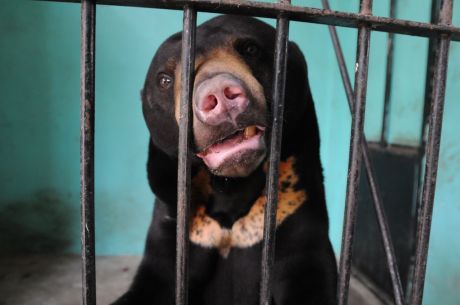
We also learnt more of the bear bile industry. The We Animals website explains that, in Asia, tens of thousands of bears are kept in tiny cages for their entire lives so that their gall bladders can be tapped for bile and used in medicine. They are barely able to turn around in their confined spaces.
Jo described a very moving experience with this wonderful sun bear in Cambodia.
This sweet Sun Bear has been rescued from a bear bile farm. At his new home, a sanctuary in Cambodia, he comes into the caged areas a few times a day while the open areas are cleaned up and filled with new enrichment to keep the bears busy and stimulated. Free the Bears, Cambodia. Photo: Jo-Anne McArthur, We Animals
“This photo is misleading. He looks like a tremendously sad bear, and he was at one point. He was used for bear bile for four years before he was rescued. He started producing lower quality bile while he was still caged and what they did was cut off his two front paws. In Vietnam that’s a delicacy for bear paw soup. So he was missing his two front paws. This photo was taken after his rescue, and like Ron who you met earlier, who preferred the company of humans, this bear also preferred the company of humans. He had a whole sanctuary to play in, but he just stayed inside. He saw me and started begging for his favourite treat, which is pineapple jam, and that’s why he’s looking so depressed. You know how dog’s put on that sad ‘gimme a treat’ face, that’s what he’s doing, and I got too close to the cage. I wasn’t supposed to, but I was taking his portrait and they’re very fast, and he grabbed me and he pulled me in really quickly, and I could have been a goner. I was in danger but he just wanted to play, he just wanted to grab me and I was in his arms very briefly . . . He’s one of those animals who solidifies for you what you’re doing, and you keep them in your heart. He’s one of these bears that I keep with me in my heart and who I think about often.”
“I told this story in an interview once, and an artist in New York City heard it and this is her rendition. She painted the story. I cried so hard when I saw this. It says, ‘How is it possible that can you love me, a human, after your paws were cut off to make soup?'”
It’s important to note that many of Jo’s images portray wonderfully happy experiences. Just like us, non-human animals love to have fun, and here’s a great example. It shows a chimpanzee who has been rescued from the horrors of the medical research industry, enjoying his new life at a sanctuary in Florida.
A rescued chimpanzee enjoys his new home at Save The Chimps Sanctuary in Florida, USA. Most of Dr. Noon’s chimps were rescued from the biomedical research industry and spent their entire lives in small cages. Florida, 2008. http://www.savethechimps.org
So what were some key messages that I took from that moving and thought-provoking presentation in February?
Some people may learn of the bear bile trade and cringe in horror. However, that industry is intended to improve human health, much like the medical research industry that causes millions of animals to live their lives in painful, monotonous and isolated horror. The efficacy of both trades is open to question.
Some people may also be appalled at the practice of removing bears’ paws for a supposed soup delicacy. However, what about the mutilation of animals in other forms of food production, such as pork, ham and bacon, where piglets are castrated, have their tails docked, ears notched and teeth clipped to the gum line, without anaesthetic? Or the practice of removing calves from their mothers within a day of being born, so that we can benefit from the lactation process and enjoy the distraught mother’s milk? They are just a few examples; the full list could fill many pages.
What right do we have to deny these beautiful, dignified animals their liberty and well-being? Why should non-human animals pay the price for supposed human benefits?
The fact that we have the power to exploit other animals does not mean we should. It’s our choice.
Let’s hope for an enlightened world in future, when humans put their inflated egos aside, and allow other animals to savour the lives that they have evolved to live. I’m confident that Jo-Anne’s images and campaigning can play a significant part in achieving that goal.
Liz Marshall’s documentary featuring Jo-Anne McArthur, “The Ghosts in our Machine“, has been released in Canada, and is likely to reach Australia during 2014. It is due for release in the United States during the fall (autumn) of 2013.
The first We Animals book is due for release in late 2013.






 terrastendo