Britain’s Prince Charles recently spoke out about the combined dangers of climate change and the so-called sceptics who deny that it’s happening. [1]
He was speaking at a conference for forest scientists, and commented on accelerating rates of deforestation in south-east Asia and Africa.
It’s great to see Charles speaking out on this issue and standing up to corporate lobbyists and others who appear unconcerned about the future of the planet. However, if forests are a key concern, he should be promoting a plant-based diet.
We will not overcome climate change without massive reforestation, and the only way to do that is to claim back land currently used for grazing and animal feedcrops. The inherent and gross inefficiency of animals as a food source is the key prohibiting factor in that regard, causing us to use far more land than would otherwise be required to satisfy humanity’s nutritional requirements.
According to the United Nations Food & Agriculture Organization’s 2006 “Livestock’s Long Shadow” report [2]:
Directly and indirectly, through grazing and through feedcrop production, the livestock sector occupies about 30 percent ice-free terrestrial surface of the planet.
Similarly, a report from the PBL Netherlands Environmental Assessment Agency in 2009 stated [3]:
. . . a global food transition to less meat, or even a complete switch to plant-based protein food [was found] to have a dramatic effect on land use. Up to 2,700 Mha of pasture and 100 Mha of cropland could be abandoned, resulting in a large carbon uptake from regrowing vegetation. Additionally, methane and nitrous oxide emissions would be reduced substantially.
They said a plant-based diet would reduce climate change mitigation costs by 80%. A meat-free diet would reduce them by 70%.
Prince Charles need look no further than the Centre for Alternative Technology in Wales, responsible for the Zero Carbon Britain 2030 plan. A summary of the plan states [4]:
Zero Carbon Britain 2030 will revolutionise our landscape and diets. An 80% reduction in meat and dairy production will free up land to grow our own food and fuel whilst also sequestering carbon from the atmosphere. The report also represents an opportunity to tackle the relationship between diet and health in the UK by promoting healthier diets and lifestyles.
The following image [5] shows that 58% of the planet’s appropriated plant growth in the year under review (2000) was fed to livestock, and provided only 17% of humanity’s calorie (energy) intake. On the other hand, only 12% of the plant growth was fed directly to humans, and provided 83% of our calorie intake. For protein, the comparison was around 40% from animals and 60% from plants.
If the comparison was based on a business whose end product was human nutrition, any competent management team reviewing the operations would throw out the animal-based approach.
A general move away from animals as a food source is essential if we are to have any chance of preventing further catastrophic impacts of climate change.
Do we want a habitable planet or don’t we? It’s our choice.
[5] Derived from Fridolin Krausmann, et al “Global patterns of socioeconomic biomass flows in the year 2000: A comprehensive assessment of supply, consumption and constraints” and Helmut Haberl, et al “Quantifying and mapping the human appropriation of net primary production in earth’s terrestrial ecosystems”, cited in Russell, G. “Burning the biosphere, boverty blues (Part 1)”
Image:
“Prince Charles And Duchess Of Cornwall Visit Japan – Day 2” | EdStock | iStockphoto
Paul Mahony, one of the founders of Melbourne Pig Save, speaks to Anita Krajnc about the vegan imperative to help solve the climate crisis.
Question: What is the link between meat, dairy and the problem of climate change? What is the ecological footprint of an average meat eater compared to a vegan?
Paul Mahony: The link involves many inter-related factors, such as livestock’s inherent inefficiency as a food source; the massive scale of the industry, including tens of billions of animals slaughtered annually; land clearing; and greenhouse gases, including carbon dioxide, methane and nitrous oxide, and other warming agents.
The inherent and gross inefficiency of livestock as a food source causes us to use far more resources than would otherwise be required to obtain our nutritional requirements. In terms of land, that has resulted in the clearing of rainforest and other prime areas.
We often hear of methane (CH4) in relation to ruminant livestock. That is a critical problem, but so is CO2, due largely to the clearing of forest and other vegetation. The carbon locked in that vegetation is released as CO2, and once the vegetation is gone, we’ve lost the benefit of it drawing down carbon from the atmosphere.
A 2009 study by the PBL Netherlands Environmental Assessment Agency reported that a global transition to a completely animal free diet is estimated to reduce climate change mitigation costs by around 80%. Removing just meat from the diet would reduce the costs by around 70%.
The report’s abstract states: “By using an integrated assessment model, we found a global food transition to less meat, or even a complete switch to plant-based protein food to have a dramatic effect on land use. Up to 2,700 Mha of pasture and 100 Mha of cropland could be abandoned, resulting in a large carbon uptake from regrowing vegetation. Additionally, methane and nitrous oxide emission would be reduced substantially.”
Vegans are often blamed for soy production that causes large areas of Amazon rainforest to be cleared. However, most soy production is fed to animals, including pigs in China, where their numbers exceed 500 million. The UN Food and Agriculture Organization (FAO) has reported that around 70 percent of land cleared in the Amazon is used for cattle grazing, while much of the remainder is used for animal feedcrops.
I tend not to think in terms of an individual’s carbon footprint. I look at the overall impact of animal agriculture. Estimates of its impact vary based on the factors that are included in any analysis. For example, Australia’s Department of Climate Change and Energy Efficiency conservatively estimates that livestock are responsible for around 10% of the country’s emissions. However, that figure is based solely on enteric fermentation (a process that produces methane in the digestive system of ruminant animals) and manure management. By adding livestock-related land clearing and savannah burning, and calculating methane’s impact based on a 20-year time horizon, we increase the share, on my estimates, to around 30%. The 20-year time horizon is important, because the standard approach is to use a 100-year period. Methane breaks down in the atmosphere in around 12 years, so the 100-year measurement understates its shorter-term impact more so than the 20 year approach. (Over a 100-year time horizon, methane is around 21 times as potent as CO2 in terms global warming. Over a 20-year time horizon, it’s between 72 and 105 times as potent). A 12-year measure would be even better, but does not appear to be available. That shorter-term impact is critical when we consider climate change tipping points and the urgent need to deal with the crisis.
A team at climate change campaign group, Beyond Zero Emissions (BZE), has factored in the impact of tropospheric (ground level) ozone and grassland emissions. Tropospheric ozone is formed through a series of chemical reactions involving nitrogen oxide, methane, carbon monoxide and other non-methane volatile organic compounds, which are relevant to animal agriculture. BZE anticipate that their final report, expected in late 2013, will indicate that livestock are responsible for around 50% of Australia’s emissions.
Black carbon from savanna burning is another factor in livestock’s emissions, but its impact is difficult to measure, and it has not been used in BZE’s analysis. I’ve commented on BZE’s approach in this article.
In 2009, writing in World Watch magazine, the former lead environmental adviser to the World Bank, Robert Goodland and colleague Jeff Anhang, estimated that livestock were responsible for 51% of global emissions. They included many factors that had not been accounted for in the 2006 “Livestock’s Long Shadow” report from the FAO, which had indicated a figure of 18%.
One of the approaches I’ve used in an effort to add some context to livestock’s emissions, has been to compare the emissions intensity of beef to that of aluminium. (Emissions intensity is a measure of the kilograms of greenhouse gases emitted per kilogram of product.) Aluminium smelting is incredibly emissions intensive. It consumes 16% of Australia’s (mainly coal-fired) electricity, for 0.06% of jobs and 0.23% of gross domestic product.
How does beef compare? A 2003 report commissioned by the Australian Greenhouse Office estimated that beef production was 150% more emissions intensive than aluminium smelting (that is, it was 2.5 times as emissions intensive as aluminium). That analysis was based on the carcass weight of beef. Beef’s emissions intensity is even higher when you consider the smaller portions used as food. A more recent estimate, allowing for a subsequent reduction in livestock-related land clearing, but based on the final product rather than the carcass, indicates that beef is still around 50% more emissions intensive than aluminium.
Much attention has been given to a recent TED presentation by US-based Zimbabwean farmer, Allan Savory, claiming that his “holistic resource management” form of livestock farming is beneficial in terms of revegetation and climate change. Very strong objective evidence suggests otherwise. His approach may allow revegetation on a relatively small scale, subject to adequate water resources and livestock controls, but it would never be sufficient to feed the masses.
Question: What kinds of activism are occurring around these issues, and are environmental groups making this link and campaigning on vegan diets?
Paul Mahony: From my experience, many groups campaigning for animal rights also mention the environmental impact of animal agriculture. Examples include PETA, Animals Australia and the Vegan Society, UK.
Unfortunately, however, it seems to me that most climate change campaign groups say little about the impact of animal agriculture.
I have written to groups such as the Australian Greens political party, Environment Victoria and Australian Youth Climate Coalition, who have said little or nothing about the issue. Their responses (or lack of them) have been disappointing. (You can see my comments on the Greens here.)
Beyond Zero Emissions (referred to in my response to the first question) is dealing with the issue as part of its forthcoming land use plan. A key researcher involved in BZE’s work is Gerard Wedderburn-Bisshop, who is also involved in a group devoted solely to the environmental impacts of animal agriculture, the World Preservation Foundation. He is a former principal scientist with the Queensland Department of Environment and Resources Management Remote Sensing Centre.
I argue that any group that campaigns for meaningful action on climate change is wasting its time if it ignores or overlooks the issue of animal agriculture. I believe we will not overcome the crisis without a general move toward a plant-based diet (in addition to other action such as a move away from fossil fuels), and that resources must urgently be devoted to such a transition. That view is partly based on the work of Dr James Hansen, former head of NASA’s Goddard Institute for Space Studies, who has said that massive reforestation is needed in order to bring CO2 concentrations down to the critical threshold level of 350 parts per million. He also argues for a reduction in non-CO2 climate forcing agents, in which animal agriculture also plays a key role.
I also recently wrote to Australia’s Climate Commission after attending a presentation by Chief Commissioner Professor Tim Flannery and fellow commissioner Professor Will Steffen. Animal agriculture does not appear to be mentioned in any of the commission’s material, and was not referred to in the presentation.
In answer to my question at the presentation on this matter, the commissioners indicated that they have not investigated it due to the commission’s current resource base lacking specific expertise on the topic. A subsequent email response indicated that the commission is considering preparing a report that would include discussion of agricultural emissions and soil carbon. To what extent any such report would focus on animal agriculture is unknown.
It’s worth noting that Professor Flannery has been criticised by mathematician, researcher and writer Geoff Russell for his advocacy of meat consumption. Here’s an example of Russell’s comments.
I feel frustrated by climate change campaigners I know, who choose to largely ignore the animal agriculture issue because of their current food choices. Those choices are largely the result of cultural, social and commercial conditioning, and can easily be changed with a little conviction to do so.
Most people I deal with in the vegan community are campaigning primarily for the rights of animals. Many are also concerned about the environmental aspects, but I believe many others regard them as very much a secondary issue. Even if campaigners’ sole focus is the suffering of animals, they should be alarmed about climate change. It is causing loss of habitat and extinctions at an alarming rate. It is difficult to imagine the suffering created during such processes.
Question: What about the extent of media reporting…
Paul Mahony: Much of the mainstream media tells people what they want to hear. Doubt has been created over climate change by vested interests with massive budgets, applying sophisticated PR techniques. I’ve commented on that aspect of the problem in my article “Relax, have a cigarette and forget about climate change”, talking about the history of PR, including its pioneer, Edward Bernays, nephew of Sigmund Freud.
Resources created by the tobacco industry to cast doubt over the dangers of passive smoking have been utilised by the fossil fuel industry for the same reason. Large sections of the community who want to believe the problem is not serious are generally happy to absorb false indications of doubt in the scientific community.
The Murdoch press, including The Australian and The Herald Sun newspapers in this country, are happy to contribute to any doubt that may exist in the community.
On a global scale, the issue struggles to compete against other news, such as economic melt-downs.
I’ve previously highlighted the tendency of what I consider to be a more credible media organisation, to report more on sport than on climate change (see slide 90). At least the newspaper involved in that review has been highlighting climate change issues extensively in recent times, including reports from Peter Hannam and Ben Cubby.
I’ve also reported on the fall-away in climate change reporting by mainstream US media outlets in the four years up to 2011 (page 3). It may have increased since the devastation caused by Super Storm Sandy, but in my view, the alarm bells are so muffled as to be almost totally ineffective. That’s partially because President Obama, who understands the issue, including something of livestock’s impacts, has been unwilling to treat it as the emergency it is.
In regard to my own involvement in a major mainstream media article, I was disappointed that the journalist involved was too willing to take the alternative position, without valid reasons or correctly applying some of the key principles involved. I’ve discussed that experience in my article “Does the standard of climate reporting need beefing up?”.
Certain writers, such as Mark Bittman of the New York Times, have pursued the issue of animal agriculture. I haven’t seen Bittman’s recent material, but some of his early material referred to fairly conservative figures from the UN FAO, which I mentioned in answering an earlier question. Despite that, I’m pleased he’s writing and talking about it.
I’ve also had some concerns over The Science Show on ABC Radio National in Australia, whose presenter, Robyn Williams, has been very happy to give airtime to arguments in favour of animal agriculture, without adequately considering the alternative evidence.
Independent outlets such as Climate Progress (part of Think Progress) provide excellent commentary on climate change, but I’ve seen little there on animal agriculture’s impact. For the latter, Geoff Russell’s contributions on Brave New Climate (the site of Professor Barry Brook of the University of Adelaide) are excellent.
Question: What are the possibilities for great cooperation amongst progressive social movements: animal rights, environment, labour, women’s rights, development, human rights, and so forth and are there some examples of such progressive campaigns?
Paul Mahony: I haven’t looked far into this aspect of campaigning, as I have focussed very much on animal rights and the environment. It’s a good question though, and I would have thought that anyone who is concerned about the rights of an individual could easily extend that concept to include all sentient beings, and the right of those beings and future generations to live on a planet that we have protected and nurtured.
A key difficulty may be some lack of willingness by different groups to work cooperatively. That may be driven by human ego as much as anything else.
Some further reading and listening if you’re interested:
Paul Mahony is an environmental and animal rights campaigner who is trying to remove what he considers to be blinkers and blindspots in the community, resulting from social, cultural and commercial conditioning. You can find Paul on: Viva la Vegan; Twitter; Slideshare; Sribd; and his blogging site, Terrastendo.
Aerial photo by Les Johnson of Aerofoto, care of live.org.au. Human Sign, St Kilda Beach, 17th May, 2009.
At the time of writing, a recent TED presentation by Allan Savory with the title “How to green the desert and reverse climate change” had been viewed more than 700,000 times. At the end of the presentation, Savory received a standing ovation, and host Chris Anderson said, “I’m sure everyone here (a) has 100 questions and (b) wants to hug you”.
The comment about a hug may have partially reflected some relief on the part of those present, based on a new belief that they could eat meat without contributing to massive climate change impacts and other environmental problems.
Perhaps Anderson’s more pertinent comment was the one relating to 100 questions, because the audience and viewers would be well advised to consider the validity of Savory’s claims.
In case you haven’t seen the presentation and would like to, here it is (22 minutes duration including brief questions):
Video filmed Feb 2013 • Posted Mar 2013 • TED2013
What was Savory’s main point?
Savory’s key claim is that livestock can be controlled through a planning process he called in the presentation “holistic management and planned grazing”, so as to be “a proxy for former herds and predators”, in trampling dry grass and leaving “dung, urine and litter or mulch”, enabling the soil to “absorb and hold rain, to store carbon, and to break down methane”.
In this way, he says that we can “mimic nature”. In the final 8 minutes of the 20 minute (plus questions) presentation , Savory used the term “mimic nature” (or “mimicking nature”) 9 times. He used it again when answering the first question. (The notion of mimicking nature is very relevant to animal population figures referred to below.)
Savory also refers to his process as “Holistic Resource Management” or HRM, and has previously referred to it as “short duration grazing”.
How valid are Savory’s claims?
Savory’s approach has been considered by two Australian researchers, Geoff Russell and Gerard Wedderburn-Bisshop.
Geoff Russell
Geoff Russell is a mathematician, researcher and writer, and the author of “CSIRO Perfidy“. His work has been published in (amongst others) Australasian Science, The Monthly, Dissent, The Age, Punch,The Advertiser and Climate Spectator. He is also a regular contributor to Brave New Climate, the website of Professor Barry Brook, head of climate science at the University of Adelaide.
Russell points to a study by Emma R.M. Archer of the University of Capetown, published in a 2004 edition of the Journal of Arid Environments, investigating the effect of commercial stock grazing practices on vegetation cover in an eastern Karoo study site in South Africa. Based on 14 years of satellite imaging data and objective assessment methods, the researchers reported that HRM strategies resulted in lower levels of vegetation than more traditional approaches. [1]
Russell has also reported extensively on the impact of livestock grazing in Africa, including within his “Boverty Blues” (Parts 1 and 2) series on Brave New Climate. [2] He has cited a study reported in the journal Nature in 2005, indicating the massive potential for reforestation (as opposed to desertification) if livestock were removed and the related burning of savanna ceased. [3] (Refer to MODIS satellite maps and additional comments below.)
Russell coined the term “boverty blues” to mean “the human impact of too many bovines overwhelming the local biosphere’s ability to feed them”.
Very relevant to Savory’s focus on mimicking nature, Russell has pointed out that current livestock populations dwarf natural populations that preceded them. He states: “Wildlife rates of conception, growth, and the like don’t match what can be achieved by artificial selection, artificial insemination, good fences, irrigated feed production, predator extermination and all the other paraphernalia of modern agriculture. These have produced a totally unnatural and unprecedented explosion in numbers of those animals which people have designated as livestock.” [4] His table comparing numbers from the year 1500 with those from 2004 can be seen below. Today’s animals have also been bred to be much larger than they would be in nature, adding further to their total biomass and the related resource requirements.
Gerard Wedderburn-Bisshop
Gerard Wedderburn-Bisshop is a former Principal Scientist with the Queensland Government Department of Environment and Resources Management Remote Sensing Centre. He was responsible for assessing and monitoring vegetation cover, structure and trend across the state. This involved leading a team of remote sensing scientists to develop satellite monitoring methods to cover an area of 1.7 million square kilometres each year. He is currently a Director and Lead Scientist with the World Preservation Foundation and a researcher on Beyond Zero Emission’sLand Use Plan as part of its ZCA2020 project.
The points that follow in italics are from his comments on the TED website in response to Savory’s presentation.
What Savory does not mention is that intensive (cell) grazing is only viable where water points are close and labour is cheap. Temporary or permanent fencing is labour intensive, moving herds daily requires far more labour input than most operations can afford.
Also absent is mention of the failure of traditional intensive grazing in Russia, Siberia, Mongolia, Kazakhstan, China and eastern Africa where large herds are constantly moved by traditional herders (as the Savory method does) – but sheer weight of livestock numbers has ravaged these landscapes in drought years, leading to more degradation.
China has gone to great efforts to reverse desertification, including the Great Green Wall, and is discovering that in marginal areas the most effective method is re-planting native perennial grasses, and removing all livestock – see http://www.chinadialogue.net/books/4772-Books-simple-ecology-complex-issues/en
Long-time Australian pasture agronomist and climate scientist Greg McKeon has coined the term “hydro-illogical cycle”, which is: – it rains, grass grows, graziers stock up – drought comes, graziers hold on to stock due to lower prices – drought continues, pastures are flogged, devoid of edible grass – government steps in with drought aid and permits to cut down trees that stock will eat such as acacias – rain comes, washes away the (unprotected) soil – cycle continues
Climate change – hotter, drier droughts, more flooding rains – will only accelerate the degradation of grazed rangelands.
The best aspect of Savory’s method is that burning is stopped. Burning is a very effective tool to stop forests re-growing, and half of Africa is high rainfall savannah, which will revert to forest if the burning were stopped – see http://www.nature.com/nature/journal/v478/n7369/full/nature10452.html. After a few years when herders see their grazing lands overtaken with trees, they will turn back to fire.
There is enormous potential in above ground and below ground carbon sequestration, but this will only happen when we stop burning the daylights out of grasslands for pasture management and to stop ‘woody weeds’; and when we remove grazing pressure.
You can hear an interview with Wedderburn-Bisshop on these issues here. It’s from radio station 3CR’s “Freedom of Species” program, and was broadcast on 7th October, 2012. The podcast can be downloaded from this page. The interview was also referred to in my blog post “Omissions of Emissions: a critical climate change issue“.
Here is an extract from that blog post: “The northern and southern Guinea Savannas in Africa have also been adversely affected by livestock grazing. As an example of an alternative approach to livestock in Africa, Gerard Wedderburn-Bisshop discussed the Kenya Hunger Halt program, administered by the World Food Program. Under the program, people have been taught to grow alternatives such as root crops. The Maasai, traditional herders, have been converting to the program, growing nutritious crops and thriving.”
Sheep grazing in the Little Karoo region of South Africa near Oudtshoorn
What do others say?
Blogger Adam Merberg (Inexact Change) has said (with direct quotes in italics):
Savory’s methods have found little support from mainstream science. The [February 2000 issue of Rangelands] included an article by Jerry L. Holechek and others, which attempted to review the evidence for a number of Savory’s claims. Their review of studies from 13 North American sites and additional data from Africa found little evidence for any of the environmental benefits which Savory claimed for his methods. Moreover, the research consistently indicated that “hoof action from having a large number of animals on a small area for short time periods reduced rather than increased infiltration,” seemingly contradicting a key assumption of Savory’s methods.
Regarding an experiment undertaken with Savory’s involvement in Zimbabwe during the 1960’s (“the “Charter Grazing Trials”), Savory said in 1983: “The only trial ever conducted proved what I have always advocated and continue to advocate when livestock are run on any land.” In general, it is unlikely that a single study on a few plots of land will definitively prove a statement about “any land.” Moreover, while I haven’t seen the original papers (which were published in the Zimbabwe Agricultural Journal), Holechek summarized the published work in a later issue of Rangelands, finding relatively weak support for Savory’s methods. [Note: Merberg refers to a letter to the editor of Rangelands, published in June 2000, in which Savory claimed, “we could double the stocking rate on any land under conventional management, improve the land and make more profit”.]
Holechek’s 2000 article also claims that Savory had “expressed doubt that holistic resource management could be validated experimentally.” While I was not able to find a precise reference for this claim, Savory did not deny it in his response, and elsewhere he has expressed some reservations about scientific testing.
That is problematic because the scientific method is what will tell us whether Holistic Management works. Savory would like us to graze more cattle to fight desertification and climate change, even as scientific evidence indicates that his “solution” will actually exacerbate these problems.
As Chad Kruger writes, “Being ‘unconventional’ is not, in itself, a problem, but when what you are arguing for is unconventional, you’d better ‘bring data.'”
In a review of Savory’s 1988 book Holistic Resource Management, M.T. Hoffman wrote “The apparent inconsistencies and lack of definitions (eg. for concepts such as complexity, stability, resilience, diversity and production which have a number of different meanings in the ecological literature), render it frustratingly difficult to compare his [Holistic Resource Management] approach with the broader literature.” Imprecise language doesn’t just make it hard to compare Savory’s methods with the existing literature. It also makes it nearly impossible to evaluate his approach scientifically because it allows Savory to blame any failures on a misunderstanding of the method.
[Please see the postscript below regarding additional articles commenting on Allan Savory’s work.]
Something they all agree on
All those referred to in this blog who have touched on the issue agree that the biosphere provides enormous potential for drawing down atmospheric carbon, and that the burning that occurs for pasture management needs to stop.
Here are images from NASA depicting the extent of burning in Africa during two ten-day periods from 29th July to 7th August, 2012 (right) and 1st to 10th January 2013 (left):
“Each of these fire maps accumulates the locations of the fires detected by MODIS on board the Terra and Aqua satellites over a 10-day period. Each colored dot indicates a location where MODIS detected at least one fire during the compositing period. Color ranges from red where the fire count is low to yellow where number of fires is large. The compositing periods are referenced by their start and end dates (julian day). The duration of each compositing period was set to 10 days.”
Something they do not agree on
To a large extent, the fire regions shown above cover areas within the northern and southern Guinea savanna. Geoff Russell (refer above) has said that a roughly corresponding area shown by the vertical lines in this image “has an average rainfall over 780mm and would, according to Sankaran and the large number of other authors [of the cited Nature article], revert to some kind of forest if given half a chance. Its status as savanna is anthropogenic and not a product of natural attributes like soil type and climate.”
Gerard Wedderburn-Bisshop (refer above) has made a similar point, citing another Nature article by Jonathan Foley and colleagues.
On the other hand, Savory says: “Now, looking at this grassland of ours that has gone dry, what could we do to keep that healthy? And bear in mind, I’m talking of most of the world’s land now. Okay? We cannot reduce animal numbers to rest it more without causing desertification and climate change. We cannot burn it without causing desertification and climate change. What are we going to do? There is only one option, I’ll repeat to you, only one option left to climatologists and scientists, and that is to do the unthinkable, and to use livestock, bunched and moving, as a proxy for former herds and predators, and mimic nature. There is no other alternative left to mankind.”
A key difference between the alternative views is that Russell and Wedderburn-Bisshop have based theirs on peer-reviewed scientific literature, which is widely supported by other scientific sources. On the other hand (as indicated above), the scientific support for Savory’s approach appears scant.
Potential next steps
Adam Merberg (refer above) has suggested that TED apply some of its own criteria for “identifying bad science” in assessing the worth of Savory’s presentation. Those criteria include:
It has failed to convince many mainstream scientists of its truth.
Much of it is not based on experiments that can be reproduced by others.
It comes from an overconfident fringe expert.
It uses imprecise vocabulary to form untested theories.
Postscript 19th September, 2013: Two additional articles commenting on Allan Savory’s work have come from Robert Goodland (referred to above) and James McWilliams. Goodland’s article is “Meat, Lies & Videotape (a Deeply Flawed TED Talk)” from Planetsave, 26th March, 2013, while McWilliams has written “All Sizzle and No Steak: Why Allan Savory’s TED talk about how cattle can reverse global warming is dead wrong“, published on Slate, 22nd April, 2013. Included in the McWilliams article are these comments about algal growth and desertification, a key aspect of Savory’s TED presentation: “Further weakening Savory’s argument for the wholesale application of holistic management to the world’s deserts is his distorted view of desert ecology. There are two basic kinds of deserts: genuinely degraded landscapes in need of revival and ecologically thriving ones best left alone. Proof that Savory fails to grasp this basic distinction comes when, during his talk, he calls desert algae crust (aka “cryptobiotic crust”) a “cancer of desertification” that represses grasses and precipitate runoff. The thing is desert algae crust, as desert ecologists will attest, is no cancer. Instead, it’s the lush hallmark of what Ralph Maughan, director of the Western Watersheds Project, calls ‘a complete and ancient ecosystem‘. According to the U.S. Geological Survey, ‘Crusts generally cover all soil spaces not occupied by green plants. In many areas, they comprise over 70 percent of the living ground cover and are key in reducing erosion, increasing water retention, and increasing soil fertility’. Savory, whose idea of a healthy ecosystem is one with plenty of grass to feed cattle, neglects the less obvious flora – such as, in addition to algae crust, blackbrush, agaves, and creosote – that cattle tend to trample, thereby reducing the desert’s natural ability to sequester carbon on its own terms. ‘It is very important,’ Maughan writes, ‘that this carbon storage not be squandered trying to produce livestock.’”
Postscript 26th December, 2013: Another article criticising Allan Savory’s TED presentation was published on the Real Climate website on 4th November, 2013. Real Climate “is a commentary site on climate science by working climate scientists for the interested public and journalists.” The article, from ecosystem scientists Jason WestandDavid Briske and titled “Cows, Carbon and the Anthropocene: Commentary on Savory TED Video“, stated: “It is important to recognize that Mr. Savory’s grazing method, broadly known as holistic management, has been controversial for decades. . . . We focus here on the most dramatic claim that Mr. Savory made regarding the reversal of climate change through holistic management of grasslands. . . . While it is understandable to want to believe that such a dramatic outcome is possible, science tells us that this claim is simply not reasonable. The massive, ongoing additions of carbon to the atmosphere from human activity far exceed the carbon storage capacity of global grasslands.”
Postscript 31st July, 2014: An article published in the International Journal of Biodiversity on 23rd April, 2014, titled “Holistic Management: Misinformation on the Science of Grazed Ecosystems“, examined each of Allan Savory’s claims. The authors concluded: “Studies in Africa and the western USA, including the prairies which evolved in the presence of bison, show that HM, like conventional grazing systems, does not compensate for overstocking of livestock. As in conventional grazing systems, livestock managed under HM reduce water infiltration into the soil, increase soil erosion, reduce forage production, reduce range condition, reduce soil organic matter and nutrients, and increase soil bulk density. Application of HM cannot sequester much, let alone all the greenhouse gas emissions from human activities because the sequestration capacity of grazed lands is much less than annual greenhouse gas emissions.” They also stated: “Studies supporting HM have generally come from the Savory Institute or anecdotal accounts of HM practitioners. Leading range scientists have refuted the system and indicated that its adoption by land management agencies is based on these anecdotes and unproven principles rather than scientific evidence.” [5]
[5] John Carter, Allison Jones, Mary O’Brien, Jonathan Ratner, and George Wuerthner, “Holistic Management: Misinformation on the Science of Grazed Ecosystems”, International Journal of Biodiversity, vol. 2014, Article ID 163431, 10 pages, 2014. doi:10.1155/2014/163431, http://dx.doi.org/10.1155/2014/163431 and http://www.hindawi.com/journals/ijbd/2014/163431/
Additional reference material will be inserted for the links contained in this article.
In early March 2013, Australia’s Climate Commission released a report titled “The Angry Summer“, prepared by commissioner Professor Will Steffen. In subsequently discussing the report, Prof Steffen likened our climate system to an athlete on steroids:
“I think the steroids analogy is a useful one. Steroids do not create elite athletes – they are already very good athletes. What happens when athletes start taking steroids is that suddenly the same athletes are breaking more records, more often. We are seeing a similar process with the Earth’s climate.”
Some of the records established during Australia’s 2012/13 summer (December-February) are highlighted in the following image from the report:
Please click on the map if you would like to open a larger version. Once open, you can left-click again to enlarge it further.
The results are consistent with those found in other parts of the world. For example, NOAA (National Oceanic and Atmospheric Administration) has reported that 2012 was the warmest year on record “by a wide margin” for the contiguous United States.
Some key points from the Climate Commission’s report and supporting material:
Temperature
The length, extent and severity of the heatwave were unprecedented since records began.
For seven days running, from 2–8 January 2013, the average daily maximum temperature for the whole of Australia was over 39 °C (102°F), easily breaking the previous record of four consecutive days over 39 °C.
There have only been 21 days since records began in 1910 where the average maximum temperature across Australia has exceeded 39 °C; eight of those days happened in the 2012/13 summer (2–8 January and 11 January 2013).
Bushfires
In the first weeks of January, dangerous bushfire conditions occurred in many areas across Australia with major bushfires flaring in Tasmania, New South Wales and Victoria.
Rainfall Extremes: Floods and Droughts
Between 22 and 29 January 2013 extreme rainfall occurred over the east coast of Queensland and the New South Wales coast north of the Illawarra. The heavy rainfall was the result of former tropical cyclone Oswald moving south, just inland of the coast.
Extreme rainfall from former tropical cyclone Oswald triggered severe flooding in many areas within 200 km of the Queensland and far northern New South Wales coastlines. In addition to heavy rains, the system brought strong winds, storm surges, high waves and tornadoes.
In contrast to what was happening in the north, Victoria and South Australia had the driest summer in decades.
Since mid-2012 much of Australia has been drier than usual.
The report states that the IPCC (Intergovernmental Panel on Climate Change) has reported a likely net increase in the number of heavy precipitation events globally, although there is a stong regional variation in the trends (as typified by events in Australia). The following image from the Climate Commission’s report describes the connection between a warming climate and increasing rainfall. Higher ocean surface temperatures cause more evaporation, leading to more water vapour in the atmosphere. That, in turn, leads to more precipitation.
In an article in The Conversation on 4th March, 2013, Prof. Steffen further explained the influence of the changing climate on weather:
“All weather is influenced by climate change. The climate system is warmer and moister than it was 50 years ago, and this influences the nature, impact and intensity of extreme weather events. All of the extreme weather events of the angry summer occurred in a climate system that has vastly more heat compared to 50 years ago. That means that they were all influenced to some extent by a climate that is fundamentally shifting.”
What happened after summer?
The hot weather continued into March, with more records broken. In Melbourne, a new record of nine consecutive days with maximum temperatures above 30°C (86°F) was established. Each of the previous spells of eight days had occurred in January or February, and the most recent of those occurred in 1961.
Melbourne also experienced its warmest March night since records began, with a minimum temperature of 26.5°C (79.7°F).
Does everyone acknowledge what’s happening?
Professor Steffen has said: “Statistically, there is a one in 500 chance that we are talking about natural variation causing all these new records. Not too many people would want to put their life savings on a 500-1 horse.”
That statement represents an interesting contrast to a statement from Belinda Hutchinson, chair or Australia’s largest international insurer, QBE. In April 2011, following another summer of extreme events, she said: “The catastrophe events that have taken place this year, the floods in Queensland, the fires, have nothing to do with climate change. They are part of Australia’s really long history of floods, fires, droughts.”
It would be interesting to know if Ms Hutchinson has changed her position since that time.
If she has not, then she may not be alone. The Age newspaper recently reported on a climate risk survey of 184 American insurance companies in the Property and Casualty; Life and Annuity; and Health sectors. A report by sustainability advocacy group Ceres said the survey (conducted by insurance regulators in California, New York and Washington) found:
Almost all of the 184 companies responding showed significant weakness in their preparedness to address the effects climate change may have on their business;
Only 23 demonstrated a comprehensive climate change strategy;
88 viewed climate change as a potential future loss driver, even though scientific assessments such as the recent IPCC Extreme Events report and draft National Climate Assessment emphasise that climate change is already amplifying extreme events that lead to insured losses.
The findings may have disappointed the CEO of major global reinsurer, Munich Re, Nikolaus von Bomhard. In December, 2009, he said, “Climate change is a global problem and a challenge for humankind. If the players do nothing but pursue their national interests, we are headed for a climate catastrophe”.
So what lies ahead?
The Climate Commission’s report says it is virtually certain that extreme hot weather will continue to become more frequent and severe around the globe, including Australia, and that the frequency of heavy rainfall will also increase.
It says: “In Australia and around the world we need to urgently invest in clean energy sources and take other measures to reduce emissions of greenhouse gases. This is the criticaldecade to get on with the job.”
Although the purpose of this article is not primarily to consider the impact of animal agriculture, Professor Steffen should perhaps also consider the need to urgently draw down greenhouse gases from the atmosphere through reforestation and other measures. As referred to in my article “Omissions of Emissions” and elsewhere, reducing our reliance on animal agriculture as a food source could play a major role in that regard if we were willing to change entrenched practices. (In a forthcoming article, I will comment on some recent widely-publicised comments concerning that issue.)
Do you have any thoughts? If so, please record them in the “comments” section below.
In this article, I comment on various aspects of a mainstream media article that I was involved in during 2011. It concerned the “Climate Agenda” project, run by The Sunday Age newspaper in Melbourne, Australia.
For around a month, readers’ questions on climate change were voted on by others, with each of the top ten subsequently being the subject of a major article by a Sunday Age journalist. I am pleased to report that my question on the impact of animal agriculture finished second, and the relevant article by Michael Bachelard was published on 25 September, 2011.
My question (as summarised in the article)
“When are we going to hear more about the great elephant in the room – animal agriculture? The CSIRO and the University of Sydney have jointly reported that it is responsible for more that 30 per cent of Australia’s greenhouse gas emissions. Meaningful action in [reducing emissions] cannot be achieved without a general move towards a plant-based diet.”
The industry’s comment
Article Extract: “Why wouldn’t anyone living in this great country desire a balanced diet that includes red meat? That anyone could presume to tell someone else what to eat in a country where food is so bountiful and healthy is outrageous.” Glen Feist, marketing general manager, Meat & Livestock Australia (referred to in the article as “the Meat and Livestock Association”).
So red meat’s healthy?
Apart from the increased risk of cancer, heart disease, obesity, diabetes, hypertension and other concerns as referred to in my recent blog post, I suppose there’s nothing to worry about.
Article Extract: “The 30 per cent referred to by Mahony comes from a CSIRO report that used information from the 1990s. But in the past two decades deforestation for agriculture has been outlawed, halving emissions. The clearing that takes place in Australia now is, by and large, cutting back the regrowth from land already cleared.”
Broad-scale land clearing in Queensland, where most Australian clearing has occurred in recent times, did not cease until the end of 2006. Consequently, Bachelard’s statement “in the past two decades deforestation for agriculture has been outlawed” is largely incorrect.
In the 20 years to 2008, around 78,000 square kilometres were cleared in that state for livestock. That’s equivalent to a 33 kilometre wide strip of land between Melbourne and Cairns. Any desire for increased meat production may create pressure on legislators to allow more of the same. It is not hard to imagine the current Liberal National Party government in Queensland, led by Campbell Newman, being sympathetic to any suggestions for a return to mass clearing. Significant levels of livestock-related clearing are continuing anyway, due to various exemptions.
Also, the National Greenhouse Gas Inventory’s land use change estimate includes emissions from all forest lands cleared during the year of reporting, as well as ongoing emissions from the loss of biomass and soil carbon on lands cleared over the previous twenty years. As a result, recent clearing is very relevant. It’s also worth noting that a key factor omitted from official reporting is the ongoing loss of carbon sequestration caused by the loss of trees.
What about regrowth?
The previous extract mentioned regrowth. As mentioned in my recent article “Omissions of Emissions: A Critical Climate Change Issue“, “Forests are robust and will often regrow if given the opportunity. With sound management, it would be possible to remove livestock from huge tracts of land, and rely on significantly more efficient plant sources of nutrition.”
Around 40% of the 78,000 square kilometres of clearing that occurred between 1988 and 2008 was of regrowth. It is critical that we allow the forests and other wooded vegetation to return if we are to have any chance of overcoming climate change, so the clearing of regrowth is of vital importance.
Some missing links: nitrous oxide and deforestation for feed crops
Article Extract: “But people in these[developing] countries are not likely to aspire to the same red meat habit as in the Western world because they prefer the white meats, pork and chicken, which produce barely measurable methane emissions.”
We must not assume that pigs and chickens are benign in terms of environmental impacts. Like all livestock, they represent an inherently inefficient way to produce food, requiring massive amounts of grain and other inputs at the expense of natural ecosystems
Pigs and chickens might not produce much methane, but their excrement releases nitrous oxide (around 300 times more potent that carbon dioxide as a greenhouse gas), and their related feed crop production is responsible for massive amounts of land clearing in the Amazon and elsewhere. The gross and inherent inefficiency of livestock as a food source (including the more than 500 million pigs in China) means that far more land is cleared for food production than if our nutrients were derived directly from plants.
The article referred to nitrous oxide and land clearing in the context of ruminant animals such as cows, sheep and goats, but not in relation to pigs and chickens.
Tractor on a recently cleared farm, growing soy beans, with only slices of intact tropical rain forest remaining in the Amazon in Brazil.
Failing to recognise the true impact of methane
Article Extract: “But by simply existing, sheep, cattle, goats and buffalo pump out large volumes of methane and nitrous oxide. Methane is produced during digestion – what the scientists call ‘enteric fermentation’ – and is 21 times stronger as a greenhouse gas than carbon dioxide. It stays for less time in the atmosphere (about 12 years compared with carbon dioxide, a proportion of which can last thousands of years) but while methane is there, it traps more heat.”
While Bachelard acknowledges the relatively short-term nature of methane’s existence in the atmosphere by mentioning that it breaks down within around 12 years, he assigns a “global warming potential” figure to it of 21. That figure is based on a 100-year time horizon. If we are to consider methane’s shorter-term impacts, then it is more accurate to say that it is between 72 and 105 times more potent than carbon dioxide as a greenhouse gas over a 20-year period.
The government’s response: More research
Article Extract: “Climate Change Minister Greg Combet denied that the government was ignoring the ‘elephant in the room’, but pointed to the $429 million it was putting towards research to reduce methane and other emissions, and incentives for farmers themselves to reduce their stock emissions with better animal husbandry.”
Okay, let’s form some committees while we’re at it, to review the research.
We are facing a climate emergency, with time for meaningful action quickly running out. Action on animal agriculture offers one of the quickest ways to help prevent us reaching critical tipping points that will almost certainly lead to catastrophic and irreversible climate change.
The Opposition’s response
Article Extract: “Opposition spokesman Greg Hunt said it was likely that agriculture would ‘attract a significant proportion of emissions reduction’ money under the Coalition’s direct action policy. ‘The answer is incentives for cleaner production, not killing off the national cattle herd,’ he said.”
Who said anything about “killing off the national cattle herd”? To suggest that such an approach had been proposed or implied in my question is a ridiculous notion that typifies much of the tripe that constitutes political debate in Australia. If appropriate policies were established, such as accounting for the true environmental cost in the price of the product, then demand would fall and fewer animals would be bred for food.
The Greens’ response
Article Extract: “And Greens deputy leader Christine Milne said her party wanted to see agriculture included in carbon accounting once farm emissions could be accurately counted.”
Is Christine Milne serious about climate change, or is she concerned about appeasing industry lobby groups and voters? It is clear that “farm emissions” have a massive impact. If she likes, we can be conservative in our estimates. It would be better to understate livestock’s impact than to ignore it altogether or to misallocate its emissions.
Banning the barbecue
Article Extract: “Our politicians recognise the problem, but do not agree with the vegetarian lobby’s prescription. . . . Quite apart from the economic value of animal agriculture – $18 billion a year, including $15 billion in exports – governments are unpopular enough without invading the plates and palates of their constituents and trying to ban the barbecue.”
I have mentioned the need to account for the true environmental costs of a product within its price, which would reduce demand. I had not suggested in my “Climate Agenda” question that barbecues be banned. Besides, a barbecue can be used for delicious and nutritious plant-based food, with minimal environmental impact.
In terms of that issue and “invading the plates and palates” of electoral constituents, shouldn’t politicians be willing to consider the critical environmental circumstances that we are in, and seek to convince people of the need for meaningful action? The word “courage” is sadly lacking in the descriptions that we might apply to most politicians.
Conclusion
The dire circumstances that we now face in relation to climate change are yet to be recognised in a meaningful way. Media articles such as the one referred to here spend too much time seeking “balance”, while catastrophe looms.
In the article, I used a war analogy. I’ll conclude by using one again.
If it were clear that an enemy nation planned an extensive aerial bombing campaign over our home country in the near future, would we debate each other (for as long as we were able) over the notion of whether or not the bombs were real, so as to decide whether or not to act against the threat? For some people, the threat of climate change may not seem as tangible as an enemy bombing campaign, but in many respects the consequences may be far more severe and long-lasting.
It is difficult to overstate the seriousness of our current predicament on climate change. Despite the gravity of our circumstances, most groups campaigning for meaningful action ignore or overlook the critical issue of animal agriculture.
In a recent article, I discussed the fact that the Greens political party in Australia generally ignores the issue. In this article, I consider the manner in which Australia’s greenhouse gas accounts under-report its impact.
The under-reporting has occurred because relevant factors are:
(a) omitted entirely from official figures, e.g. tropospheric ozone;
(b) classified under different headings, e.g. livestock-related land clearing reported under “land use, land use change and forestry”;
(c) considered but with conservative calculations, e.g. methane’s impact based on a 100-year, rather than 20-year, “global warming potential”.
The basis of reporting is generally in line with international practice, such as the Kyoto Protocol, and is valid in many respects. However, a critical problem is that it understates the shorter-term impact of animal agriculture, which is crucial if we are to have any chance of avoiding runaway climate change.
The mis-allocation of emissions sources also creates difficulties in determining the most efficient and effective mitigation measures.
Global Warming Potential
The emissions of different gases can be aggregated by converting them to carbon dioxide equivalents (CO2-e). They are converted by multiplying the mass of emissions by the appropriate “global warming potentials” (GWPs). GWPs represent the relative warming effect of a unit mass of the gas when compared with the same mass of CO2 over a specific period.
A 20-year “global warming potential” (GWP) for methane may be more valid than the 100-year figure used by the Department of Climate Change and Energy Efficiency and most other reporting bodies. That is because methane, a critical factor in livestock’s greenhouse effects, generally breaks down in the atmosphere in 9–12 years. Accordingly, a 100-year GWP (which shows the average impact over a period of 100 years) greatly understates its shorter term impact.
For methane, the GWPs used by the UN’s Intergovernmental Panel on Climate Change (IPCC) are 21 for 100 years and 72 for 20 years. The UN Food & Agriculture Organization used a GWP of 23 for the 100 years in its 2006 “Livestock’s Long Shadow” report. NASA’s Goddard Institute for Space Studies estimates GWPs for methane of up to 33 for 100 years and up to 105 for 20 years.
Although methane may have a shorter life than carbon dioxide (which remains in the atmosphere for many hundreds of years), its impact can be long-term if it contributes to us reaching tipping points that result in positive feedback loops with potentially irreversible and catastrophic consequences. On the positive side, the relatively short-term nature of methane’s impact means that action on livestock production can be one of the most effective steps available to us in dealing with climate change.
Examples of under-reporting
The under-reporting of animal agriculture’s impact in Australia’s official reporting can be illustrated through two examples.
Example 1
An example of under-reporting was Australia’s National Greenhouse Inventory for 2008, which indicated that electricity generation represented 37 per cent of Australia’s emissions, compared to 10.7 per cent for livestock.
The report indicated that livestock’s emissions were 59 mt. The livestock figure was based solely on enteric fermentation (which causes methane to be released, primarily through belching) and manure management (which releases methane and nitrous oxide).
Adding emissions from livestock-related deforestation and savanna burning increases livestock’s emissions to 106 mt or 17.8% of the revised total.
Using that figure and applying a 20-year GWP to all methane emissions, the final percentage increases to 29.6%.
Alternative measures of livestock’s contribution to emissions
The comparisons allow for the following assumptions:
85.1% of forest clearing was for livestock grazing [2]; and
56.9% of savanna burning was for livestock [3].
In respect of the first assumption, it is helpful to note that the National Greenhouse Gas Inventory’s land use change estimate for 2008 includes emissions and removals from all forest lands cleared that year as well as ongoing emissions from the loss of biomass and soil carbon on lands cleared over the previous twenty years. However, it does not allow for ongoing loss of carbon sequestration relating to the loss of vegetation.
The problem of under-reporting has also occurred in subsequent inventories.
Those and other factors were discussed in an interview on radio station 3CR’s “Freedom of Species“ program with Gerard Wedderburn-Bisshop, Executive Director of the World Preservation Foundation, on 7th October, 2012. Gerard is a former principal scientist with the Queensland Department of Environment and Resources Management Remote Sensing Centre. He was interviewed primarily in his capacity as a researcher on the Land Use Plan being prepared by climate change campaign group Beyond Zero Emissions (BZE) in conjunction with the University of Melbourne’s Melbourne Energy Institute and Melbourne Sustainable Society Institute.
In the interview, Gerard also said that 64% of the continent is used for livestock grazing. He indicated that BZE’s land use plan, due for release during 2013, is expected to indicate that animal agriculture is responsible for around 50% of Australia’s greenhouse gas emissions. The plan will not account for the role of black carbon (soot) due to a lack of reliable data for Australia. However, black carbon generated by animal agriculture globally plays a significant role in global warming.
Additional factors considered by BZE relate to deforestation, grassland emissions and savanna burning, including the role of tropospheric ozone.
Tropospheric ozone is formed through a series of chemical reactions involving nitrogen oxide, methane, carbon monoxide and other non-methane volatile organic compounds (VOCs). It is the third most prevalent greenhouse gas after carbon dioxide and methane (not allowing for water vapour). Major sources of carbon monoxide are agricultural waste burning, savanna burning and deforestation. Livestock grazing is one of the major drivers of deforestation and savannah burning.
To put the savanna burning into context, the 2009 Black Saturday bushfires in the state of Victoria burnt around 4,500 hectares. In comparison, each year in northern Australia where 70% of our cattle graze, we burn 100 times that area across the tropical savanna. The savanna covers around 1.9 million square kilometres across northern Australia, which is around one-quarter of the nation’s land mass. The savanna vegetation is burnt primarily to prevent new tree growth and to stimulate the growth of high-protein green grass.
Here is an image from NASA depicting the extent of burning over a ten-day period in July-August, 2012:
Extract of MODIS Fire Map 29 Jul – 07 Aug 2012 from NASA Earth Data.
“Each of these fire maps accumulates the locations of the fires detected by MODIS on board the Terra and Aqua satellites over a 10-day period. Each colored dot indicates a location where MODIS detected at least one fire during the compositing period. Color ranges from red where the fire count is low to yellow where number of fires is large. The compositing periods are referenced by their start and end dates (julian day). The duration of each compositing period was set to 10 days.”
BZE has also attributed relevant grassland emissions, including carbon dioxide, methane and nitrous oxide, to livestock. In the Freedom of Species interview, Gerard described the “fence line effect” in northern Australia, whereby bare ground will often exist on one side of a fence, while on the other there is knee-high native grass. The bare side will generally be owned by a pastoral company seeking to maximise its financial return. It will have increased stocking rates during times of favourable rainfall, then taken too long to reduce those rates during drought. The land becomes degraded, and carbon stores are significantly depleted.
An Alternative Approach
The northern and southern Guinea Savannas in Africa have also been adversely affected by livestock grazing.
As an example of an alternative approach to livestock in Africa, Gerard Wedderburn-Bisshop discussed the Kenya Hunger Halt program, administered by the World Food Program. Under the program, people have been taught to grow alternatives such as root crops. The Maasai, traditional herders, have been converting to the program, growing nutritious crops and thriving.
What is possible in Australia? Forests are robust and will often regrow if given the opportunity. With sound management, it would be possible to remove livestock from huge tracts of land, and rely on significantly more efficient plant sources of nutrition.
Additional Comments
The World Preservation Foundation has cited information from German consumer protection organisation, Foodwatch, to report (with my underlines): ” . . . shifting from a conventional diet, including meat and dairy, to a conventionally-raised vegan diet would reduce emissions by 87 percent, while shifting to an organic diet including meat and dairy would only reduce emissions by 8 percent. By contrast, a 100 percent organic vegan diet would reduce emissions by 94 percent.”
Conclusion
Addressing the issue of animal agriculture would represent a relatively low-cost solution to critical aspects of the climate change crisis. We must not avoid the issue simply for the sake of satisfying those who are unwilling to change entrenched practices.
References:
[1] Dept of Climate Change & Energy Efficiency, National Greenhouse Inventory 2008, Fig. 15, p. 15. Livestock’s share of deforestation and savanna burning derived references [2] and [3].
[2] George Wilkenfeld & Associates Pty Ltd and Energy Strategies, “National Greenhouse Gas Inventory 1990, 1995, 1999, End Use Allocation of Emissions Report to the Australian Greenhouse Office, 2003, Volume 1”, p. 88 and Table 5.5, p. 85
[3] George Wilkenfeld & Associates Pty Ltd and Energy Strategies, ibid, Table 5.2, p. 83.
This is my September 2012 submission responding to the Australian Government’s National Food Plan Green Paper.
The submission highlights the urgent need to mitigate the threat of climate change, and the dramatic impact of animal agriculture. Some health impacts of animal foods are also considered.
In the Viva la Vegan article “To retain a habitable planet, what we eat is critical!” and elsewhere, I have highlighted the enormous impact of animal agriculture on climate change. A related issue involves the question of how we can satisfy our nutritional requirements if we move away from animal agriculture as a food source.
To help answer that question, using information from the Department of Agriculture, Fisheries and Forestry’s (DAFF) “Australian food statistics 2010-11” [1]and the United States Department of Agriculture’s (USDA) “National Nutrient Database for Standard Reference” [2], I included in the article some examples of charts depicting the gross production figures of certain nutrients in Australia. The chart for calcium was included in a submission responding to DAFF’s National Food Plan green paper.[3] The results are summarised in Figures 1 and 2:
Figure 1:Calcium Content of Australian Food Production 2010/11 – Plant Products versus Animal Products:
Figure 2: Calcium Content of Australian Food Production 2010/11 by major product
The charts include products that are exported and/or used as livestock feed. The inclusion of the latter means there is some double-counting of nutrients. The double-counting is more significant for calcium than for some other nutrients, for which animal agriculture’s output is relatively low. However, it appears to be unavoidable due to the nature of government reporting on the issue.
While the charts show the gross amount of calcium produced in Australia during 2010/11 (which was influenced by the volume of plant and animal production), the following chart shows the amount of calcium per 100 grams of product for certain products with a high calcium content. Of note is the low calcium content of milk relative to certain plant sources.
Figure 3:Calcium Content of Selected Foods per 100 grams of product
Not only are plant sources of calcium readily available, it has been found that animal proteins and a high intake of calcium can adversely affect the level of calcium in our bones. Here’s what the Physicians Committee for Responsible Medicine (PCRM) says on the topic:
“Get your protein from plants, not animal products. Animal protein – in fish, poultry, red meat, eggs, and dairy products – tends to leach calcium from the bones and encourages its passage into the urine. Plant protein – in beans, grains, and vegetables – does not appear to have this effect.” [4]
Further comments from PCRM [5]:
“ . . . clinical research shows that dairy products have little or no benefit for bones. A 2005 review published in Pediatrics showed that milk consumption does not improve bone integrity in children.” [6]
“Similarly, the Harvard Nurses’ Health Study,which followed more than 72,000 women for 18 years, showed no protective effect of increased milk consumption on fracture risk.” [7]
“A study published in the Archives of Pediatrics & Adolescent Medicine, which followed adolescent girls’ diets, physical activity, and stress fractures for seven years, found that girls consuming the most dairy products and calcium had no added bone protection. In fact, among the most physically active girls, those who got the most calcium in their diets (mostly from dairy products) had more than double the risk of stress fractures.” [8]
“While calcium is important for bone health, studies show that increasing consumption beyond approximately 600 milligrams per day – amounts that are easily achieved without dairy products or calcium supplements – does not improve bone integrity.” [9]
“In studies of children and adults, exercise has been found to have a major effect on bone density.” [10], [11], [12]
Figure 4:Kale – an excellent source of calcium
Similar findings were reported by T. Colin Campbell and Thomas M. Campbell II in “The China Study” [13]. Dr T.C Campbell is a member of PCRM’s advisory board. Some key points:
A 2000 study from the Department of Medicine at the University of California at San Francisco showed that American women aged fifty and older have one of the highest rates of hip fractures in the world. The only countries with higher rates are Australia, New Zealand and certain European countries, where milk consumption is even higher than in the United States.[14]The study used eighty-seven other studies from thirty-three countries and compared the ratio of vegetable to animal protein consumption to the rate of bone fractures. A chart depicting the findings can be found here. The China Study authors state: “A high ratio of vegetable to animal protein consumption was found to be impressively associated with a virtual disappearance of bone fractures.”
A 1992 report from Yale University School of Medicine summarised data on protein intake and fracture rates among women aged fifty and over from thirty-four surveys in sixteen countries that had been published in twenty-nine peer-reviewed research publications. It found that the 70% of the fracture rate was attributable to the consumption of animal protein.[15]The China Study authors summarised the Yale study’s reasoning: “These researchers explained that animal protein, unlike plant protein, increases the acid load in the body. An increased acid load means that our blood and tissues become more acidic. The body does not like this acidic environment and begins to fight it. In order to neutralize the acid, the body uses calcium, which acts as a very effective base. This calcium, however, must come from somewhere. It ends up being pulled from the bones, and the calcium loss weakens them, putting them at greater risk for fracture.”
A study of over one thousand women aged sixty-five or more was published by The Study of Osteoporotic Fractures Research Group at the University of California at San Francisco. After seven years of observations, the women with the highest ratio of animal protein to plant protein had 3.7 time more bone fractures than the women with the lowest ratio.[16]The China Study authors stated: “This 3.7 fold effect is substantial, and is very important because the women with the lowest bone fracture rates still consumed, on average, about half of their total protein from animal sources. I can’t help but wonder how much greater the difference might have been had they consumed not 50% but 0-10% of their total protein from animal sources.”They reported that, in their study of rural China, the animal to plant ratio was about 10%, while the fracture rate was only one-fifth that of the United States. Similarly, Nigeria has an animal-to-plant ratio of around 10% that of Germany, with less than 1% of the hip fracture rate.
The authors cited other studies extending back more than a hundred years as evidence of either the link between animal protein and poor bone health or the tendency of animal protein to increase the metabolic acid load in the body.
Mark Hegsted is a former Harvard professor and a principal architect of America’s first dietary guidelines in 1980. In a 1986 paper [17], he stated, “ . . . hip fractures are more frequent in populations where dairy products are commonly consumed and calcium intakes are relatively high”. The China Study authors state: “Professor Hegsted believes that excessively high intakes of calcium consumed over a long time impair the body’s ability to control how much calcium it uses and when.” The reasoning is that excessive calcium intake inhibits the body’s ability to regulate calcitriol, an activated form of Vitamin D, which in turn disrupts the regulation of calcium absorption and excretion.
PCRM has also commented on Vitamin D: “Vitamin D controls your body’s use of calcium. About 15 minutes of sunlight on your skin each day normally produces all the vitamin D you need. If you get little or no sun exposure, you can get vitamin D from any multiple vitamin. The Recommended Dietary Allowance is 600 IU (5 micrograms) per day. Vitamin D is often added to milk, but the amount added is not always well controlled.” [18]
In conclusion, it is clear that we need to consume fewer animal products if we are to retain a habitable planet. We are well placed to do so, while maintaining our nutritional requirements. A high intake of animal protein and calcium may adversely affect bone strength, osteoporosis rates and fractures.
Do you have any thoughts on this issue? I’d welcome your comments below.
Notes:
Biography of T. Colin Campbell: Jacob Gould Schurman Professor Emeritus of Nutritional Biochemistry (Cornell) & Author of “The China Study. Startling Implications for Diet, Weight Loss and Long Term Health” (Campbell TC and Campbell, TM II, 2005) T. Colin Campbell, who was trained at Cornell (M.S., Ph.D.) and MIT [Massachusetts Institute of Technology] (Research Associate) in nutrition, biochemistry and toxicology, spent 10 years on the faculty of Virginia Tech’s Department of Biochemistry and Nutrition before returning to the Division of Nutritional Sciences at Cornell in 1975 where he presently holds his Endowed Chair (now Emeritus).”
About the Physicians Committee for Responsible Medicine (PCRM): Since 1985, PCRM has been influencing advancements in medicine and science. We advocate for preventive medicine, especially good nutrition, conduct clinical research, and advocate for higher ethical standards in research. Our membership includes 150,000 health care professionals and concerned citizens. PCRM is a nonprofit 501c3 organization headquartered in Washington, D.C.Board of Directors: Neal D. Barnard, M.D., President; Russell Bunai, M.D., Treasurer and Secretary; Mindy Kursban, Esq., Director; Mark Sklar, M.D., Director; Barbara Wasserman, M.D., Director.PCRM’s advisory board includes 18 health care professionals from a broad range of specialties: Leslie Brown, M.D., Pontchartrain Pediatrics; T. Colin Campbell, Ph.D.,Cornell University; Caldwell B. Esselstyn, Jr., M.D., The Cleveland Clinic; Roberta Gray, M.D., F.A.A.P., Pediatric Nephrology Consultant; Suzanne Havala Hobbs, Dr.PH., M.S., R.D., University of North Carolina at Chapel Hill; Henry J. Heimlich, M.D., Sc.D., The Heimlich Institute; David Jenkins, M.D., Ph.D., Sc.D., St. Michael’s Hospital, Toronto; Lawrence Kushi, Sc.D., Division of Research, Kaiser Permanente; John McDougall, M.D., McDougall Program, St. Helena Hospital; Milton Mills, M.D., Gilead Medical Group; Baxter Montgomery, M.D., Houston Cardiac Association and HCA Wellness Center; Carl Myers, M.D., Sonoran Desert Oncology; Ana Negrón, M.D., Community Volunteers in Medicine and family physician; Myriam Parham, R.D., L.D., C.D.E., East Pasco Medical Center; William Roberts, M.D., Baylor Cardiovascular Institute; Joan Sabaté, M.D., Dr.PH., Loma Linda University Nutrition School of Public Health; Gordon Saxe, M.D., M.P.H., Ph.D., Moores Cancer Center, University of California, San Diego; Andrew Weil, M.D., University of Arizona.
Dr Campbell and another PCRM Advisory Board member, Dr Caldwell Essylstyn, feature in the documentary, Forks Over Knives. The film’s website states: “The feature film Forks Over Knives examines the profound claim that most, if not all, of the degenerative diseases that afflict us can be controlled, or even reversed, by rejecting animal-based and processed foods.” Dr Essylstyn has been instrumental in the adoption of a vegan diet by former U.S. president, Bill Clinton.
Within “Health Concerns about Dairy Products: Osteoporosis” [5], PCRM states (with specific references cited): “You can decrease your risk of osteoporosis by reducing sodium,increasing intake of fruits and vegetables, exercising, and ensuring adequate calcium intake from plant foods such as kale, broccoli, and other leafy green vegetables and beans. You can also use calcium-fortified products such as breakfast cereals and beverages.” [This note was added on 8th January, 2013]
None of the material contained in this article should be construed as representing medical, health, nutritional, dietary or similar advice.
[4] Physicians Committee for Responsible Medicine (PCRM), “Calcium and Strong Bones” http://www.pcrm.org/health/health-topics/calcium-and-strong-bones, citing Remer T, Manz F. Estimation of the renal net acid excretion by adults consuming diets containing variable amounts of protein. Am J Clin Nutr. 1994;59:1356-1361
[6] Lanou AJ, Berkow SE, Barnard ND. Calcium, dairy products, and bone health in children and young adults: a reevaluation of the evidence. Pediatrics. 2005;115:736-743, cited in PCRM “Health Concerns about Dairy Products
[7] Feskanich D, Willett WC, Colditz GA. Calcium, vitamin D, milk consumption, and hip fractures: a prospective study among postmenopausal women. Am J Clin Nutr. 2003;77:504-511, cited in PCRM “Health Concerns about Dairy Products”
[8] Sonneville KR, Gordon CM, Kocher MS, Pierce LM, Ramappa A, Field AE. Vitamin D, Calcium, and Dairy Intakes and Stress Fractures Among Female Adolescents. Arch Pediatr Adolesc Med. Published ahead of print March 5, 2012, cited in PCRM “Health Concerns about Dairy Products”
[9] Feskanich, D. et al, ibid, cited in PCRM “Health Concerns about Dairy Products”
[10] Lunt M, Masaryk P, Scheidt-Nave C, et al. “The Effects of Lifestyle, Dietary Dairy Intake and Diabetes on Bone Density and Vertebral Deformity Prevalence: The EVOS Study”. Osteoporos Int. 2001;12:688-698, cited in PCRM “Health Concerns about Dairy Products”
[11] Prince R, Devine A, Dick I, et al. “The effects of calcium supplementation (milk powder or tablets) and exercise on bone mineral density in postmenopausal women”. J Bone Miner Res. 1995;10:1068-1075, cited in PCRM “Health Concerns about Dairy Products”
[12] Lloyd T, Beck TJ, Lin HM, et al. “Modifiable determinants of bone status in young women”. Bone. 2002;30:416-421, cited in PCRM “Health Concerns about Dairy Products”
[13] Campbell, T.C. and Campbell, T.M. II, “The China Study: Startling Implications for Diet, Weight Loss and Long-Term Health”, Wakefield Press, 2007, pp. 204-211
[14] Frassetto, L.A., Todd, K.M., Morris, C, Jr., et al. “Worldwide incidence of hip fracture in elderly women: relation to consumption of animal and vegetable foods”, J. Gerontology 55 (2000): M585-M592, cited in Campbell, T.C. and Campbell, T.M. II , ibid.
[15] Abelow, B.J., Holford, T.R. and Insogna, K.L. “Cross-cultural association between dietary animal protein and hip fracture: a hypothesis” Calcif. Tissue Int. 50 (1992): 14-18, cited in Campbell, T.C. and Campbell, T.M. II , ibid.
[16] Sellmeyer, D.E., Stone, K.L., Sebastian, A., et al. “A high ratio of dietary animal to vegetable protein increases the rate of bone loss and the risk fo fracture in postmenopausal women”, Am. J. Clin. Nutr. 73 (2001): 118-122, cited in Campbell, T.C. and Campbell, T.M. II , ibid.
[17] Hegsted, D.M., “Calcium and osteoporosis”, J. Nutr. 116 (1986): 2316-2319, cited in Campbell, T.C. and Campbell, T.M. II , ibid.
Many critical aspects of climate change are missing from key discussions on the subject. I will refer to many of those in future articles. In this article, I focus on The Greens political party in Australia.
The Greens have produced policies on the environment, climate change and sustainable agriculture. In none of those is the issue of animal agriculture specifically mentioned. That’s despite referring to issues such as: soil degradation; ecologically sustainable approaches to land use; greenhouse gas emissions; the ecological and resource limits of the planet; and the desire for an equitable distribution of global resources that delivers sustainable and meaningful prosperity for all current and future generations.
The Greens acknowledge that “climate change is real, urgent and the greatest threat facing the global environment at the beginning of the 21st century”.
The Greens cannot claim to be unaware of animal agriculture’s impact on the environment generally or on climate change specifically. The issue has been widely addressed by prominent individuals and international organisations, some of which have been referred to in my earlier article “To retain a habitable planet, what we eat is critical”. They include: United Nations Environment Programme; Food and Agriculture Organization of the United Nations; World Health Organization; Dr James Hansen of NASA’s Goddard Institute for Space Studies; Dr Rajendra Pachauri, Chairman, Intergovernmental Panel on Climate Change; PBL Netherlands Environmental Assessment Agency; Lord Nicholas Stern [1]; Zero Carbon Britain 2030 [2]; and The World Preservation Foundation [3].
A summary of the Zero Carbon Britain 2030 plan states: “Zero Carbon Britain 2030 will revolutionise our landscape and diets. An 80% reduction in meat and dairy production will free up land to grow our own food and fuel whilst also sequestering carbon from the atmosphere. The report also represents an opportunity to tackle the relationship between diet and health in the UK by promoting healthier diets and lifestyles.”
In 2008, I wrote to former Greens leader Bob Brown and the current leader Christine Milne. The responses indicated that they did not intend addressing this issue. A representative of Bob Brown’s office suggested that change on any issue needs to come from “grassroots movement”, rather than politicians. I argue that politicians should use their position to inform the community and attempt to convince the people of the right course. It comes down to leadership, which is tragically lacking when political parties are driven by opinion polls and focus groups.
In 2011, I wrote to the Greens Federal Member for Melbourne, Adam Bandt. He did not respond. Also in 2011, I raised the issue with Mr Bandt at a community forum in the inner Melbourne suburb of Fitzroy. I referred to the fact that the Greens were intending to support the Labor Party in exempting agriculture from the carbon tax. His only comments were that it was difficult to measure methane emissions, and that some of the carbon tax revenue would be used in research.
Estimates of methane emissions (which are one of many factors influencing animal agriculture’s impact) have been included for many years in national greenhouse inventories produced by The Department of Climate Change and Energy Efficiency and its predecessor, The Australian Greenhouse Office.
Some responses from the Greens have included reference to the party’s Animals policy. I have responded by pointing out that I had raised the issue of climate change and the environment, not animal welfare.
Do the Greens not understand the issue, or are they concerned that voters will walk away or that the livestock industry will run scare campaigns? Are they are a party of principle or pragmatism? They need to help inform the community and stand up for the environment on this issue in the same way they do on others.
I concur with former cattle rancher and current campaigner for animals and the environment, Howard Lyman, who said: “To consider yourself an environmentalist and still eat meat is like saying you’re a philanthropist who doesn’t give to charity.” [4]
Some may suggest that my comments are undermining a critical organisation within the environment movement. Should that be said, I would respond by saying that the issues are too urgent, and the consequences of failure too great, to remain silent.
Any group that campaigns for meaningful action on climate change is wasting its time if it ignores or overlooks the issue of animal agriculture.
What are your thoughts? I’d love to hear from you. Just click the icon next to the date at the top of this blog in order for the comments box to appear.




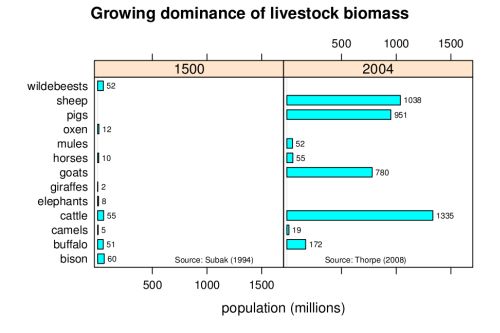
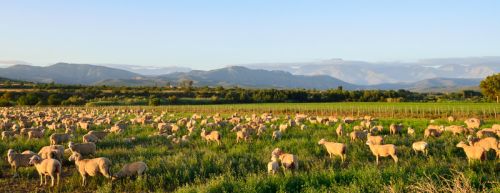


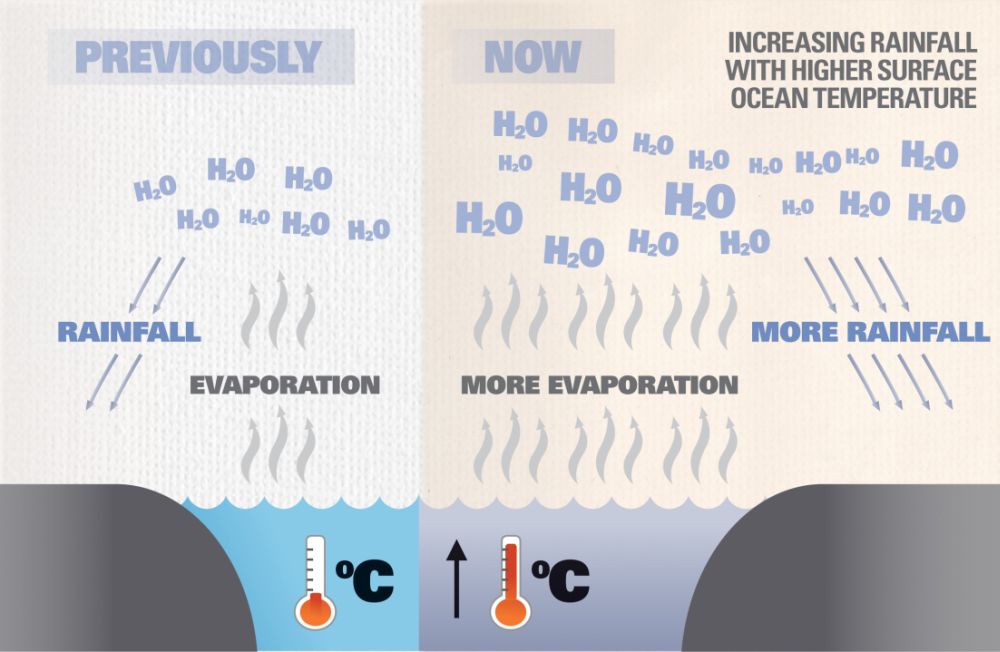



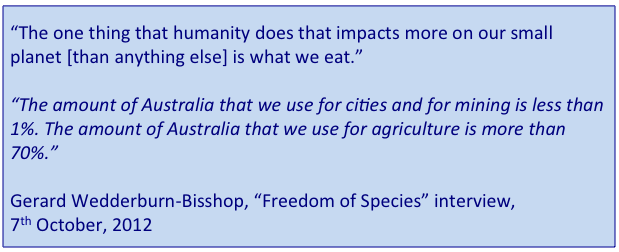




 terrastendo
