Archives for category: Environment

???????????????????????????????????????????????????????????????????????????

The Great Barrier Reef Marine Park in Australia contains coral reefs and marine habitats along a 2,300 kilometre stretch of the Queensland coast. Its coral reef ecosystem is the world’s largest, and the park itself is larger than the United Kingdom, Switzerland and Holland combined. [1]

However, the park is much more than coral reefs, which comprise around seven per cent of the Marine Park and the World Heritage Area. The Great Barrier Reef Marine Park Authority has said, “The Great Barrier Reef is home to a stunning array of animals, from microscopic plankton to whales weighing more than 100 tonnes. . . . The different types of animals . . .  help make [the Reef] one of the richest and most complex natural systems on earth. While there is a lot known about some of the animals that make the Reef home, vast amounts of information and species are yet to be discovered.” [2]

Some idea of the park’s scale can be gauged by this image, bearing in mind (in relation to the inset image) that Australia is almost as wide as the contiguous United States:

SDC2004120620Sept200420General20Reference

Under Threat

Despite its iconic status, the reef is under extreme threat.

Guardian journalist Graham Readfearn has referred to the following factors [3]:

  • Dredging for coal and gas ports
  • Related to the first point, dumping of dredged material.
  • Also related to the first point, increased shipping frequency.
  • Run off from agricultural developments
  • Increased ocean acidity
  • Rises in sea temperatures from fossil fuel burning

A key recent development in respect of dredging and dumping was the decision of the Great Barrier Reef Marine Park Authority (GBRMPA), in January, 2014, to approve the dumping of sediment from dredging in relation to the massive Abbot Point port project.

Readfearn has stated:

“Now the government’s Great Barrier Reef Marine Park Authority (GBRMPA) has decided to allow up to three million cubic metres of ocean bottom to be dredged and then dumped within the borders of the marine park and also the Great Barrier Reef World Heritage area.”

“The decision is another necessary block removed in order to liberate millions of tonnes of coal from Queensland’s Galilee Basin, where miners hope to then rail it to shore and load it onto containers at an expanded coal terminal at Abbot Point. The dredging is to make way for the ships as they weave their way through the Great Barrier Reef – a wondrous icon of the blue planet that doubles as the world’s most iconic coal shipping lane.”

Climate Change: IPCC Fifth Assessment Report

In its March 2014 Fifth Assessment report, the Intergovernmental Panel on Climate Change (IPCC) addressed the issues of risk, adaptation and vulnerability. They reported that coral reef systems were already experiencing “irreversible regime shifts”, and were at very high risk with additional warming of 2 degrees Celsius. [4]

There are three key concerns arising from climate change. Firstly, rising ocean temperatures cause bleaching of corals. Secondly, increased acidity arising from CO2 being absorbed by sea water weakens, and inhibits formation of, calcium carbonate (limestone) skeletons of hard corals and other organisms that contribute to reef building. Finally, the increased intensity of tropical cyclones adversely affects coral reefs. [5]

Dredging, dumping and climate change are significant aspects of what appears to be unrelenting pressure on the Great Barrier Reef. However, what if they not the key problems?

Could cattle grazing be the biggest problem?

In a submission to the Victorian State Government in July, 2008, I highlighted some of the impacts of Australian beef production on the reef.  I quoted the Great Barrier Reef Marine Park Authority, which has stated (with my underlines): [6]

  • “80 percent of the land adjacent to the Great Barrier Reef World Heritage Area supports agricultural production, primarily beef cattle grazing and intensive cropping agriculture.”
  • Beef cattle grazing is the largest single land use with approximately 4,500,000 cattle grazing in the Great Barrier Reef Catchment (Department of Primary Industries & Fisheries 1993). Grazing land management has resulted in extensive clearance of vegetation and with over-stocking, particularly during drought conditions has caused widespread soil erosion and the export of eroded material, with its associated nutrients, into the Great Barrier Reef World Heritage Area.” 
  • “Fertilisers and pesticides are taken up by the crop but a significant portion applied to the land ends up in coastal waters. Poor agricultural practice results in soil erosion and the discharge of sediments, nutrients and pesticides into rivers, estuaries and eventually the Great Barrier Reef World Heritage Area.”

The authority has reported that the highest stock numbers are in the Fitzroy and Burdekin catchments. They have said (with my underlines) [7]:

  • “Beef grazing on these large, dry catchments adjacent to the Great Barrier Reef Marine Park has resulted in extensive tree clearance and over-grazing, especially during drought conditions. This has resulted in widespread soil erosion (The Condition of River Catchments in Queensland 1993).”
  • The majority of the Great Barrier Reef catchment is used for rangeland beef grazing. This development has involved wide-scale clearance of woodland vegetation, particularly Brigalow, for conversion to pasture (Gilbert in press).”
  • “The principal consequence for the Great Barrier Reef from the introduction of beef grazing on catchment lands stems from increased soil erosion (Ciesiolka 1987).”
  • “Soil erosion increases arise from woodland removal; overgrazing, (especially in drought conditions, where vegetation cover falls below 60%); and streambank erosion when cattle have direct access to streams (Finlayson and Brigza 1993).”

The Authority has also stated, “Grazing of cattle for beef production is the largest single land use on the catchment with cropping, mainly of sugarcane, and urban/residential development considerably less in areal extent.” [8]

Some thoughts from the World Preservation Foundation:

The World Preservation Foundation serves “as an access-point for information to assist media and concerned parties to engage” the topic of climate change, including deforestation, disease, drought and global hunger.

In July, 2013, it produced an article arguing that the cattle industry is the key threat to the Great Barrier Reef’s coral. Here are some extracts [9]:

“ . . . the reef used to be amazing, but the report card  [from the Queensland Government’s Reef Water Quality Protection Plan Secretariat] [10] released in July 2013 has now downgraded the health of the Great Barrier Reef to “poor”. 72% of the reef’s hard coral has died since the 1960′s, leading UNESCO to question [11] government protection and consider revoking its World Heritage status.”

“We know that as the oceans grow more acidic this weakens calcium formation of shells and coral. Also, much has been said on the outbreaks of crown-of-thorns starfish – these voracious creatures eat live coral, leaving behind white, dead coral, that soon turns green as algae make it their new home. But the real reasons for the degradation of this amazing reef (including the reason for outbreaks of starfish numbers) have now been well studied, [12] and found not to be climate change, but pollution, mainly from the Burdekin and Fitzroy rivers, the largest rivers flowing onto the reef.

What’s killing the reef is (in order of importance) (my underlines):

  • Fine silt (the major coral killer), over 75% of which comes from grazing lands
  • Nitrogen pollution, mostly particulate, from sediment erosion of grazing lands
  • Phosphorous pollution, mostly particulate, from sediment erosion of grazing lands

“Nitrogen and phosphorous nutrient increases are the major cause of crown-of-thorns starfish outbreaks. Minor sources of pollution were dissolved nitrogen and phosphorous from sugarcane production, as well as herbicides and pesticides, also from farming.”

“So there we have it – what’s killing the Great Barrier Reef is cattle.”

The Foundation pointed out that although plans have been drawn up to improve pollution levels, compliance is voluntary, and only 17% of beef graziers complied with them. [13]

An interactive presentation released by The Guardian in March, 2014 neglected to mention cattle grazing. It referred to farming, including run-off of sediment and chemicals, but only in relation to sugarcane.[14]

In addition to the run-off caused by animal agriculture, the sector’s significant contribution to greenhouse gas emissions is also affecting the reef through its climate change impacts.

Some political perspectives

With the dramatic impact of the beef cattle industry on a natural icon that generates massive tourism revenues, it would seem reasonable for a local federal Member of Parliament to raise some concerns. George Christensen (Nationals) is the member for Dawson, which includes the towns of Bowen and McKay, along with the Whitsunday Islands. [15]

However, Mr Christensen is a staunch supporter of the beef cattle industry, as demonstrated by the fact that he established a “Free Meat Week” campaign [16] in an effort to counter “Meat Free Week” [17], from 24th to 30th March, 2014.

The website states: “Free Meat Week (March 24 to 30) calls on everyone to host a barbecue for their mates to celebrate our Aussie farmers and graziers. Our mates in the bush are doing it tough – after having the live cattle export market shut down overnight some of them are now battling the biggest drought in a century. Rubbing salt into their wounds is a national campaign called Meat-Free Week, which is trying to recruit people to vegetarianism. When our farmers and graziers are doing it so tough, that’s just un-Australian. Free Meat Week is a counter-campaign to promote a great Australian industry and to support our great Australian farmers and graziers. “

Christensen’s electorate includes various industries, such as: small crops; prawn and fish farms; sugar growing and refining; beef cattle; coal mining related industries; abattoirs; and tourism. [18] However, tourism may be left behind if Christensen maintains his current approach.

It’s possible that he is unaware of the industry’s impact on the reef, but his actions conjure memories of former Queensland Premier (1968-1987), Joh Bjelke-Petersen. The former Premier was linked to environmental degradation resulting from beef cattle and other agricultural industries. According to the Wilderness Society, “In the 1950s a young Joh Bjelke-Petersen came up with the idea of using an enormous chain strung between two tractors to drag down great swathes of bushland.” [19] Broadscale land clearing occurred on a massive scale in Queensland for many years, most significantly for the beef cattle industry, until the Labor Government banned such clearing with effect from the end of 2006.

However, the current Liberal National Party government led by Premier Campbell Newman has introduced new legislation to again allow significant levels of land clearing. Land that was protected under Labor’s legislation can now be cleared if deemed to be of “high agricultural value”. [20]

Bjelke-Petersen was also referred to in the Guardian’s interactive presentation mentioned earlier:

“A loose coalition of amateur conservationists had managed to scupper an initial plan to mine an area of the reef for fertiliser but appeared powerless to stop Bjelke-Petersen, who lashed them as ‘nitwits’, ‘cranks’ and ‘Commies’.  Bjelke-Petersen had himself invested in oil companies he had licensed. One of his ministers even claimed any oil spill would actually provide nutritious food for marine life, rather than kill it off. Unsurprisingly, the move to list the reef as a world heritage site was vigorously opposed by Bjelke-Petersen.”

Conclusion:

There are many factors contributing to the demise of the Great Barrier Reef Marine Park’s magnificent corals. It is possible that any of those factors, in their own right, could destroy them. All must be addressed, including our continued utilisation of animal agriculture, particularly beef production. It is our choice, and the time to act is now!

Author: Paul Mahony

Images:

Fish at Great Barrier Reef © Tanya Puntti | Dreamstime.com

Map: Australian Government, Great Barrier Reef Marine Park Authority, http://www.reefed.edu.au/__data/assets/pdf_file/0009/18783/SDC2004120620Sept200420General20Reference.pdf

References:

[1] Great Barrier Reef Marine Park Authority, “Facts about the Great Barrier Reef”, http://www.gbrmpa.gov.au/about-the-reef/facts-about-the-great-barrier-reef

[2] Great Barrier Reef Marine Park Authority, “Animals” http://www.gbrmpa.gov.au/about-the-reef/animals

[3] Readfearn, G, “Death by sludge, coal and climate change for Great Barrier Reef?”, The Guardian, 31 January, 2014 http://www.theguardian.com/environment/planet-oz/2014/jan/31/great-barrier-reef-australia-dredging-abbot-point-coal-export

[4] Intergovernmental Panel on Climate Change (IPCC) “Climate Change 2014: Impacts, Adaptation, and Vulnerability, Summary for Policymakers”, http://ipcc-wg2.gov/AR5/images/uploads/IPCC_WG2AR5_SPM_Approved.pdf

[5] Great Barrier Reef Marine Park Authority, “Climate change impacts on coral reefs”, http://www.gbrmpa.gov.au/outlook-for-the-reef/climate-change/what-does-this-mean-for-habitats/coral-reefs

[6] Australian Government Great Barrier Reef Marine Park Authority, http://www.gbrmpa.gov.au/corp_site/key_issues/water_quality/agriculture (accessed 3 July 2008 but no longer available and cited in Mahony, P. “Is There Anything That I Can Do? Yes, Modify Your Diet!”, 9 July 2008, http://www.slideshare.net/paulmahony101/a-climateofopportunitysubmissionpaulmahony9july08)

[7] Great Barrier Reef Marine Park Authority, “Environmental Status: Water Quality” http://kurrawa.gbrmpa.gov.au/corp_site/info_services/publications/sotr/water_quality/pressures.html (accessed 3 March 2012)

[8] J. Brodie, C. Christie, M. Devlin, D. Haynes, S. Morris, M. Ramsay, J. Waterhouse and H. Yorkston, “Catchment management and the Great Barrier Reef”, pp. 203 & 205, Water Science and Technology Vol 43 No 9 pp 203–211 © IWA Publishing 2001, http://www.iwaponline.com/wst/04309/wst043090203.htm (accessed 30 March 2014)

[9] World Preservation Foundation, “Cattle – not climate change – killing the Great Barrier Reef”, 28th July, 2013, http://www.worldpreservationfoundation.org/blog/news/cattle-not-climate-change-killing-the-great-barrier-reef/#.UzvvA6Ikykw

[10] Reef Water Quality Protection Plan Secretariat, Queensland Government, 2013, “Great Barrier Reef Report Card 2011: Reef Water Quality Protection Plan”, http://www.reefplan.qld.gov.au/measuring-success/report-cards/assets/report-card-2011.pdf

[11] UNESCO World Heritage Committee, Thirty-seventh session, Phnom Penh, Cambodia, 16-27 June 2013, http://whc.unesco.org/archive/2013/whc13-37com-7B-en.pdf

[12] Australian Government and Queensland Government,  2013 Scientific Consensus Statement, “Reef Water Quality Protection Plan, Chapter 4, Sources of sediment, nutrients, pesticides and other pollutants in the Great Barrier Reef catchment”, http://www.reefplan.qld.gov.au/about/scientific-consensus-statement/sources-of-pollutants.aspx

[13] Hunt, Colin, “Great Barrier Reef report in: time to make polluters pay”, The Conversation, 16th July, 2013, https://theconversation.com/great-barrier-reef-report-in-time-to-make-polluters-pay-16073

[14] Oliver Milman, Christian Bennett and Mike Bowers, “The Great Barrier Reef: An Obituary”, The Guardian, 27th March, 2014, http://www.theguardian.com/environment/ng-interactive/2014/mar/great-barrier-reef-obituary

[15] Parliament of Australia, Senators and Members, Mr George Christensen, MP, Member for Dawson, Queensland, http://www.aph.gov.au/Senators_and_Members/Parliamentarian?MPID=230485

[16] Free Meat Week, http://www.freemeatweek.com.au/

[17] Meat Free Week, https://meatfreeweek.org/

[18] Australian Electoral Commission, Profile of the electoral division of Dawson (Qld), http://aec.gov.au/profiles/qld/dawson.htm

[19] The Wilderness Society, “Land Clearing in Queensland”,  https://www.wilderness.org.au/land-clearing-queensland

[20] Roberts, G, “Campbell Newman’s LNP bulldozing pre-election promise”, The Australian, 1 June, 2013, http://www.theaustralian.com.au/national-affairs/campbell-newmans-lnp-bulldozing-pre-election-promise/story-fn59niix-1226654740183; http://sunshinecoastbirds.blogspot.com.au/2013/06/campbell-newman-takes-axe-to-queensland.html

This article first appeared on the Viva la Vegan website on 7th August, 2012.

dreamstime_s_13921032

It’s not surprising that many people are uncertain about the dangers of climate change. Much confusion has been created by groups with vested interests, who have successfully utilised sophisticated PR (public relations) techniques to influence public perceptions and opinion.

In this article, I consider the link between tobacco industry PR and that of the fossil fuel sector. The story is largely one of relationships between: individuals; their areas of expertise; and industries.

Edward Bernays was a nephew of “the father of psychoanalysis”, Sigmund Freud. Bernays himself is widely regarded as being “the father of PR”. Here’s an extract on Edward Bernays from the documentary “The Century of Self” [1]:

“Bernays was the first person to take Freud’s ideas about human beings and use them to manipulate the masses. He showed American corporations for the first time how they could make people want things they didn’t need by linking mass produced goods to their unconscious desires. Out of this would come a new political idea of how to control the masses. By satisfying people’s inner selfish desires, one made them happy and thus docile. It was the start of the all-consuming self which has come to dominate our world today. “

Text-box

Text-box-5

Let’s look at some history of PR within the tobacco industry.

1929: TOBACCO INDUSTRY PR ENDS THE TABOO ON WOMEN SMOKING

Here’s an extract from an article on the website of the American Psychological Association [2]:

Manipulating behaviors: Intrigued by Freud’s notion that irrational forces drive human behavior, Bernays sought to harness those forces to sell products for his clients. In his 1928 book, ‘Propaganda’, Bernays hypothesized that by understanding the group mind, it would be possible to manipulate people’s behavior without their even realizing it. To test this hypothesis, Bernays launched one of his most famous public relations campaigns: convincing women to smoke.”

Here’s another extract from “The Century of Self” [1]:

“Every year New York held an Easter day parade to which thousands came. Bernays decided to stage an event there . He persuaded a group of rich debutants to hide cigarettes under their clothes. Then they should join the parade and at a given signal from him they were to light up the cigarettes dramatically. Bernays then informed the press that he had heard that a group of suffragettes were preparing to protest by lighting up what they called ‘torches of freedom’.

Pat Jackson, Public Relations Adviser and Colleague of Bernays: He knew this would be an outcry, and he knew that all of the photographers would be there to capture this moment so he was ready with a phrase which was ‘torches of freedom’. So here you have a symbol, women, young women, debutantes, smoking a cigarette in public with a phrase that means anybody who believes in this kind of equality pretty much has to support them in the ensuing debate about this, because I mean torches of freedom. What’s our American point, it’s liberty, she’s holding up the torch, you see and so all this there together, there’s emotion there’s memory and there’s a rational phrase, all of this is in there together. So the next day this was not just in all the New York papers, it was across the United States and around the world. And from that point forward the sale of cigarettes to woman began to rise. He had made them socially acceptable with a single symbolic ad.”

So, in 1929, the PR industry likened smoking by women to liberty and freedom. Decades of smoking by women since then have caused untold pain and suffering. It seems that the tobacco and PR industries were influencing people to act in ways prejudicial to those people’s own interests.

dreamstime_s_23160924

1969: MEMO OUTLINING THE BASIS OF PR WITHIN THE TOBACCO INDUSTRY

A famous memo between tobacco industry executives in 1969 stated: “Doubt is our product since it is the best means of competing with the ‘body of fact’ that exists in the mind of the general public. It is also the means of establishing a controversy.” [3]

Naomi Oreskes is Professor of History and Science Studies at the University of California and co-author (with Erik Conway) of “Merchants of Doubt: How a Handful of Scientists Obscured the Truth on Issues from Tobacco Smoke to Global Warming” [4]. Speaking at the University of New South Wales in 2010, she stated:

“Now this is an incredibly important memo. It’s been reproduced by many scholars in many different contexts, and it was a crucial piece of evidence in the US federal prosecution of the tobacco industry, because it showed that the tobacco industry deliberately worked together, conspired. The tobacco industry was found guilty of conspiracy under the Racketeering and Corrupt Organisations Act, because of documents like this that showed that the tobacco industry consciously set out to challenge the scientific evidence by manufacturing doubt.”

Professor Oreskes went on to say: “But one of the key insights the tobacco industry realised early on was that for this doubt-mongering campaign to be credible, for it to be effective for journalists who’d quote them, it wouldn’t do for tobacco industry executives to get up and say, we don’t really know if tobacco is harmful. . . .  But if the tobacco industry could get scientists to say it, and particularly if they could get distinguished scientists, prestigious scientists, a president of the US National Academy of Sciences to say it, well that would have a lot of credibility. In particular, the documents show that the tobacco industry understood that it would have credibility with the media . . .  So a key component of this strategy was the recruitment of scientists, was finding scientists who would be willing to participate in this activity.”

1993: CONTINUING THE TOBACCO INDUSTRY’S PR STRATEGY

In his ground-breaking book on climate change, “Heat: How to stop the planet burning”, Guardian columnist George Monbiot reported on the tactics of tobacco company, Philip Morris.  Following the December, 1992 release of the U.S. Environment Protection Agency’s report on the adverse health effects of passive smoking, an internal memo between executives of the company in 1993 stated:

“Our overriding objective is to discredit the EPA report . . . Concurrently, it is our objective to prevent states and cities . . . from passive smoking bans.” [5]

For this purpose, the company hired a PR firm, APCO, to develop an appropriate strategy. The firm established a “fake citizens group”, The Advancement of Sound Science Coalition (TASSC).

Tobacco industry communications stated that it was important ‘to ensure that TASSC has a diverse group of contributors’; to ‘link the tobacco issue with other more ‘politically correct’ products’; and to associate scientific studies that cast smoking in a bad light with ‘broader questions about government research and regulations’ – such as ‘global warming’, ‘nuclear waste disposal’ and ‘biotechnology’. APCO would engage in the ‘intensive recruitment of high-profile representatives from business and industry, scientists, public officials, and other individuals interested in promoting the use of sound science’”. [6]

Monbiot reported that, “TASSC did as its founders . . . suggested, and sought funding from other sources.” Those sources included the fossil fuel sector. He says, “The website it has financed – JunkScience.com – has been the main entrepot for almost every kind of climate-change denial that has found its way into the mainstream press. It equates environmentalists with Nazis, communists and terrorists. It flings at us the accusations that could justifiably be levelled against itself: the website claims, for example, that it is campaigning against ‘faulty scientific data and analysis used to advance special and, often, hidden agendas’. I have lost count of the number of correspondents who, while questioning manmade global warming, have pointed me there.”

He also stated that the tobacco and fossil fuel lobbies “use the same terms, which appear to have been invented by Philip Morris’s consultants. ‘Junk science’ meant peer-reviewed studies showing that smoking was linked to cancer and other diseases. ‘Sound science’ meant studies sponsored by the tobacco industry suggesting that the link was inconclusive.”

CONTRIBUTIONS OF PROMINENT DENIALIST, FRED SINGER

Professor S. Fred Singer is described by Naomi Oreskes as, “the bête noire of many climate scientists, who continues today to attack climate science”. He is a former director of the U.S. National Weather Satellite Service. According to Professor Oreskes:

“He often claims to be a climate scientist because of this connection to the weather service, but he was the director of the weather service not in his capacity as a climate scientist, which he was not, but as a rocket scientist who knew how to get those satellites up into space.” [3]

She says, “In the 1980s, Singer worked with the Reagan administration to cast doubt on the significance and severity of acid rain, arguing that controlling sulphur emissions was a billion dollar solution to a million dollar problem, so implying that environmentalists had exaggerated the significance of acid rain, and it wouldn’t be significant enough to justify what it would cost to fix. So this is an argument we hear again today regarding global warming.”

In challenging (with lawyer Kent Jeffreys) the U.S. Environmental Protection Agency (EPA) over the dangers of passive smoking, he wrote in 1993, “If we do not carefully delineate the government’s role in regulating dangers, there is essentially no limit to how much government can ultimately control our lives.” [6]

He was challenging the EPA’s conclusions: that tobacco was a proven carcinogen; that second-hand smoke was responsible for 3,000 additional adult cancer deaths each year in the United States alone; that second-hand smoke was responsible for as many as 300,000 additional cases of bronchitis and pneumonia in infants and young children; and that second-hand smoke was correlated with an increase in Sudden Infant Death Syndrome or cot death.

It appears that Singer was following and promoting an anti-regulation ideology. That view is supported by the background of various organisations linked to the work of himself and/or Jeffreys. They include (with descriptions from Naomi Oreskes):

Alexis de Tocqueville Institute: Published the report of Singer and Jeffreys. It is a think tank whose goal is “the extension and perfection of democracy and economic liberty and political freedom”.

Cato Institute: A think tank to whom Kent Jeffreys was affiliated. It is “dedicated to individual liberty, limited government and free markets”.

Competitive Enterprise Institute: Another think tank to whom Kent Jeffreys was affiliated. It is dedicated to “expanding liberty, increasing individual opportunity and strengthening free markets”.

Professor Singer is also on the “global warming experts” list of The Heartland Institute. [7]

Here are some comments on the Heartland Institute from an editorial in the journal “Nature”:

“Despite criticizing climate scientists for being overconfident about their data, models and theories, the Heartland Institute proclaims a conspicuous confidence in single studies and grand interpretations….makes many bold assertions that are often questionable or misleading…. Many climate sceptics seem to review scientific data and studies not as scientists but as attorneys, magnifying doubts and treating incomplete explanations as falsehoods rather than signs of progress towards the truth. … The Heartland Institute and its ilk are not trying to build a theory of anything. They have set the bar much lower, and are happy muddying the waters.” [8]

According to the institute’s web site, “it is a non-profit ‘think tank’ that questions the reality and import of climate change, second-hand smoke health hazards, and a host of other issues that might seem to require government regulation.” [9]

Professor Singer’s views about government regulation were also apparent in the following comments about regulation of chlorofluorocarbons (CFCs) in 1989:

“And then there are those with hidden agendas of their own, not just to save the environment, but to change our economic system. Some of these coercive utopians are socialists, some are technology-hating luddites, and most have a great desire to regulate on as large a scale as possible.” [3]

What if we had adopted Professor Singer’s position on CFCs?

According to the journal “Australasian Science”, the ozone layer would have almost disappeared by 2007, and CFCs would have been by far the most significant contributor to global warming:

“If you express CFCs in CO2-e [CO2-equivalent], and if you look at the growth of CFCs prior to the 1987 Montreal Protocol, you can estimate the amount of CO2-e emissions that Montreal has saved. This calculation shows that, by 2012, the Montreal Protocol will have prevented the equivalent of between 9.7 and 12.5 billion tonnes of CO2 being pumped into the atmosphere every year. On the other hand, if all countries meet their Kyoto targets by 2012, we will save the equivalent of only about 2 billion tonnes of CO2 per year. You can also show that, if CFCs had continued to grow at their 1970s growth rates, they would be the gases having the biggest impact on global temperatures today (they would have also almost completely destroyed the ozone layer). Were it not for their other stratospheric side-effects, perhaps we would be setting up deodorant-trading schemes to control them!” [10]

CFC-image

CONCLUSION AND FURTHER THOUGHTS

In summary, some important aspects of the PR industry’s influence on cigarette smoking and climate change can be summarised as:

Text-box-PR-summary-position

The concept of the “all-consuming self”, as referred to in respect of the early achievements of Edward Bernays, seems relevant to ideas on climate change that have been considered by Clive Hamilton in his book “Requiem for a Species” [11].

Commenting on the book, La Trobe University academic Robert Manne said:

“Perhaps it is the character type that flourishes under the conditions of consumer capitalism that presents the primary obstacle to taking action on climate change. Faced by an apparent choice between the continuation of our lifestyle and the wellbeing of our planet, perhaps it is the continuation of our lifestyle that in the end we will decide to choose.” [12]

Text-box-2

Let’s hope for the future of our planet and its current and future inhabitants that we choose more wisely than indicated in that comment.

Blog Author: Paul Mahony (Also on Twitter, Scribd and Slideshare)

Footnote:

In 1960, the efforts of Bernays to inform the public of the dangers of smoking earned him praise from Action on Smoking & Health. He said that, had he known in 1928 what he knew in 1960, he would have refused the offer to be involved in the smoking campaign. [13]

References:

[1]      “Century of  Self – Part 1 – Happiness Machines”, An Adam Curtis film, broadcast on BBC TV in 2002, http://pialogue.info/books/Century-of-the-Self.php (Accessed 3 August, 2012)

[2]     Held, L. “Psychoanalysis shapes consumer culture. Or how Sigmund Freud, his nephew and a box of cigars forever changed American marketing.”, Monitor on Psychology, December 2009, Vol 40, No. 11, Print version: page 32,
http://www.apa.org/monitor/2009/12/consumer.aspx (Accessed 3 August, 2012)

[3]     Prof. Naomi Oreskes, co-author of “Merchants of Doubt” on The Science Show, ABC Radio National, 8 January, 2011, http://www.abc.net.au/radionational/programs/scienceshow/naomi-oreskes—merchants-of-doubt/3012690 (Accessed 3 August, 2012)

[4]     Oreskes, N. & Conway, E.M. “Merchants of Doubt: How a Handful of Scientists Obscured the Truth on Issues from Tobacco Smoke to Global Warming”, 2010, Bloomsbury Press, http://www.merchantsofdoubt.org/ (Accessed 3 August, 2012)

[5]     Monbiot, G., “Heat: How to stop the planet burning”, 2006, Allen Lane, p. 31 http://www.monbiot.com/2006/11/07/heat/ (Accessed 3 August, 2012)

[6]     Singer, S.F. & Jeffreys, K. “EPA and the Science of Environmental Tobacco Smoke”, cited in Prof. Naomi Oreskes, co-author of “Merchants of Doubt” on The Science Show, ABC Radio National, 8 January, 2011

[7]     Source Watch, http://www.sourcewatch.org/index.php?title=Heartland_Institute/Global_warming_experts (Accessed 3 August, 2012)

[8]     “Nature”, Volume: 475, Pages: 423–424, 28 July 2011, DOI: doi:10.1038/475423b (2011-07-28). “Heart of the matter”. Nature : Nature Publishing Group. Retrieved on 14 August 2011, cited in http://www.sourcewatch.org/index.php?title=Heartland_Institute#Exxon_funding

[9]     Source Watch, http://www.sourcewatch.org/index.php?title=Heartland_Institute#Exxon_funding (Accessed 3 August, 2012)

[10]   Anon., “The global warming potential of deodorants”, Australasian Science, Nov/Dec, 2007, p. 39

[11]   Hamilton, C., “Requiem for a Species: Why we resist the truth about climate change”, 2010, Allen & Unwin, http://www.clivehamilton.net.au/cms/ (Accessed 3 August, 2012)

[12]   Manne, R, “How can climate change denialism be explained?”, The Drum Opinion, ABC, 9 December, 2011, http://www.abc.net.au/unleashed/3722126.html (Accessed 3 August, 2012)

[13]    The Museum of Public Relations, “Edward L. Bernays, 1960: Dangers of Smoking”, http://www.prmuseum.com/bernays/bernays_1960.html

Images:

Cigarette Packet © Akiyoko74 | Dreamstime.com

“Statue of Liberty” © Americanspirit | Dreamstime.com

At the time of writing, a recent TED presentation by Allan Savory with the title How to green the desert and reverse climate changehad been viewed more than 700,000 times. At the end of the presentation, Savory received a standing ovation, and  host Chris Anderson said, “I’m sure everyone here (a) has 100 questions and (b) wants to hug you”.

The comment about a hug may have partially reflected some relief on the part of those present, based on a new belief that they could eat meat without contributing to massive climate change impacts and other environmental problems.

Perhaps Anderson’s more pertinent comment was the one relating to 100 questions, because the audience and viewers would be well advised to consider the validity of Savory’s claims.

In case you haven’t seen the presentation and would like to, here it is (22 minutes duration including brief questions):

Video filmed Feb 2013 • Posted Mar 2013 • TED2013

What was Savory’s main point?

Savory’s key claim is that livestock can be controlled through a planning process he called in the presentation “holistic management and planned grazing”, so as to be “a proxy for former herds and predators”, in trampling dry grass and leaving “dung, urine and litter or mulch”, enabling the soil to “absorb and hold rain, to store carbon, and to break down methane”.

In this way, he says that we can “mimic nature”. In the final 8 minutes of the 20 minute (plus questions) presentation , Savory used the term “mimic nature” (or “mimicking nature”) 9 times. He used it again when answering the first question. (The notion of mimicking nature is very relevant to animal population figures referred to below.)

Savory also refers to his process as “Holistic Resource Management” or HRM, and has previously referred to it as “short duration grazing”.

How valid are Savory’s claims?

Savory’s approach has been considered by two Australian researchers, Geoff Russell and Gerard Wedderburn-Bisshop.

Geoff Russell

  • Geoff Russell is a mathematician, researcher and writer, and the author of CSIRO Perfidy“. His work has been published in (amongst others) Australasian Science, The Monthly, Dissent, The Age, Punch, The Advertiser and Climate Spectator. He is also a regular contributor to Brave New Climate, the website of Professor Barry Brook, head of climate science at the University of Adelaide.
  • Russell points to a study by Emma R.M. Archer of the University of Capetown, published in a 2004 edition of the Journal of Arid Environments, investigating the effect of commercial stock grazing practices on vegetation cover in an eastern Karoo study site in South Africa. Based on 14 years of satellite imaging data and objective assessment methods, the researchers reported that HRM strategies resulted in lower levels of vegetation than more traditional approaches. [1]
  • Russell has also reported extensively on the impact of livestock grazing in Africa, including within his “Boverty Blues” (Parts 1 and 2) series on Brave New Climate. [2] He has cited a study reported in the journal Nature in 2005, indicating the massive potential for reforestation (as opposed to desertification) if livestock were removed and the related burning of savanna ceased. [3] (Refer to MODIS satellite maps and additional comments below.)
  • Russell coined the term “boverty blues” to mean “the human impact of too many bovines overwhelming the local biosphere’s ability to feed them”.
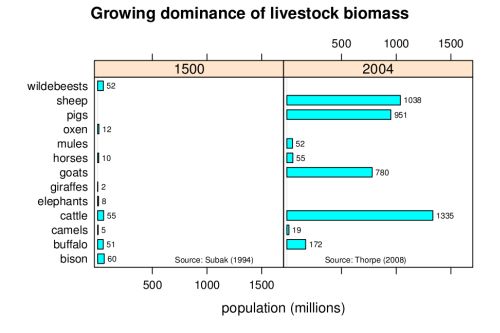
  • Very relevant to Savory’s focus on mimicking nature, Russell has pointed out that current livestock populations dwarf natural populations that preceded them. He states: “Wildlife rates of conception, growth, and the like don’t match what can be achieved by artificial selection, artificial insemination, good fences, irrigated feed production, predator extermination and all the other paraphernalia of modern agriculture. These have produced a totally unnatural and unprecedented explosion in numbers of those animals which people have designated as livestock.” [4] His table comparing numbers from the year 1500 with those from 2004 can be seen below. Today’s animals have also been bred to be much larger than they would be in nature, adding further to their total biomass and the related resource requirements.

rsubak-500-333

Gerard Wedderburn-Bisshop

  • Gerard Wedderburn-Bisshop is a former Principal Scientist with the Queensland Government Department of Environment and Resources Management Remote Sensing Centre. He was responsible for assessing and monitoring vegetation cover, structure and trend across the state. This involved leading a team of remote sensing scientists to develop satellite monitoring methods to cover an area of 1.7 million square kilometres each year.  He is currently a Director and Lead Scientist with the World Preservation Foundation and a researcher on Beyond Zero Emission’s Land Use Plan as part of its ZCA2020 project.
  • The points that follow in italics are from his comments on the TED website in response to Savory’s presentation.
  • What Savory does not mention is that intensive (cell) grazing is only viable where water points are close and labour is cheap. Temporary or permanent fencing is labour intensive, moving herds daily requires far more labour input than most operations can afford.
  • Also absent is mention of the failure of traditional intensive grazing in Russia, Siberia, Mongolia, Kazakhstan, China and eastern Africa where large herds are constantly moved by traditional herders (as the Savory method does) – but sheer weight of livestock numbers has ravaged these landscapes in drought years, leading to more degradation.
  • China has gone to great efforts to reverse desertification, including the Great Green Wall, and is discovering that in marginal areas the most effective method is re-planting native perennial grasses, and removing all livestock – see http://www.chinadialogue.net/books/4772-Books-simple-ecology-complex-issues/en
  • Long-time Australian pasture agronomist and climate scientist Greg McKeon has coined the term “hydro-illogical cycle”, which is:
    – it rains, grass grows, graziers stock up
    – drought comes, graziers hold on to stock due to lower prices
    – drought continues, pastures are flogged, devoid of edible grass
    – government steps in with drought aid and permits to cut down trees that stock will eat such as acacias
    – rain comes, washes away the (unprotected) soil
    – cycle continues
  • This has led to a dramatic long term deterioration of soils and native vegetation – see http://www.longpaddock.qld.gov.au/about/publications/pdf/preventingdegradation.pdf .
  • Climate change – hotter, drier droughts, more flooding rains – will only accelerate the degradation of grazed rangelands.
  • The best aspect of Savory’s method is that burning is stopped. Burning is a very effective tool to stop forests re-growing, and half of Africa is high rainfall savannah, which will revert to forest if the burning were stopped – see http://www.nature.com/nature/journal/v478/n7369/full/nature10452.html. After a few years when herders see their grazing lands overtaken with trees, they will turn back to fire.
  • ‘Conservation grazing’ – http://theconversation.edu.au/can-livestock-grazing-benefit-biodiversity-10789 does work in the more temperate regions where rainfall and feed production can support the cost of fencing, but is not a cure-all as is proposed.
  • There is enormous potential in above ground and below ground carbon sequestration, but this will only happen when we stop burning the daylights out of grasslands for pasture management and to stop ‘woody weeds’; and when we remove grazing pressure.
  • You can hear an interview with Wedderburn-Bisshop on these issues here. It’s from radio station 3CR’s “Freedom of Species” program, and was broadcast on 7th October, 2012. The podcast can be downloaded from this page. The interview was also referred to in my blog post “Omissions of Emissions: a critical climate change issue“.
  • Here is an extract from that blog post: “The northern and southern Guinea Savannas in Africa have also been adversely affected by livestock grazing. As an example of an alternative approach to livestock in Africa, Gerard Wedderburn-Bisshop discussed the Kenya Hunger Halt program, administered by the World Food Program. Under the program, people have been taught to grow alternatives such as root crops.  The Maasai, traditional herders, have been converting to the program, growing nutritious crops and thriving.”
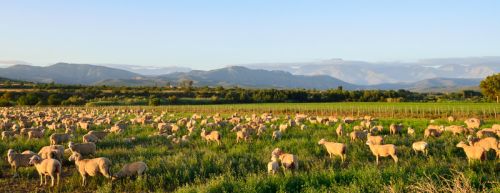
Sheep grazing in the Little Karoo region of South Africa near Oudtshoorn

Sheep grazing in the Little Karoo region of South Africa near Oudtshoorn

What do others say?

Blogger Adam Merberg (Inexact Change) has said (with direct quotes in italics):

  • Savory’s methods have found little support from mainstream science. The [February 2000 issue of Rangelands] included an article by Jerry L. Holechek and others, which attempted to review the evidence for a number of Savory’s claims. Their review of studies from 13 North American sites and additional data from Africa found little evidence for any of the environmental benefits which Savory claimed for his methods. Moreover, the research consistently indicated that “hoof action from having a large number of animals on a small area for short time periods reduced rather than increased infiltration,” seemingly contradicting a key assumption of Savory’s methods.
  • Regarding an experiment undertaken with Savory’s involvement in Zimbabwe during the 1960’s (“the “Charter Grazing Trials”), Savory said in 1983:  “The only trial ever conducted proved what I have always advocated and continue to advocate when livestock are run on any land.” In general, it is unlikely that a single study on a few plots of land will definitively prove a statement about “any land.” Moreover, while I haven’t seen the original papers (which were published in the Zimbabwe Agricultural Journal), Holechek summarized the published work in a later issue of Rangelands, finding relatively weak support for Savory’s methods. [Note: Merberg refers to a letter to the editor of Rangelands, published in June 2000, in which Savory claimed, “we could double the stocking rate on any land under conventional management, improve the land and make more profit”.]
  • Holechek’s 2000 article also claims that Savory had “expressed doubt that holistic resource management could be validated experimentally.” While I was not able to find a precise reference for this claim, Savory did not deny it in his response, and elsewhere he has expressed some reservations about scientific testing.
  • That is problematic because the scientific method is what will tell us whether Holistic Management works. Savory would like us to graze more cattle to fight desertification and climate change, even as scientific evidence indicates that his “solution” will actually exacerbate these problems.
  • As Chad Kruger writes, “Being ‘unconventional’ is not, in itself, a problem, but when what you are arguing for is unconventional, you’d better ‘bring data.'”
  • In a review of Savory’s 1988 book Holistic Resource Management, M.T. Hoffman wrote “The apparent inconsistencies and lack of definitions (eg. for concepts such as complexity, stability, resilience, diversity and production which have a number of different meanings in the ecological literature), render it frustratingly difficult to compare his [Holistic Resource Management] approach with the broader literature.” Imprecise language doesn’t just make it hard to compare Savory’s methods with the existing literature. It also makes it nearly impossible to evaluate his approach scientifically because it allows Savory to blame any failures on a misunderstanding of the method.

[Please see the postscript below regarding additional articles commenting on Allan Savory’s work.]

Something they all agree on

All those referred to in this blog who have touched on the issue agree that the biosphere provides enormous potential for drawing down atmospheric carbon, and that the burning that occurs for pasture management needs to stop.

Here are  images from NASA depicting the extent of burning in Africa during two ten-day periods from 29th July to 7th August, 2012 (right) and 1st to 10th January 2013 (left):

firemap-Africa-combined

Extracts of MODIS Fire Maps from NASA Earth Data

Some background from NASA on the MODIS fire maps:

“Each of these fire maps accumulates the locations of the fires detected by MODIS on board the Terra and Aqua satellites over a 10-day period. Each colored dot indicates a location where MODIS detected at least one fire during the compositing period. Color ranges from red where the fire count is low to yellow where number of fires is large. The compositing periods are referenced by their start and end dates (julian day). The duration of each compositing period was set to 10 days.”

Something they do not agree on

To a large extent, the fire regions shown above cover areas within the northern and southern Guinea savanna. Geoff Russell (refer above) has said that a roughly corresponding area shown by the vertical lines in this image “has an average rainfall over 780mm and would, according to Sankaran and the large number of other authors [of the cited Nature article], revert to some kind of forest if given half a chance. Its status as savanna is anthropogenic and not a product of natural attributes like soil type and climate.”

Gerard Wedderburn-Bisshop (refer above) has made a similar point, citing another Nature article by Jonathan Foley and colleagues.

On the other hand, Savory says: “Now, looking at this grassland of ours that has gone dry, what could we do to keep that healthy? And bear in mind, I’m talking of most of the world’s land now. Okay? We cannot reduce animal numbers to rest it more without causing desertification and climate change. We cannot burn it without causing desertification and climate change. What are we going to do? There is only one option, I’ll repeat to you, only one option left to climatologists and scientists, and that is to do the unthinkable, and to use livestock, bunched and moving, as a proxy for former herds and predators, and mimic nature. There is no other alternative left to mankind.”

A key difference between the alternative views is that Russell and Wedderburn-Bisshop have based theirs on peer-reviewed scientific literature, which is widely supported by other scientific sources. On the other hand (as indicated above), the scientific support for Savory’s approach appears scant.

Potential next steps

Adam Merberg (refer above) has suggested that TED apply some of its own criteria for “identifying bad science” in assessing the worth of Savory’s presentation. Those criteria include:

  • It has failed to convince many mainstream scientists of its truth.
  • Much of it is not based on experiments that can be reproduced by others.
  • It comes from an overconfident fringe expert.
  • It uses imprecise vocabulary to form untested theories.

Let’s hope that TED heeds Merberg’s call.

Author: Paul Mahony

Postscript 19th September, 2013: Two additional articles commenting on Allan Savory’s work have come from Robert Goodland (referred to above) and James McWilliams. Goodland’s article is Meat, Lies & Videotape (a Deeply Flawed TED Talk) from Planetsave, 26th March, 2013, while McWilliams has written All Sizzle and No Steak: Why Allan Savory’s TED talk about how cattle can reverse global warming is dead wrong, published on Slate, 22nd April, 2013. Included in the McWilliams article are these comments about algal growth and desertification, a key aspect of Savory’s TED presentation: “Further weakening Savory’s argument for the wholesale application of holistic management to the world’s deserts is his distorted view of desert ecology. There are two basic kinds of deserts: genuinely degraded landscapes in need of revival and ecologically thriving ones best left alone. Proof that Savory fails to grasp this basic distinction comes when, during his talk, he calls desert algae crust (aka “cryptobiotic crust”) a “cancer of desertification” that represses grasses and precipitate runoff.  The thing is desert algae crust, as desert ecologists will attest, is no cancer. Instead, it’s the lush hallmark of what Ralph Maughan, director of the Western Watersheds Project, calls ‘a complete and ancient ecosystem‘. According to the U.S. Geological Survey, ‘Crusts generally cover all soil spaces not occupied by green plants. In many areas, they comprise over 70 percent of the living ground cover and are key in reducing erosion, increasing water retention, and increasing soil fertility’. Savory, whose idea of a healthy ecosystem is one with plenty of grass to feed cattle, neglects the less obvious flora – such as, in addition to algae crust, blackbrush, agaves, and creosote – that cattle tend to trample, thereby reducing the desert’s natural ability to sequester carbon on its own terms. ‘It is very important,’ Maughan writes, ‘that this carbon storage not be squandered trying to produce livestock.’”

Postscript 26th December, 2013: Another article criticising Allan Savory’s TED presentation was published on the Real Climate website on 4th November, 2013. Real Climate “is a commentary site on climate science by working climate scientists for the interested public and journalists.” The article, from ecosystem scientists  Jason West and David Briske and titled Cows, Carbon and the Anthropocene: Commentary on Savory TED Video“, stated: “It is important to recognize that Mr. Savory’s grazing method, broadly known as holistic management, has been controversial for decades. . . . We focus here on the most dramatic claim that Mr. Savory made regarding the reversal of climate change through holistic management of grasslands. . . . While it is understandable to want to believe that such a dramatic outcome is possible, science tells us that this claim is simply not reasonable. The massive, ongoing additions of carbon to the atmosphere from human activity far exceed the carbon storage capacity of global grasslands.”

Postscript 31st July, 2014: An article published in the International Journal of Biodiversity on 23rd April, 2014, titled “Holistic Management: Misinformation on the Science of Grazed Ecosystems“, examined each of Allan Savory’s claims. The authors concluded: “Studies in Africa and the western USA, including the prairies which evolved in the presence of bison, show that HM, like conventional grazing systems, does not compensate for overstocking of livestock. As in conventional grazing systems, livestock managed under HM reduce water infiltration into the soil, increase soil erosion, reduce forage production, reduce range condition, reduce soil organic matter and nutrients, and increase soil bulk density. Application of HM cannot sequester much, let alone all the greenhouse gas emissions from human activities because the sequestration capacity of grazed lands is much less than annual greenhouse gas emissions.” They also stated: “Studies supporting HM have generally come from the Savory Institute or anecdotal accounts of HM practitioners. Leading range scientists have refuted the system and indicated that its adoption by land management agencies is based on these anecdotes and unproven principles rather than scientific evidence.” [5]

Blog Author: Paul Mahony (also on on Twitter, Slideshare and Sribd)

Livestock biomass chart:

Russel, G. Forget the quality, it’s the 700 million tonnes which counts, 17 Nov 2009, http://bravenewclimate.com/2009/11/17/700-million-from-livestock/, citing Subak, S., GEC-1994-06 : Methane from the House of Tudor and the Ming Dynasty, CSERGE Working Paper, http://www.cserge.ac.uk/sites/default/files/gec_1994_06.pdf and Thorpe, A. Enteric fermentation and ruminant eructation: the role (and control?) of methane in the climate change debate, Climatic Change, April 2009, Volume 93, Issue 3-4, pp 407-431, http://link.springer.com/article/10.1007%2Fs10584-008-9506-x

Images:

TED Conference, TED 2013_0053153_D41_0283, Allan Savory, Flickr, CC BY-NC 2.0, tinyurl.com/k8j8sr4

Sheep grazing in late afternoon sun near Oudtshoorn © Peter Marble | Dreamstime.com

MODIS satellite maps from NASA Earth Data, http://rapidfire.sci.gsfc.nasa.gov/firemaps/

References:

[1] Archer, E.R.M., Journal of Arid Environments, Volume 57, Issue 3, May 2004, Pages 381–408, Beyond the ‘climate versus grazing’ impasse: using remote sensing to investigate the effects of grazing system choice on vegetation cover in the eastern Karoo“, http://www.sciencedirect.com/science/article/pii/S0140196303001071

[2] Russel, G., “Burning the biosphere, boverty blues (Parts 1 & 2)”, 5th January and 10th February, 2010, http://bravenewclimate.com/2010/01/05/boverty-blues-p1/ and http://bravenewclimate.com/2010/02/04/boverty-blues-p2/

[3] Sankaran, M; Hanan, N.P.; Scholes, R.J.; Ratnam, J; Augustine, D.J.; Cade, B.S.; Gignoux, J; Higgins, S.I.; Le Roux, X; Ludwig, F; Ardo, J.; Banyikwa, F; Bronn, A; Bucini, G; Caylor, K.K.; Coughenour, M.B.; Diouf, A; Ekaya, W; Feral, C.J.; February, E.C.; Frost, P.G.H.; Hiernaux, P; Hrabar, H; Metzger, K.L.; Prins, H.H.T.; Ringrose, S; Sea, W; Tews, J; Worden, J; & Zambatis, N., Determinants of woody cover in African savannas, Nature 438, 846-849 (8 December 2005), cited in Russell, G. Burning the biosphere, boverty blues (Part 2)”, 4 Feb, 2010

[4] Russell, G., Forget the quality, it’s the 700 million tonnes which counts, 17th Nov, 2009, http://bravenewclimate.com/2009/11/17/700-million-from-livestock/

[5] John Carter, Allison Jones, Mary O’Brien, Jonathan Ratner, and George Wuerthner, “Holistic Management: Misinformation on the Science of Grazed Ecosystems”, International Journal of Biodiversity, vol. 2014, Article ID 163431, 10 pages, 2014. doi:10.1155/2014/163431, http://dx.doi.org/10.1155/2014/163431 and http://www.hindawi.com/journals/ijbd/2014/163431/

Additional reference material will be inserted for the links contained in this article.